An entertaining but deeply flawed pseudo follow up to Street Fighter……
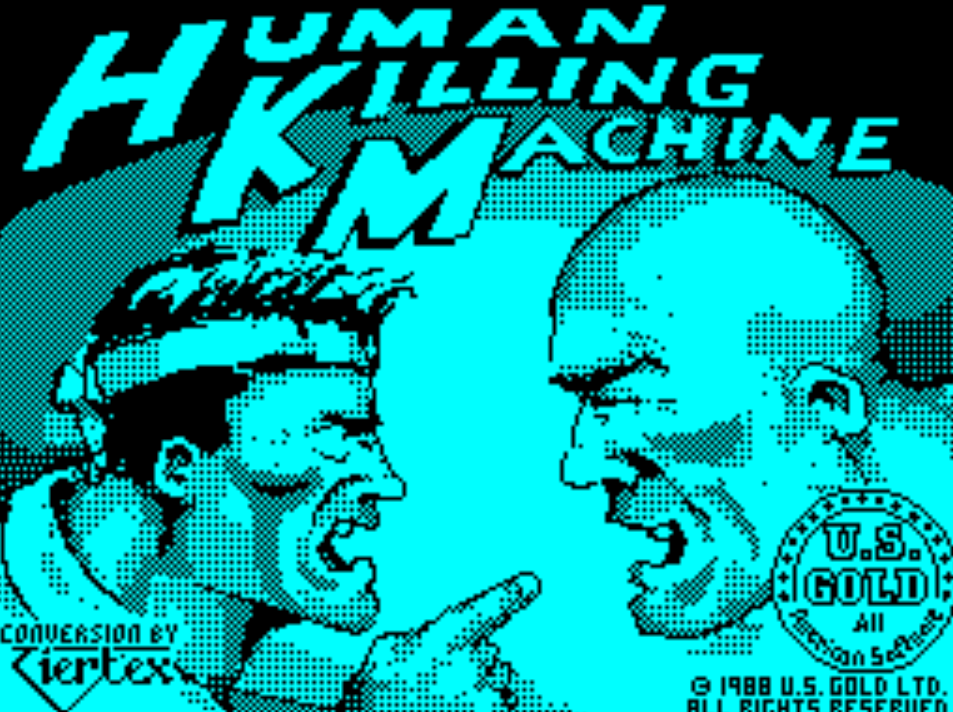
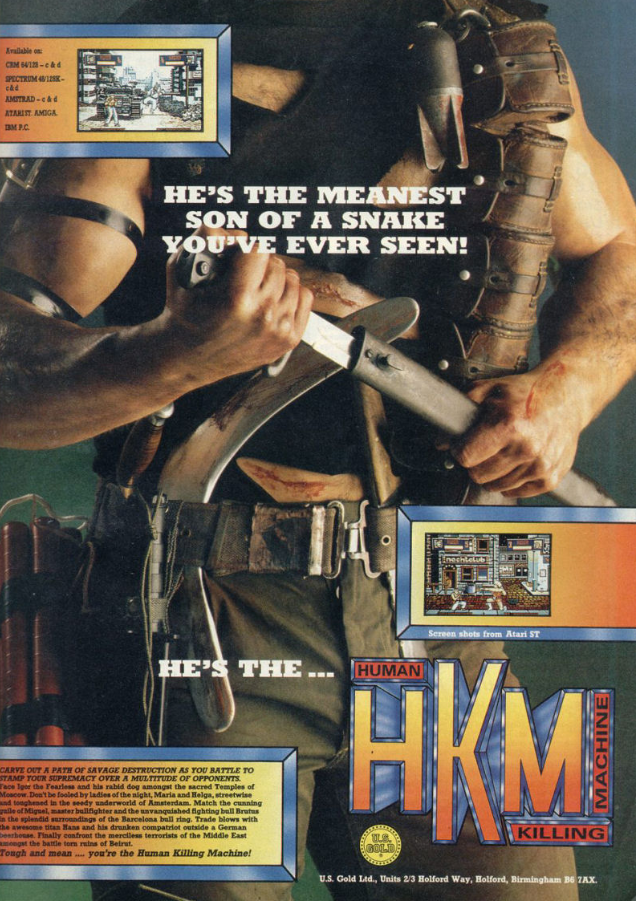
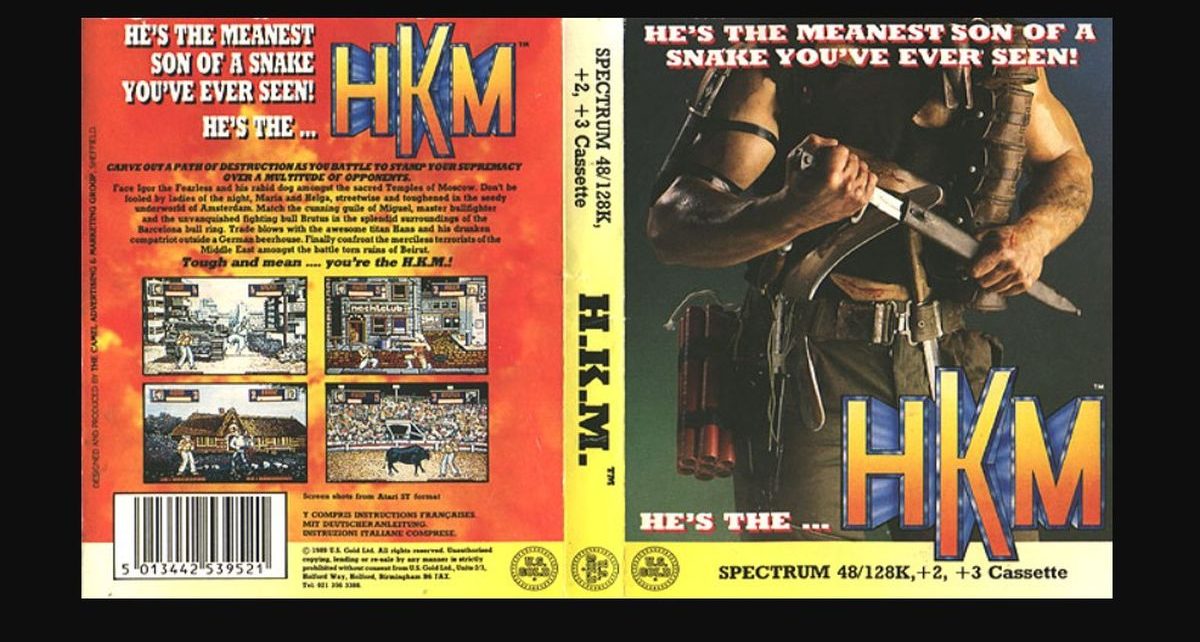
Back in the late 1980s, fighting game fans faced a frustrating reality. While arcade players were enjoying increasingly sophisticated one-on-one combat games, home computer owners often had to make do with simplified conversions, awkward controls, and technical compromises. Following the release of the original arcade version of Street Fighter, publishers rushed to bring martial arts action to home systems. Amongst those was Human Killing Machine, released in 1988 by US Gold for the ZX Spectrum and several other home computers.
Often described as an unofficial or pseudo-sequel to Street Fighter, Human Killing Machine wasn’t actually developed by Capcom, nor was it a direct continuation of the arcade hit. However, the similarities are impossible to ignore. The game follows a lone martial artist travelling the globe, facing a series of international opponents in one-on-one combat. Sound familiar? It should. In many ways, this feels like a parallel-universe version of Street Fighter created by developers who understood the concept but lacked the technology and budget to reproduce the arcade experience.
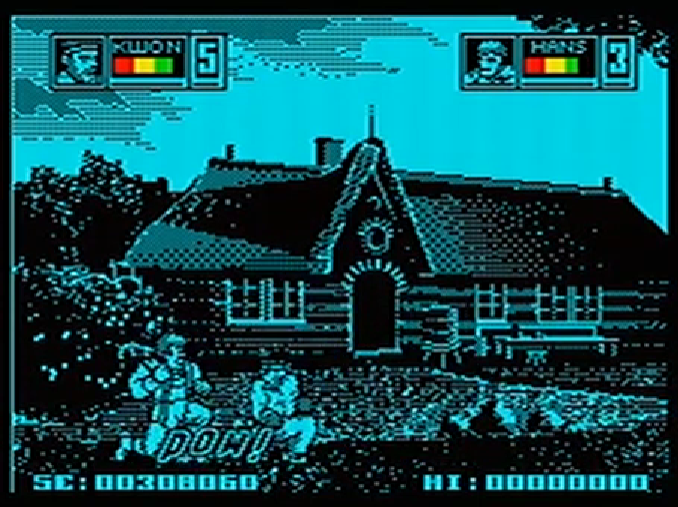
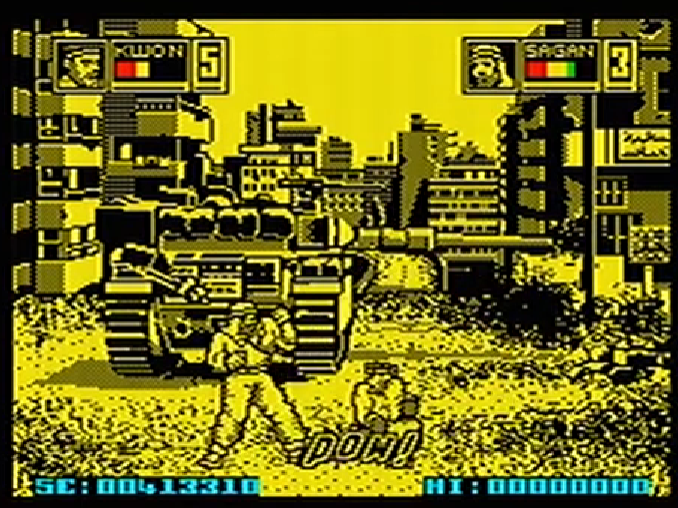
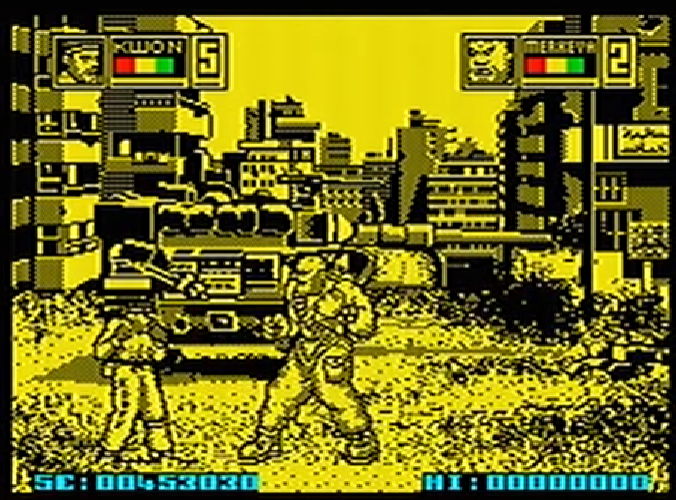
The game’s premise is straightforward. Players control Kwon, a martial arts champion competing in a deadly international tournament. Travelling across multiple countries, he must defeat a series of opponents before ultimately facing the game’s final challenge. It’s the classic martial arts movie setup!! The presentation is surprisingly impressive for a Speccy fighting game. Large character sprites dominate the screen, and the fighters are reasonably detailed with the various backgrounds attempting to create a sense of global adventure, featuring (semi) recognisable landmarks and cultural themes.
The character sprites are perhaps the game’s most visually impressive feature. Fighters are large, and reasonably well animated. Punches, kicks, and jumping attacks are clearly recognisable, and each opponent possesses a distinct appearance. Compared to many Spectrum fighting games of the period, the visuals feel surprisingly substantial. Unfortunately, once the fighting begins, that’s when the cracks start to appear, and quickly as well. One immediate issue is responsiveness. Fighting games live or die by their controls, and Human Killing Machine struggles in this area. Commands often feel delayed, attacks can seem sluggish, and performing precise moves under pressure becomes a challenge. This problem is compounded by the game’s unusual pacing. Combat feels slow, yet paradoxically less controlled. Bouts frequently descend into awkward exchanges of kicks and punches rather than carefully planned tactical encounters. The collision detection can also be inconsistent. There are moments when attacks appear to connect without causing damage, while other times seemingly impossible hits register successfully.
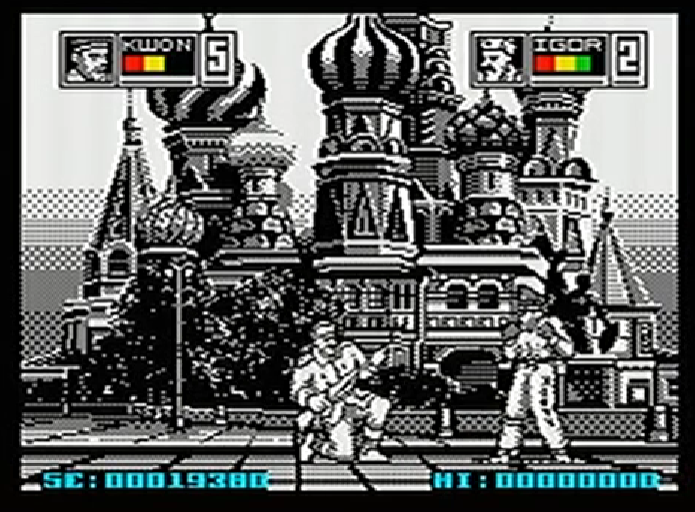
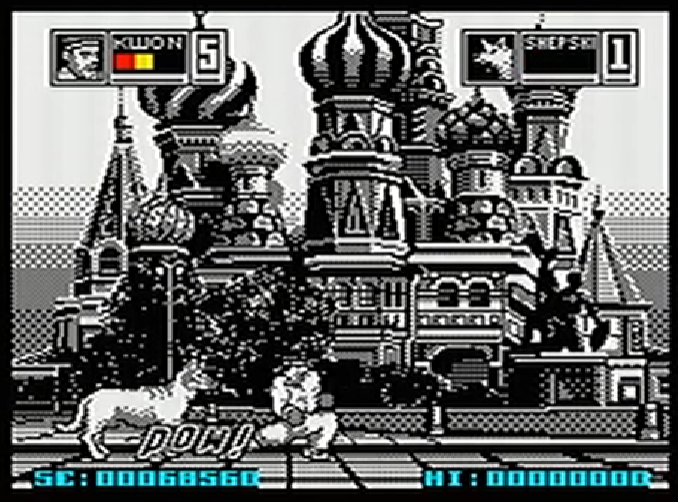
Yet despite these shortcomings, there is something undeniably enjoyable about the experience. I suppose that part of this comes from the game’s ambition. The developers clearly wanted to recreate the globe-trotting tournament atmosphere that had made Street Fighter memorable. Each opponent represents a different nation, giving the game a sense of progression and variety. New backgrounds, character designs, and fighting styles help maintain player interest as the tournament unfolds. The international cast may lack the depth and personality of later fighting game legends, but they contribute to the game’s ‘charm’. Defeating one opponent and moving on to the next destination creates a satisfying feeling of advancement.
Another strength is accessibility. Unlike some fighting games that rely heavily on complicated move lists, Human Killing Machine remains relatively straightforward. Most players can grasp the basic mechanics quickly, allowing them to focus on timing and positioning rather than memorising elaborate command sequences.
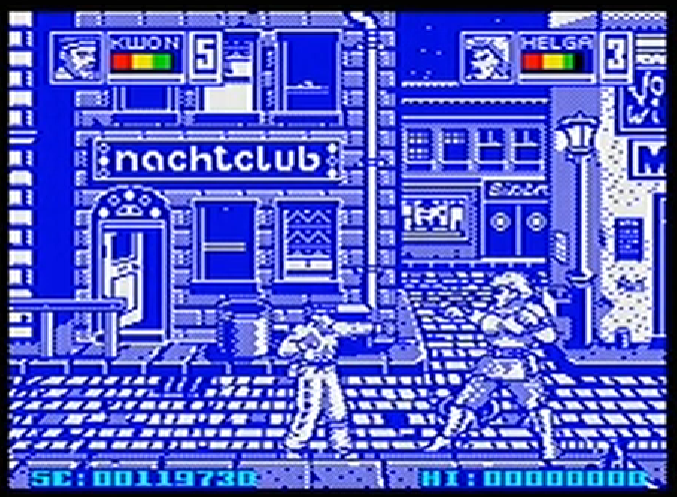
As with many Spectrum releases, sound remains fairly redundant audio is functional rather than spectacular. Effects communicate the action adequately, but there is little in the way of memorable music or atmosphere. Where the game pretty much falls flat is the difficulty balance. Certain opponents feel surprisingly manageable, while others can seem almost impossibly aggressive. Success often depends less on mastering sophisticated fighting techniques and more on discovering effective patterns or exploiting weaknesses in the computer’s behaviour. Once these patterns are identified, previously overwhelming opponents can suddenly become much easier.
Looking back from a more modern perspective, it’s impossible not to compare Human Killing Machine with the revolutionary fighting games that followed. Compared to Street Fighter II, the game feels primitive. Character balance is limited, move sets are basic, and competitive depth is almost non-existent. Yet that can be an unfair comparison, as in 1988, the fighting game genre was still finding its identity. Developers were experimenting with ideas that would later become standard features. Seen through that historical lens, Human Killing Machine becomes a little more interesting.
For Spectrum owners at the time, the game offered something relatively uncommon: a dedicated one-on-one martial arts tournament experience. While imperfect, it captured enough of the arcade fighting spirit to remain engaging. It may not have delivered the smoothness or excitement of the coin-op machines, but it provided a respectable approximation within the constraints of the ZX’s hardware.
Summary
Human Killing Machine is an ambitious but flawed ZX Spectrum fighting game that borrows heavily from the original Street Fighter formula while carving out its own peculiar identity. Large sprites, international opponents, and a globe-spanning tournament structure provide the appeal, but sluggish controls, inconsistent collision detection, and uneven difficulty prevent it from reaching anywhere near greatness. Nevertheless, it does remains a slightly intriguing snapshot of the genre.
BREAKDOWN:
GRAPHICS: 78%
MUSIC/SFX: 52%
PLAYABLITY: 57%
OVERALL: 68%

Platform: ZX Spectrum
Genre: Action – Fighting – 2D
Developer/ Publisher: Tiertex Design Studios / U.S Gold
Release: 1988