Geez this was a hard one, but at the end of the day, can you think of any game more deserving for THE top slot on the Amiga ?……..
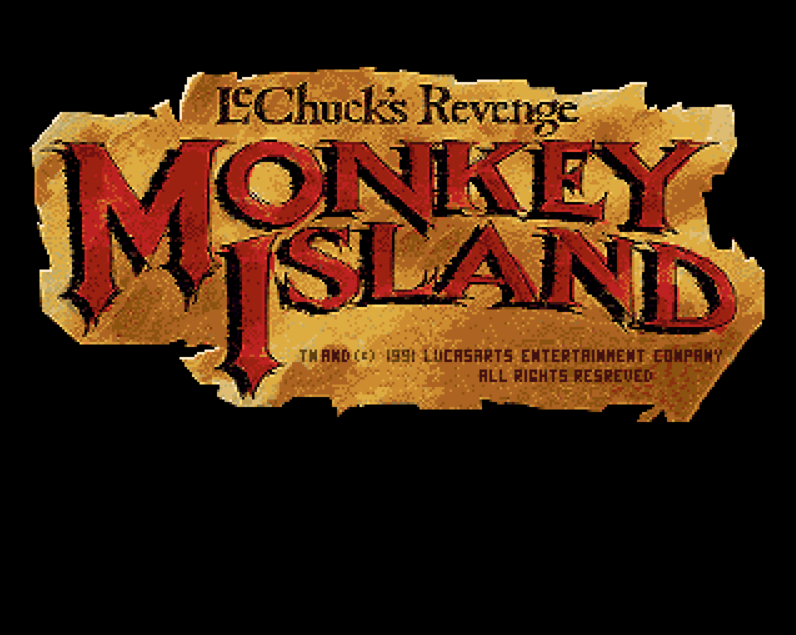
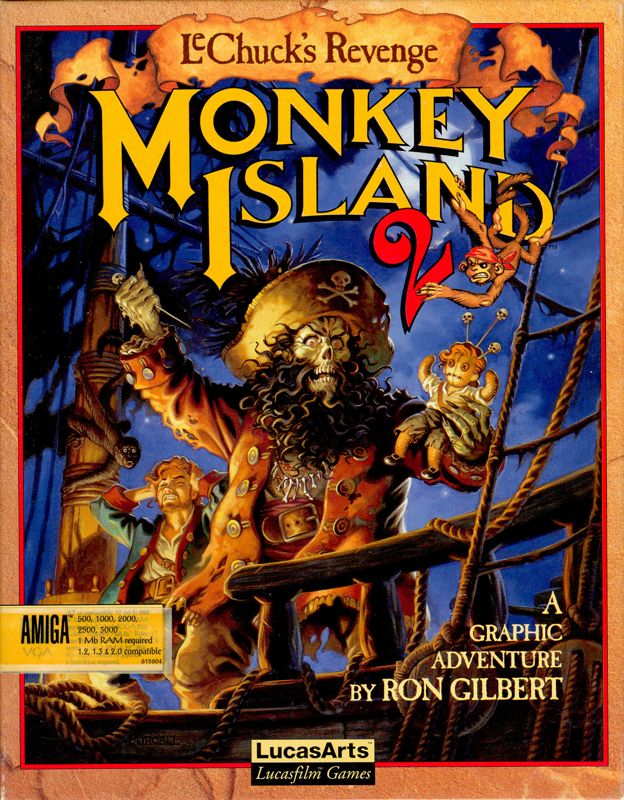
Well…. this was an extremely tough one and after hundreds of emails and messages asking us for our top slot Amiga game, here it is in all it’s glory. Don’t get me wrong, there were a few (namely 4 including this one) that could have taken that top spot, but we went with Monkey Island 2: Le Chuck’s Revenge and here is our reasoning why.
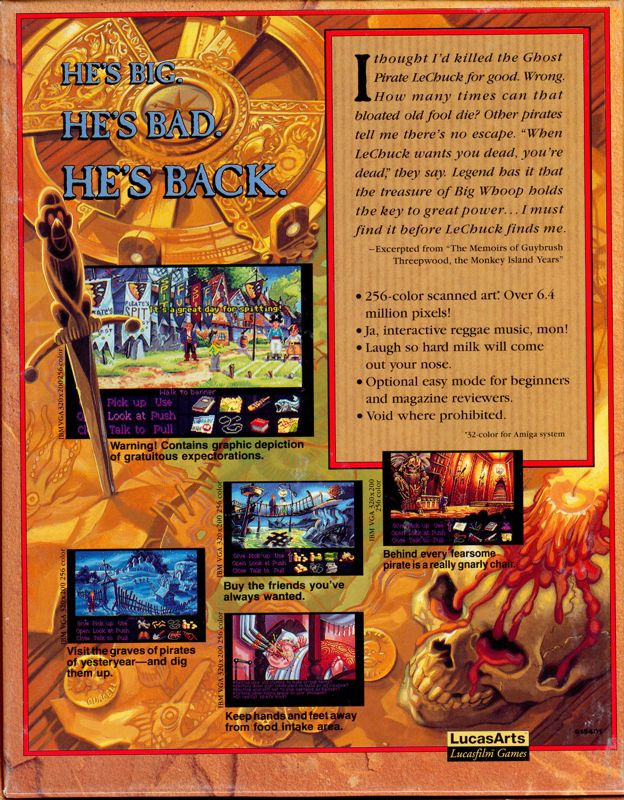
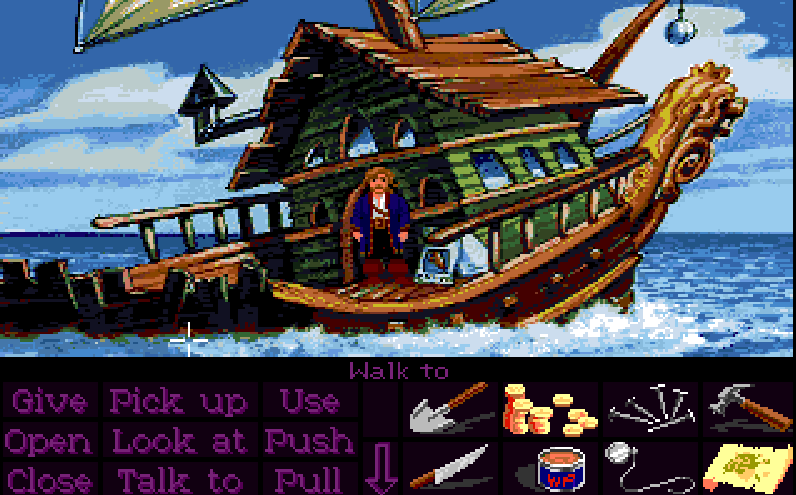
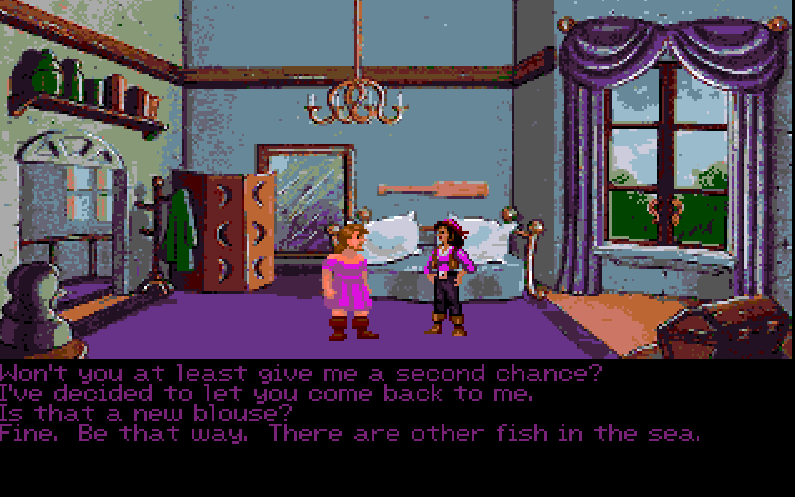
The Secret of Monkey Island took the adventure-gaming world by storm, and it didn’t take long before fans were begging Lucasfilm (now LucasArts) for a sequel. Their answer was Monkey Island 2: LeChuck’s Revenge—a game larger, richer, and arguably the most expansive entry in the entire series in terms of locations and puzzles. At the time it was a graphical marvel, and even today its pixel-art screenshots look like tiny masterpieces. I love this game for many reasons, not least because it belongs to one of the greatest series ever made. Forget George Stobbart and his not-so-broken sword, or Rincewind who can barely cast a spell—Guybrush Threepwood is back for his second adventure.
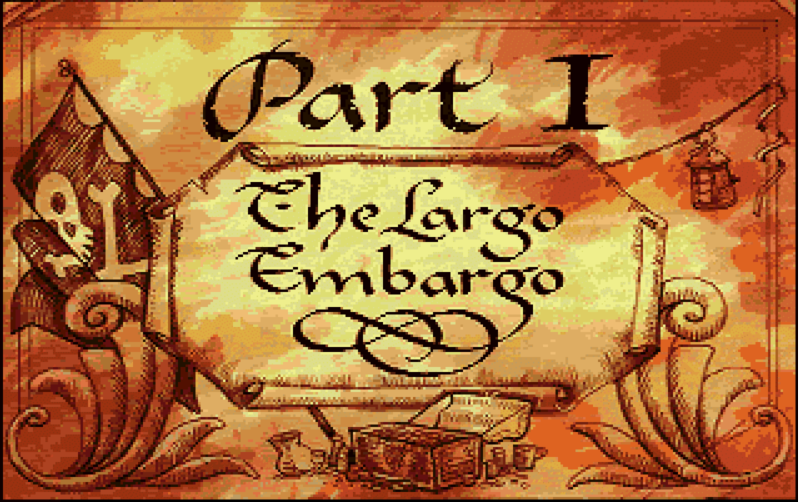
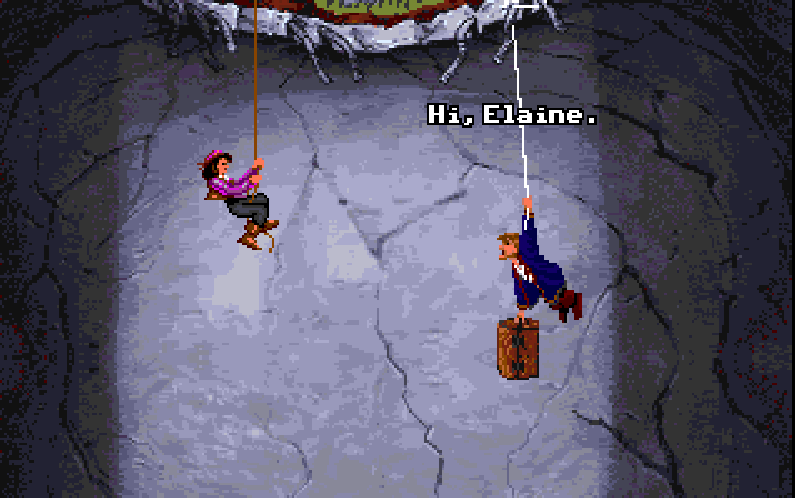
“My name’s Guybrush Threepwood, and I’m selling these fine leather jackets!”
Guybrush returns as the star of Monkey Island 2, still proudly (and constantly) retelling the story of how he defeated the ghost pirate LeChuck. He’ll repeat the tale to anyone within earshot—whether they want to hear it or not. Pirates warn him that once LeChuck wants you dead, “you’re dead!” Fortunately, Guybrush believes he’s safe… at least until whispers of LeChuck’s resurrection start up again. This time the ghost pirate has help from a menacing new ally: Largo LaGrande. Meanwhile, Guybrush begins his search for the legendary treasure known as Big Whoop.
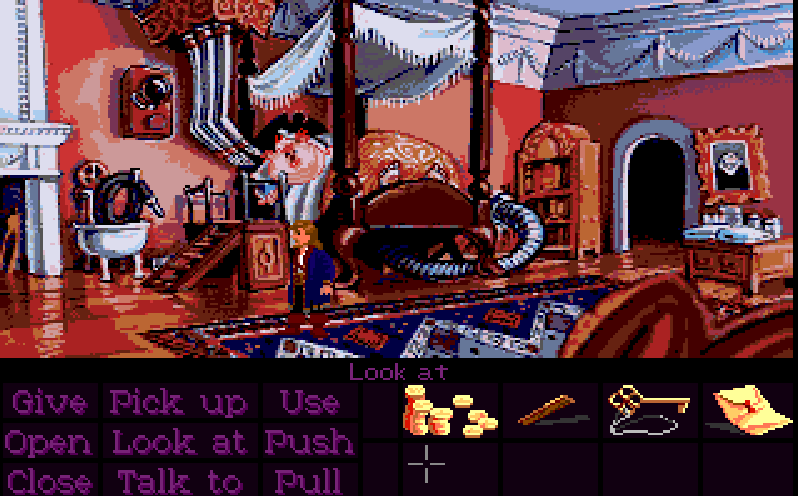
It’s a fantastic storyline—funny, mysterious, and gripping right to the end. Guybrush may have grown a beard, but he’s still as wonderfully awkward as ever, armed with witty lines and terrible bragging. Many familiar faces return, including Elaine Marley, Stan, Herman Toothrot, and the Voodoo Lady, along with the “men of low moral fiber.” Several new characters join the cast as well, some of whom—like poor Wally—end up becoming fan favorites.
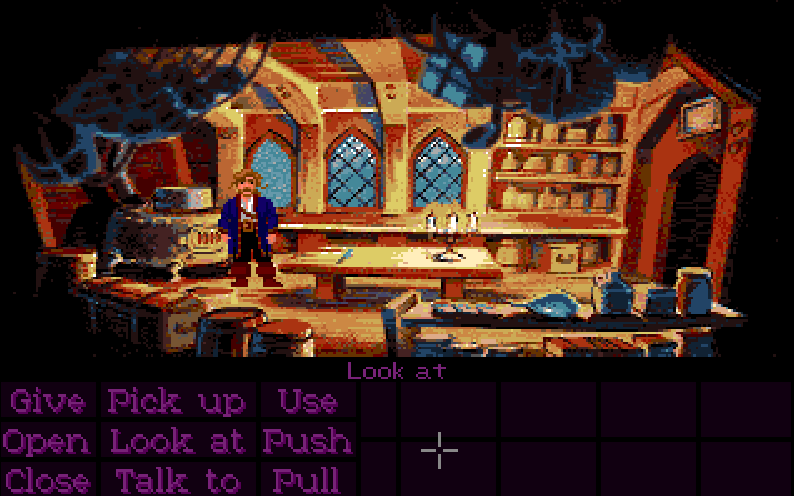
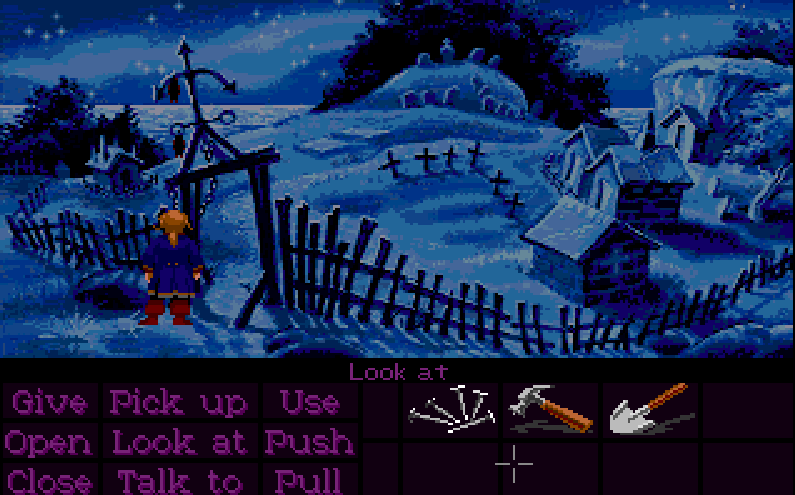
A curious question: why do a few new islands magically appear on the Caribbean map with every Monkey Island game?
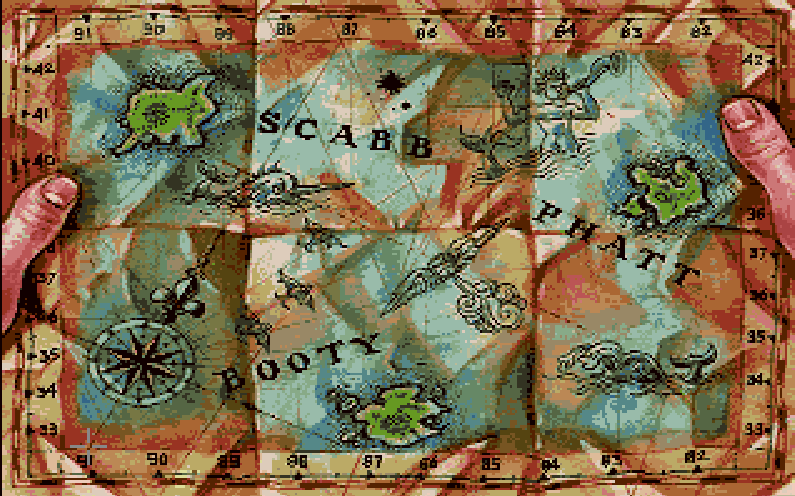
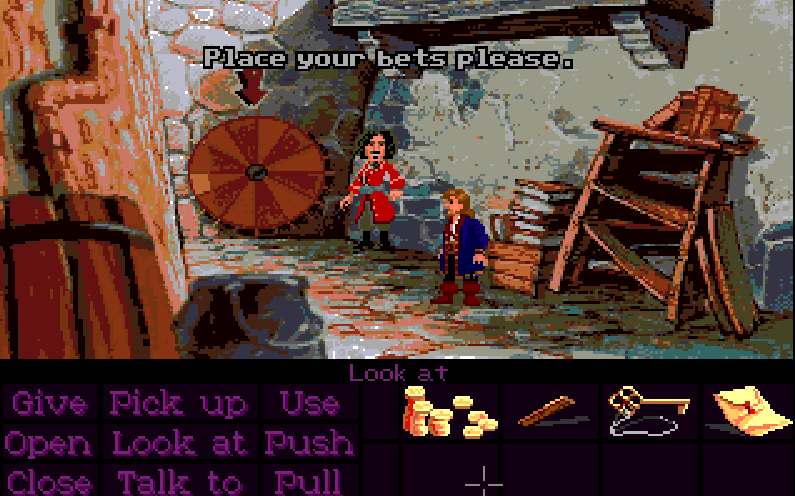
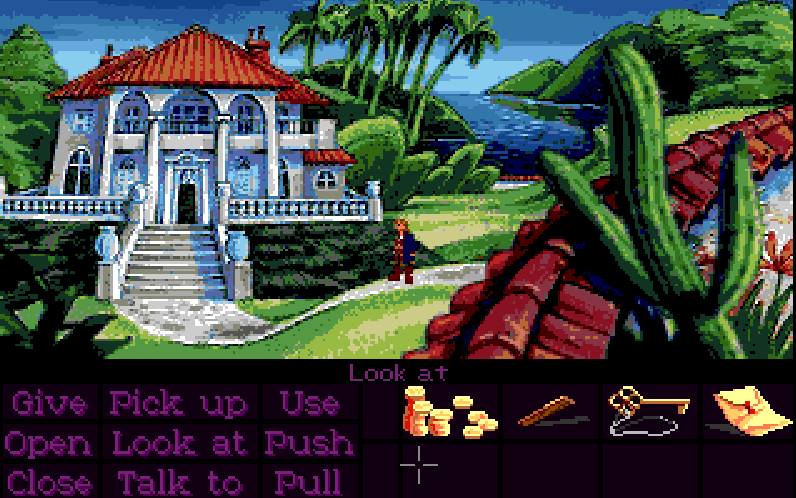
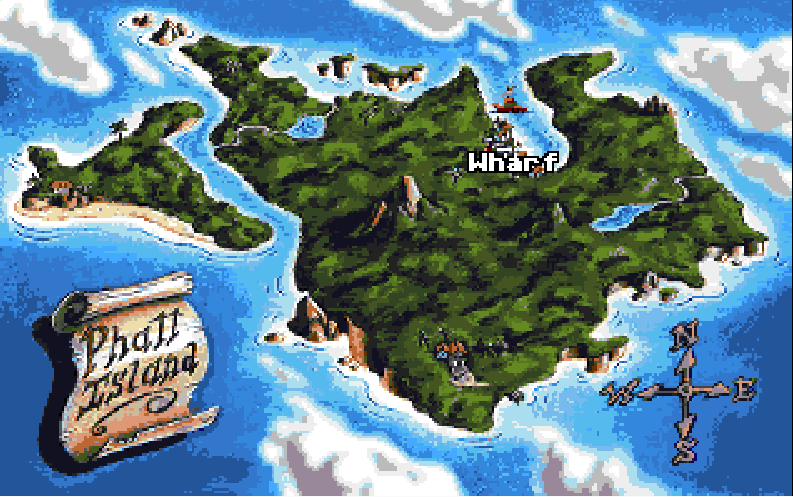
In the first game, Guybrush explored Melee Island and Monkey Island. In LeChuck’s Revenge, he travels to Scabb Island, Booty Island, Phatt Island, and eventually Dinky Island. Each features its own personalities, puzzles, and brilliantly weird locations. The game also introduced a unique feature not repeated in later titles: during Act II, you can freely travel between the three main islands. A puzzle on Scabb may require an item from Booty, which unlocks something on Phatt, and so on. This constant inter-island problem-solving makes the world feel larger and more interconnected.
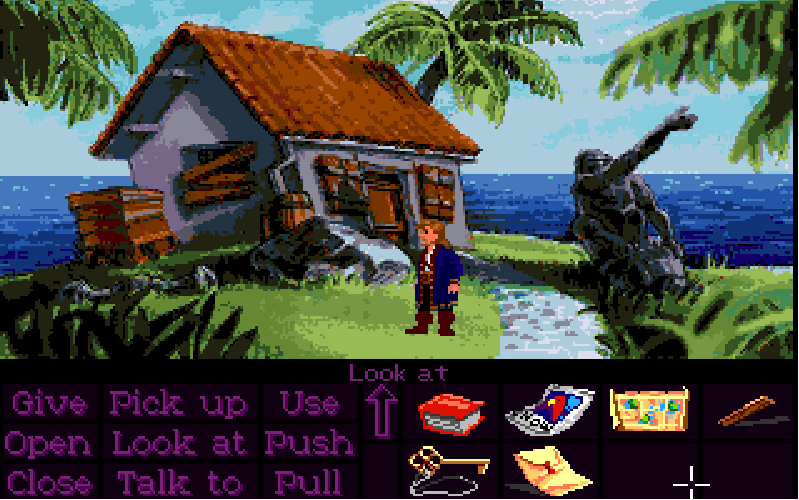
Monkey Island 2 also stands apart in tone and design. There’s no insult swordfighting this time, but it is considered the toughest game in the series—and also one of the funniest. The classic SCUMM point-and-click interface returns, complete with verbs like Open, Close, Give, Pick Up, Look At, Talk To, Use, Push, and Pull. As with most Monkey Island games, dying is almost impossible, though not entirely. Still, the game is forgiving, and the joy is in experimentation.
The music is one of the standout elements that made the series so iconic. From the unforgettable Monkey Island theme to Wally’s nervous little tune, from Booty Island’s laid-back melodies to the dramatic finale, LeChuck’s Revenge delivers a soundtrack that never misses. There’s no voice acting—but the writing and atmosphere carry everything effortlessly.
The game isn’t getting any younger, and original copies can be very hard to find. LucasArts released a collection bundling the first three games back in the early 2000’s for the PC, and there were also White Label budget releases of MI1 and MI2 (which is how I managed to grab one for £4.99). Note that the standalone version of MI2 only includes the harder difficulty; the Bounty Pack includes both Easy and Hard. For newcomers—and reviewers—Easy Mode really helps.
So, is it better than the first?
In my opinion, absolutely. It’s longer, deeper, packed with clever puzzles and brilliant writing, and worth every penny. It’s also darker than the original, driven by themes of revenge, yet it still captures the series’ trademark charm and humour.
Endless Plus Points
- The second entry in one of the greatest series of all time
- Fantastic characters
- Four unique islands to explore
- A superb storyline
- Two difficulty modes
- Challenging puzzles and excellent writing
- More voodoo than you can shake a chicken-foot at
- Over 30 hours of gameplay
- Hilariously funny
So why was/is Monkey Island such a Classic?
Hundreds of games hit the shelves every year, but only a handful truly stand out, and even fewer earn the title of genuine classics. These are the games people remember for years—the ones that broke new ground and did something no one else had attempted.
Period Examples:-
Lemmings—hailed by UK developers as the most original and impressive game of its year.
Rainbow Islands—named one of the greatest games of all time back in the late 80s/early 90s.
And The Secret of Monkey Island—a game that won’t be forgotten anytime soon.
But what exactly makes Monkey Island a classic? Here’s a different spin on the theory:
There are only two types of computer game.
Type One: Action games—built around reaction speed, coordination, and timing (like shoot-’em-ups).
Type Two: Thought games—based on logic, problem-solving, and planning (like puzzles or adventures).
I’ll allow a third category: games that combine both. But ultimately, every game fits into one of these areas—action, thought, or a mix.
That might seem reductive at first. After all, we’re used to hearing about dozens of genres—from scrolling platformers, arcade adventures, FPS etc, etc, etc. But think about what you do in these games, and you’ll see they all boil down to those core skills.
Critics often claim computer games are “bad for you,” usually because of their imagery—fast cars, spaceships, martial arts. But only a fool would confuse something like Call of Duty with reality. The skills you build while playing are pure reflex and logic, nothing more sinister.
This is why the early arcade titles—Space Invaders, Pac-Man, Defender, Asteroids—are still revered today. They were pure action or pure thought, unburdened by flashy graphics or elaborate themes.
With only two fundamental types of games, creating a truly original classic sounds difficult. And sometimes it is. But not always.
It’s not what you do—it’s how you do it.
Take Lemmings. At heart, it’s just a puzzle game. But the mechanics are beautifully designed, the difficulty expertly balanced, and the presentation fits the concept perfectly. And what do players remember most? Those adorable lemmings waddling around, falling off cliffs, and exploding. Why? Because they gave the game personality.
The Secret of Monkey Island is a different kind of classic—arguably even more of a mould-breaker. Underneath, it’s still a logic puzzle adventure. But what set it apart was its humour. It was probably the first truly funny computer game. The incentive to keep playing wasn’t just to reach the ending, but to enjoy every step along the way. Even the combat system—a battle of wits rather than weapons—was a stroke of genius.
And that, perhaps, is what defines a real classic. Great gameplay is essential; it has to be very good, because we’ve seen so many variations before. But what elevates a game to greatness is that extra spark—that touch of personality, charm, or originality layered on top.
Monkey Island was hilarious from beginning to end. That’s why it will be remembered for years and now decades—unless, of course, LeChuck’s Revenge manages to surpass even that…
Overall
The best game on the Amiga and a well deserved rosette and top slot.
BREAKDOWN:
GRAPHICS: 96%
MUSIC/SFX: 95%
PLAYABLITY: 99%
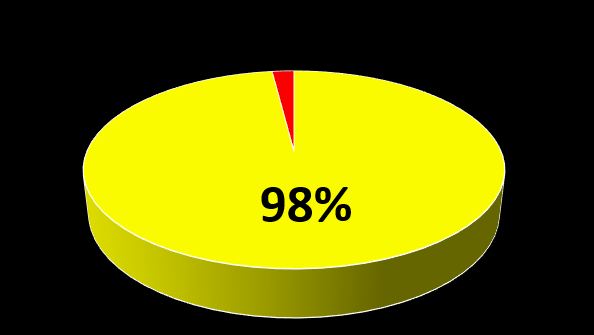
OVERALL: 98%
Platform: Amiga
Genre: Adventure-Point&Click
Developer/ Publisher: LucasArts
Release: 1991
Franchise: Monkey Island