I absolutely adore this film — it’s one I can happily put on as background while working on my laptop or tackling simple chores around the house. That said, I’ll set personal affection aside and approach this review as objectively as possible.
In the wake of Arnold Schwarzenegger’s ascent to becoming the world’s biggest movie star in the 1990s, the martial arts genre began rapidly moving upmarket. Established figures such as Steven Seagal, Jean-Claude Van Damme, and Jeff Speakman found themselves starring in slicker productions with larger budgets, improved scripts, and more exotic locations. Watching these polished efforts now, however, I occasionally feel nostalgic for the scrappier Chuck Norris and Bruce Lee films — movies with fewer pretensions and a kind of manic intensity that felt raw and unfiltered.
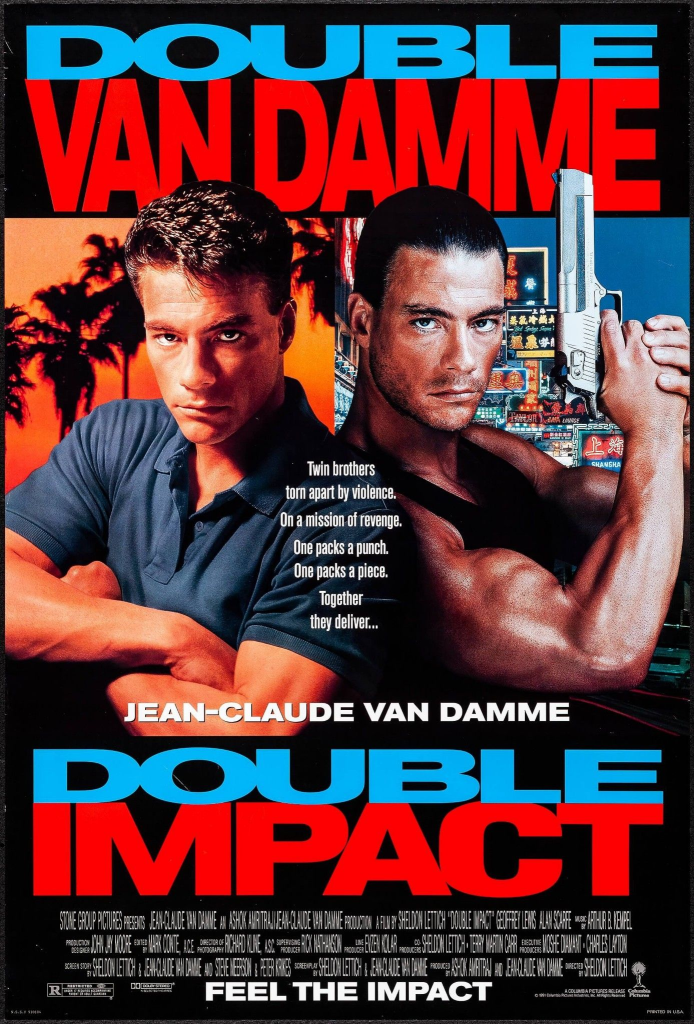
Take Double Impact, for instance. The Van Damme vehicle boasts production values worthy of a mid-tier James Bond outing, is filmed on location in Hong Kong, and features a fan-favourite villain in Bolo Yeung. There’s even enough money in the budget for a scene where two brand-new Mercedes-Benz touring cars are casually dumped into the harbour.
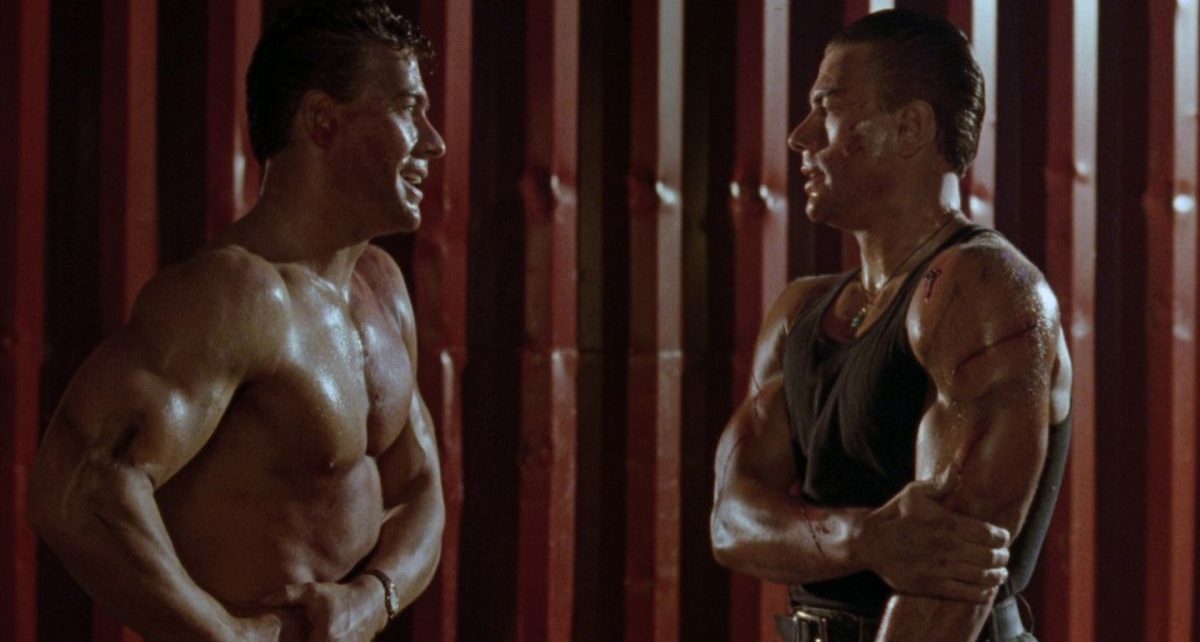
Van Damme plays twin brothers, Chad and Alex, separated at birth and kept apart throughout the film thanks to then-cutting-edge split-screen effects. One twin has fallen in with a criminal underworld — drug smuggling being the inevitable line of work — while the other remains comparatively innocent. Yet, in a coincidence beloved by twin-themed narratives, both somehow grow up to become elite martial artists.
The film is slickly produced, peppered with a few amusing lines, and serves as a textbook example of what might be called the Principle of Evil Marksmanship. In movies, villains can fire endless rounds from machine guns without hitting anything of consequence, while heroes rarely miss. In Double Impact, assassins unload torrents of bullets into a car, only for everyone important to the plot to emerge miraculously unharmed. It’s a sequence that truly has to be seen to be believed.
Films like this reliably attract enthusiastic crowds — often intense-looking teenagers closely studying the fight choreography, and older, more world-weary men who cheer each on-screen death as if it were a punchline. Personal preferences among martial arts stars vary, of course. One of my own favourites has always been Steven Seagal, whose screen persona suggests a reluctant philosopher driven to violence by an unforgiving world.
Van Damme, by contrast, presents a more conventional leading-man appeal. Belgian by birth, he speaks English with barely a trace of an accent, possesses classically handsome features, and projects less inner turmoil than Seagal. He appears entirely at ease performing acrobatic feats, often with his feet improbably higher than his head.
Ironically, the genre’s immense success in the 1980s and 1990s confined its stars to perpetual leading roles. Van Damme and Seagal were always placed at the centre of their stories, bound by rigid formulas and ritualistic plot patterns. In the long run, this may have limited their range. Both actors possess more talent than many of their films allowed them to show, and it’s a shame the market rarely permitted them to take supporting roles in more ambitious projects. They would have made excellent villains — and audiences might actually believe them if they missed a shot.
Hollywood eventually recognized this, and many martial arts stars enjoyed a late-career revival once freed from heroic constraints, discovering new life by embracing their darker, more villainous sides.