Goldeneye it is not ….. but then again perhaps it doesn’t try to be.
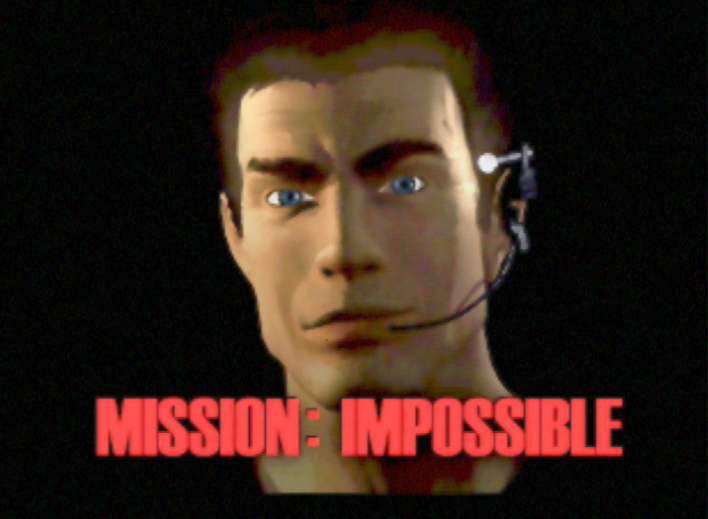
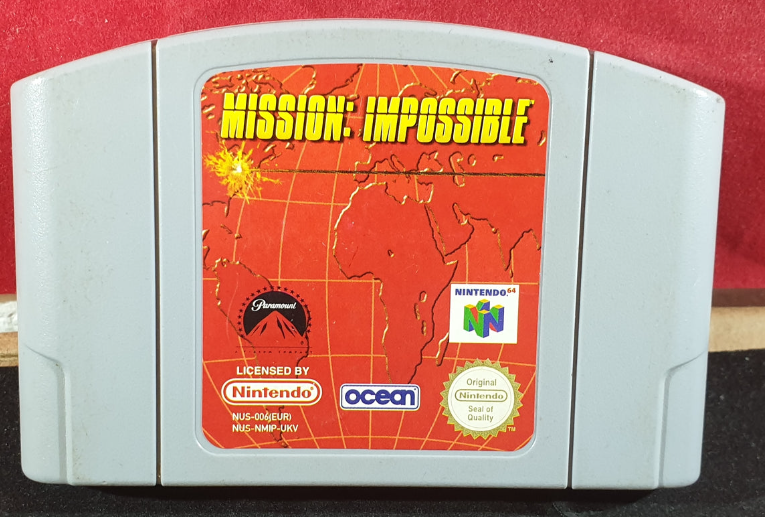
Mission: Impossible generated significant hype and anticipation among Nintendo 64 (N64) enthusiasts and gaming media prior to its release. The game’s extended development period and multiple delays contributed to the buzz surrounding it. This was in line with the belief expressed by renowned game designer Shigeru Miyamoto that a delayed game, if meticulously refined, would ultimately surpass expectations, while a rushed game would remain subpar indefinitely. However, little was known at the time about the game’s actual development process.
Surprisingly, Mission: Impossible’s delays were not primarily caused by the fine-tuning process but rather by a complete overhaul of the game. It underwent a transitional journey across two different consoles, initially starting as a 2D game for the Super Nintendo Entertainment System (SNES). Throughout its development, the project passed through the hands of several teams before reaching store shelves.
Unfortunately, by the time Mission: Impossible finally launched, it faced the daunting challenge of competing with the immensely successful GoldenEye 007. The latter had set an exceptionally high standard for action games based on movies. Nevertheless, Mission: Impossible offered a distinctive feature that set it apart from GoldenEye: despite both games being categorized as “3D shooters” based on popular action films, they provided unique gameplay experiences with notable differences…
Graphics
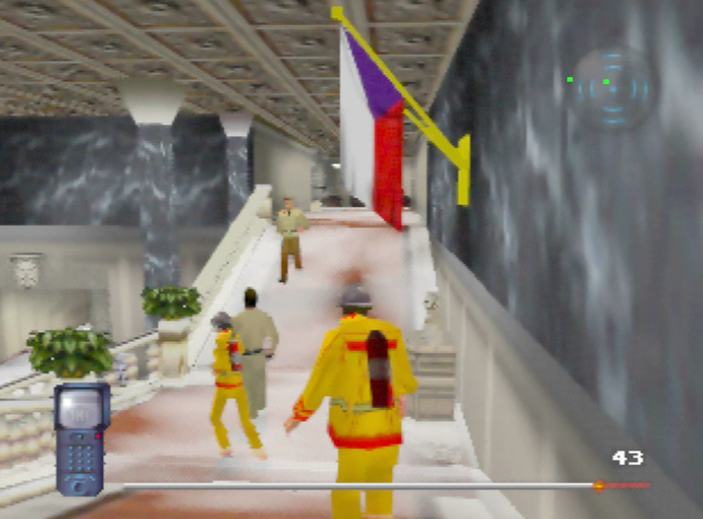
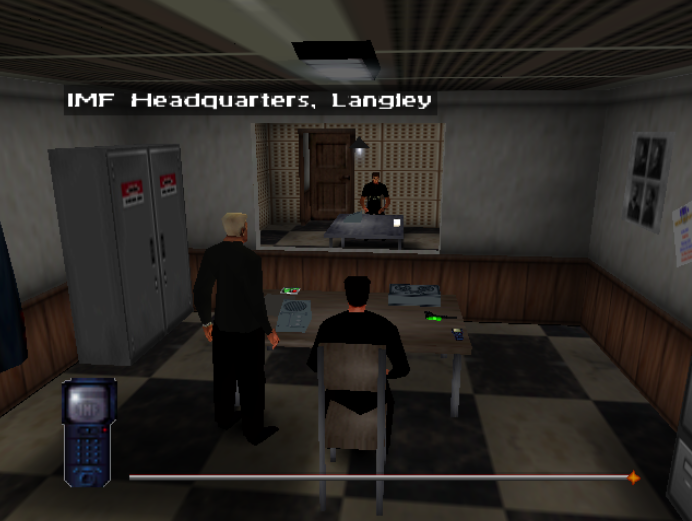
The graphical presentation in Mission: Impossible is a mixed bag. While the character models appear somewhat blocky and exhibit stiff animations, they do showcase some commendable facial details and textures. Although the in-game characters that resemble their movie counterparts may not be entirely accurate, this discrepancy likely stems from licensing constraints rather than a lack of effort from the developers. In fact, the chosen character designs are not inherently displeasing, and the absence of a faithful representation of Tom Cruise is hardly a noticeable flaw. Notably, the game incorporates visually appealing effects when utilizing various items. For instance, when employing the face-copying device, the new face smoothly fades onto the player character, showcasing a neat graphical transition. Additionally, the inclusion of unconventional weapons like spray cans or fire extinguishers adds a touch of creativity, accompanied by satisfying particle effects, which were relatively rare during the game’s release.
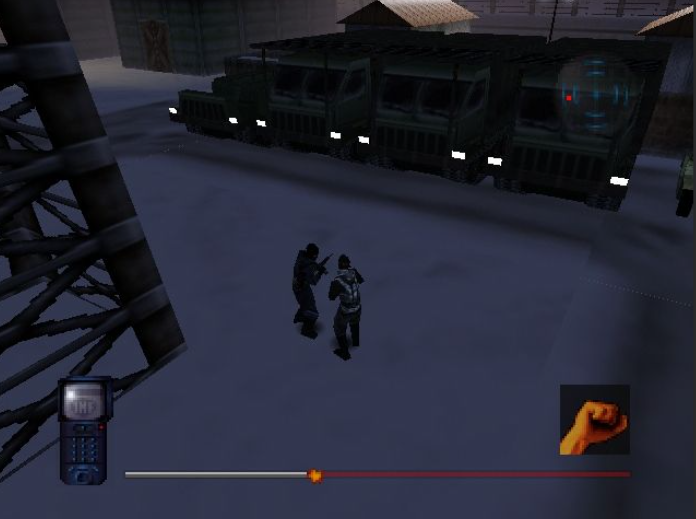
Regarding the level design, Mission: Impossible offers a variety of environments. While the edges of the levels may appear rough, the textures themselves are well executed. However, the game tends to suffer from an excessive amount of anti-aliasing, resulting in occasional fuzziness. The most significant issue arises in outdoor levels, where a prevalent flaw common among many Nintendo 64 games manifests: an overabundance of fog, leading to a limited draw distance. This limitation can pose challenges when engaging enemies from afar, and unfortunately, the camera does not consistently alleviate the problem. While it generally stays adequately positioned indoors, it often seems to have a mind of its own when given freedom in outdoor areas. Of course, players have the option to enter aiming mode or make slight adjustments using the D-pad, but encountering unseen enemies remains an exasperating aspect of gameplay.
FX & Music
In terms of music, Mission: Impossible offers some commendable tracks, despite the limitations of the N64 sound chip that prevent them from fully blossoming in terms of audio quality. However, the compositions and melodies themselves are genuinely impressive. One standout track that perfectly fits the atmosphere and remains memorable is the piano tune played during the embassy party. It exudes an Eastern European vibe, and the added touch of having a pianist situated near the bar adds a charming element to the experience. While some of the other tracks may feel slightly out of place, such as the more action-oriented theme played during a rooftop level where shooting enemies is prohibited, the overall quality of the music remains noteworthy. However, due to the limited number of songs in the game, it’s possible to become fatigued by them towards the latter stages.
Another noteworthy aspect of Mission: Impossible is its implementation of voice acting, which provided a glimpse into the future of gaming. Although the voice acting is limited to the mission-introductory cutscenes, while in-mission dialogue is conveyed through text, it is still a notable inclusion in an early N64 game. Despite the heavy compression affecting the voiceovers, the chosen voice actor delivers a performance that effectively portrays a strict and no-nonsense tone. Additionally, the protagonist, Ethan, delivers one-liners during combat, such as “Way to go!” after landing headshots or “Sleep tight” when sedating an enemy. While these lines may come across as slightly cliché and repetitive, they contribute to the overall auditory experience, particularly considering that the weapon and explosive sounds are relatively subdued.
Story
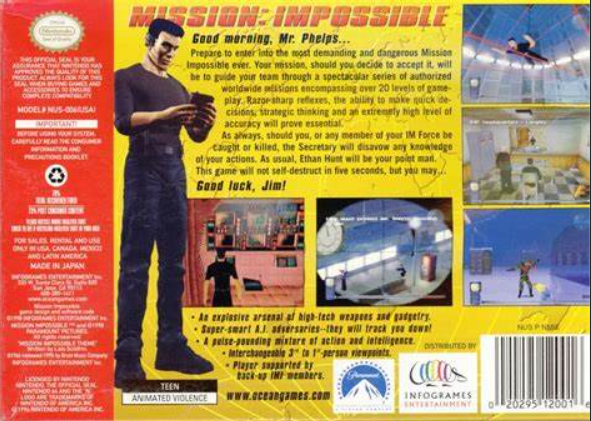
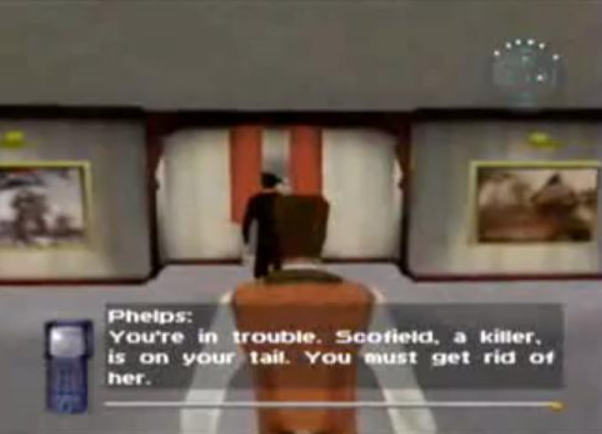
The game loosely adapts the storyline of the 1996 movie, and this departure from strict adherence to the source material turns out to be a positive aspect. Games that closely follow a specific source material often feel constrained. In Mission: Impossible, the main plot revolves around Ethan Hunt, an IMF (Impossible Mission Force) agent sent to Eastern Europe to recover a stolen IMF agent list before enemy spies can crack its encryption key. Following the successful completion of this mission, the agency suspects a mole within the IMF, and Ethan becomes the prime suspect. The rest of the game centers on clearing his name and uncovering the true culprit. Most of the story is conveyed through text-based information displayed on briefing screens before each mission. Without prior knowledge of the movie, certain elements may feel disconnected and lack natural context due to the limited information provided.
However, the game effectively recreates the key events of the movie in three missions, with some additional levels added to enhance the gameplay experience and provide more content. Some characters have been modified or introduced, adding further depth to the game. Additionally, two extra missions are included, despite being somewhat disconnected from the main storyline. While they may seem out of place from a narrative standpoint, they contribute to the overall gameplay, offer insights into the daily operations of the IMF, and provide additional screen time for supporting characters.
Controls
The control scheme in Mission: Impossible follows the conventions of N64 games, with the control stick used for movement, Z for shooting, and Start to pause the game. However, the item management system in this game introduces an interesting twist. Instead of accessing a pause menu or scrolling through weapons one by one, you can bring up a menu without pausing the game by pressing B. Subsequent presses of B allow you to navigate through the menu and select different weapons. By pressing C down while the menu is open, you can switch to the items menu, and both menus can be scrolled through using additional button presses. Confirmation of a selection is done with the A button, which is also used for interacting with characters or using the chosen item. Although it may initially sound complex, this item management system is actually quite efficient. Once you become familiar with it, the process becomes fast and seamlessly integrated into the gameplay.
Controlling Ethan, the main character, can be somewhat challenging. He feels a bit sluggish and occasionally doesn’t respond precisely to your commands, particularly when it comes to jumping. On the other hand, combat controls work quite well. As long as you don’t fall for the camera angles that hide enemies, shooting adversaries is relatively easy by aiming with the R button. It takes some time to line up a shot due to the slow movement of the crosshairs, but the enemy AI is forgiving enough that the combat remains manageable.
Gameplay
As previously mentioned, Mission: Impossible may seem like an attempt to capitalize on the success of Goldeneye, which paved the way for agent movie adaptations in the gaming industry. However, it’s important to note that Mission: Impossible had been in development for several years prior to Goldeneye’s release, and it offers a very different gaming experience. The most notable difference is the shift from a first-person perspective in Goldeneye to a third-person perspective in Mission: Impossible. Another significant distinction is that while Goldeneye featured levels with both objectives and intense firefights, Mission: Impossible focuses primarily on puzzle-solving and stealth, making it one of the early examples of the stealth genre.
Let’s consider the first level as an example. Your mission is to infiltrate an army base and destroy a terrorist vehicle. You start by being dropped off at a river landing outside the base. Your objective is to navigate deeper into the base without alerting the guards. You can accomplish this by eliminating a guard inside a cabin and using the facemaker device to assume his appearance. Then, you locate a parcel that needs to be delivered to another part of the base. By handing it to a driver, you can progress further. Depending on your approach to dealing with the guard, it’s possible to complete this level without firing a single shot. Many levels feature only a handful of guards, and those with larger numbers usually emphasize evasion rather than direct confrontation. The game’s focus is on stealth, item discovery, and puzzle-solving, and it excels in these areas. The pacing allows you to proceed at your own speed, and the controls complement this gameplay style. However, one drawback of the slower-paced levels is that if you fail a mission near the end, you have to replay the entire level from the beginning. This can be frustrating, despite the relatively short duration of each level. Additionally, some levels are more combat-oriented, but they tend to be less impressive. While the game isn’t particularly difficult, the sluggish aiming controls are offset by the enemy AI’s lack of strategic intelligence. Enemies often approach and then hesitate before taking a shot, failing to display any survival instinct. Instead of seeking cover, they act as bullet sponges.
That summarizes the core gameplay experience. The levels vary in length and quality, with most following a similar formula but with occasional unique additions to keep things fresh. While the game doesn’t offer a wide range of weapons, the abundance of gadgets adds variety, and certain puzzles can prove challenging, ensuring that your initial playthrough won’t be a breeze. There are two difficulty modes available: Possible and Impossible. The latter is not as daunting as the name suggests but introduces additional objectives and adjusts enemy accuracy and damage to your disadvantage. This extends the game’s lifespan, and you won’t find yourself wishing for more content once you’ve completed it on both difficulty levels.
Overall
Given the considerable hype surrounding its release, it’s difficult to deny that the game falls somewhat short of expectations. However, taking it for what it is, Mission: Impossible remains an intriguing title that offers a unique gameplay experience not commonly found elsewhere. It doesn’t attempt to compete with industry giants, but it still manages to provide enjoyable gameplay. However, it does suffer from certain issues, such as limited visual draw distance and clunky action mechanics, which are partially compensated for by subpar AI. It may be worth a playthrough for fans of the Mission: Impossible movies, N64 enthusiasts seeking new titles, or those simply looking for something different. Nevertheless, overall, it doesn’t leave a particularly remarkable impression and gets a Retro Gamer score of 64%
BREAKDOWN:
GRAPHICS: 75%
MUSIC/SFX: 80%
PLAYABLITY: 52%
OVERALL: 64%

Platform: Nintendo 64
Genre: Action-Adeventure-General
Developer: Infogrammes
Publisher: Ocean
Release: 1998
Franchises: Mission Impossible