Before Sonic became Sega’s Figurehead….. they relied on other figureheads…..
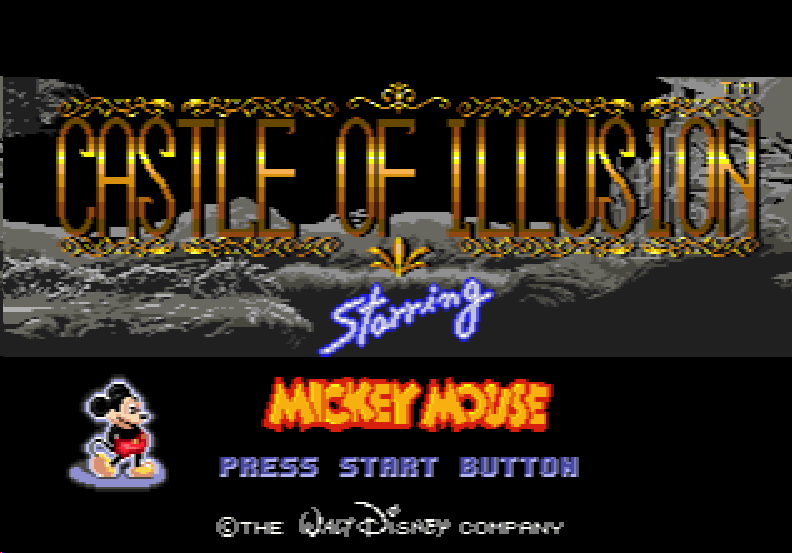
The Mega Drive, or Genesis in North America, is often synonymous with Sonic the Hedgehog, a game that not only defined the console but also played a pivotal role in the Sega-Nintendo rivalry of its time. Sonic’s iconic status has overshadowed the fact that he didn’t arrive at the console’s inception. Instead, Sega initially relied on other titles, such as sports games and arcade conversions, to establish its foothold in the market.
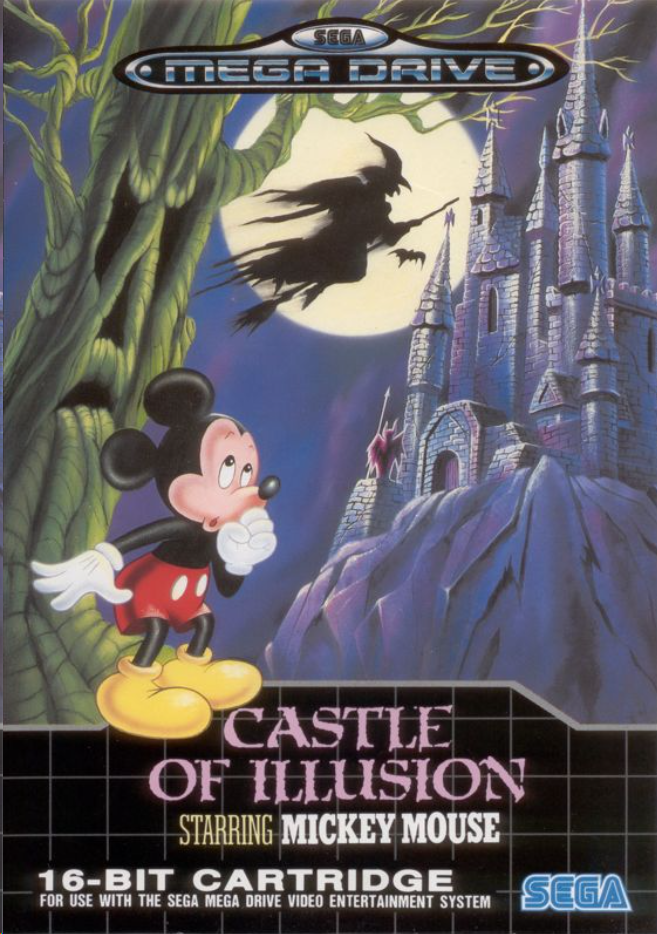
One standout example is Castle of Illusion Starring Mickey Mouse. Launched near the end of 1990, this Disney-licensed title developed by Sega showcased the capabilities of the 16-bit Mega Drive in a gaming landscape still dominated by the 8-bit NES. Its release coincided with the debut of the Super Famicom in Japan, highlighting Sega’s early mastery of the future of gaming.
Receiving widespread acclaim upon release, Castle of Illusion paved the way for a series that spanned multiple platforms, including the Master System and Game Gear. In 2013, the game received a remake, further solidifying its enduring legacy. Over thirty years later, Castle of Illusion remains a standout title, a testament to its enduring quality and impact on gaming history.

Graphics
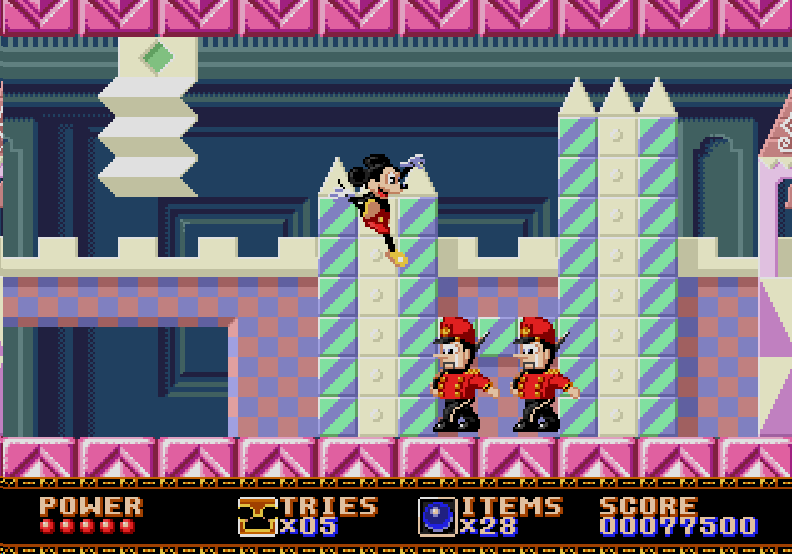
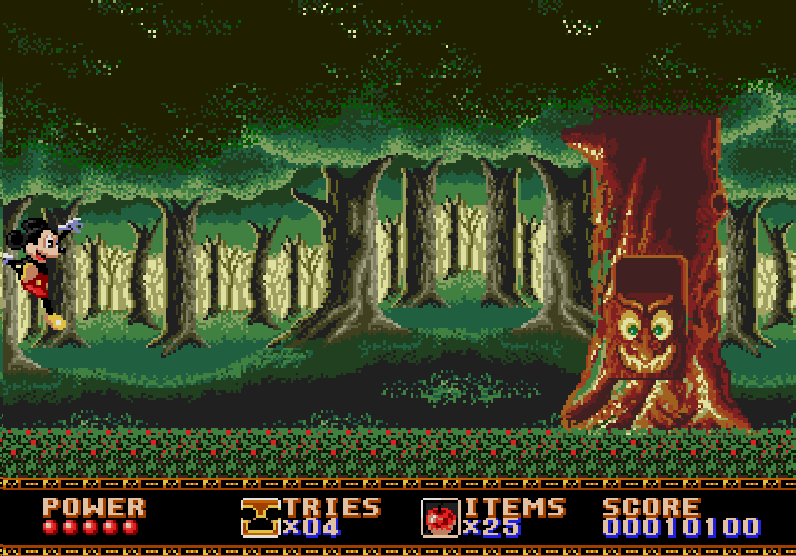
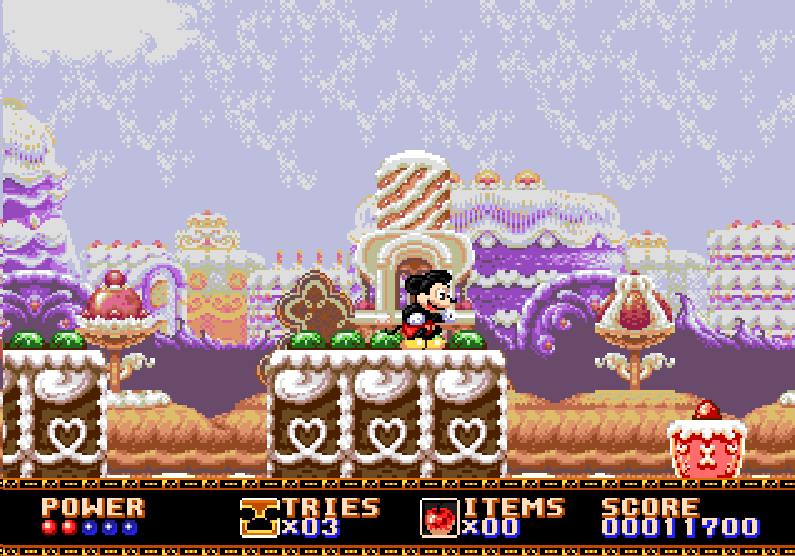
Castle of Illusion boasts charming visuals that are a delight to behold. Mickey and his adversaries are expertly drawn and animated, capturing the iconic character’s spirit with finesse. Whether he’s confidently marching forward with a cheerful grin or anxiously ducking or balancing on precarious edges, Mickey’s expressions never fail to captivate. The attention to detail is commendable, with bosses exhibiting subtle gestures like wiping their brows, and toy planes teetering precariously in mid-air. However, the true standout is the backdrop scenery, which is richly detailed and teeming with dynamic elements. From the enchanting purple heart-shaped plants in the forest to swinging bells in Toyland and turning gears in the tower, each environment is a visual feast. Personally, the land of sweets holds a special place in my heart, boasting a lush and vibrant cake-filled landscape.

Sound/FX
The soundtrack of Castle of Illusion is a whimsical accompaniment to the game’s enchanting visuals, striking a delicate balance between charm and sentimentality. For instance, the music in Toyland exudes a playful parade vibe that complements the marching toy soldiers perfectly, while the storm level’s tune evokes memories of Bionic Commando. The castle’s track, appropriately haunting, sets the tone for the eerie atmosphere. However, my favourite piece of music undoubtedly comes from the candy level, featuring delightful tap-dancing rhythms. The sound effects, though typical of the genre with their bouncy nature, fulfil their role without fuss. The only minor drawback is that the audio can sometimes sound a bit canned and tinny. Nonetheless, the strength of the soundtrack compensates for this slight imperfection.
Gameplay
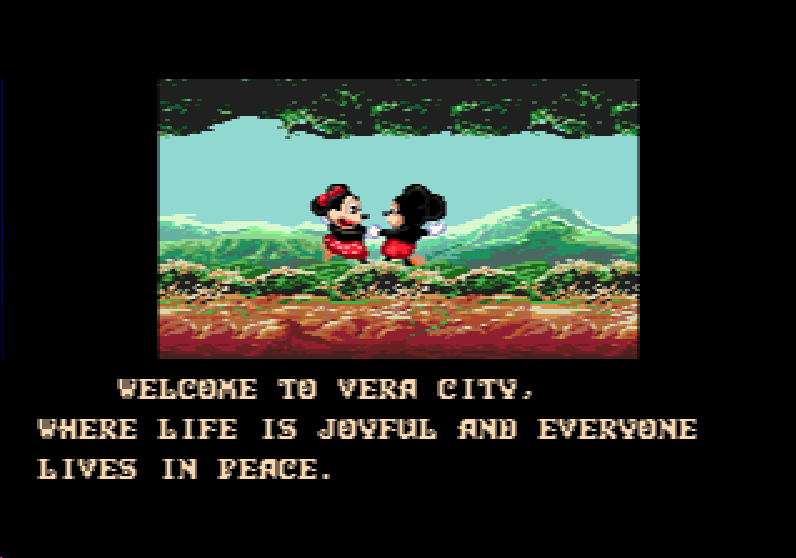
In the picturesque meadows surrounding Vera City, Mickey and Minnie Mouse find themselves joyfully dancing until ominous grey clouds roll in, heralding the arrival of Mizrabel, a jealous witch who swiftly kidnaps Minnie out of envy for her beauty. Determined to rescue his beloved, Mickey embarks on a perilous journey to Mizrabel’s castle, armed with the mission to gather the seven magical gems needed to defeat the wicked witch and save Minnie.
At its core, Castle of Illusion offers a classic platforming experience. Mickey possesses a range of abilities, including running, jumping, butt stomping, and ducking, as he navigates through platforms, chasms, enemies, and traps. Along the way, he can collect various objects to restore health, earn extra lives, and amass points, including apples and marbles to hurl at adversaries.
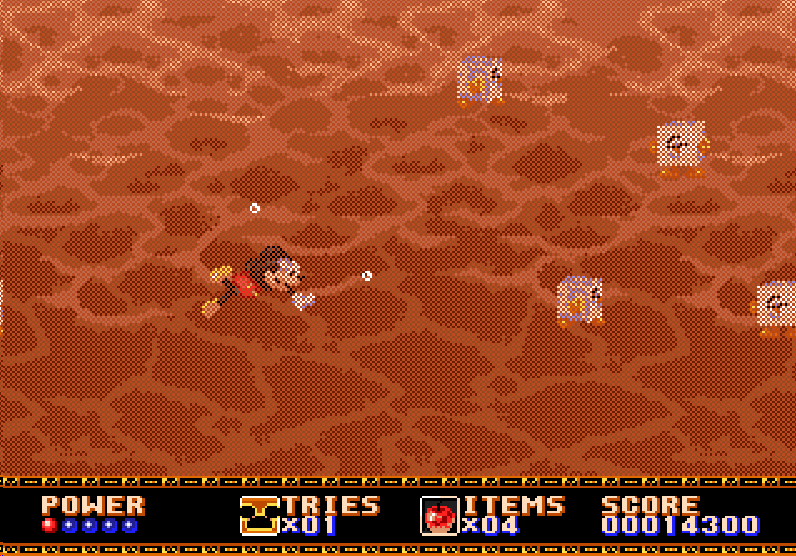

The level design showcases ingenuity, with surprises and variations abound. Clever tricks, like initially spotting the exit upon entering a level, only to ascend to the top for a key, demonstrate the game’s penchant for inventive gameplay. Dynamic elements such as recurring tidal waves, areas that flip upside down, and underwater mazes add depth and challenge. Moreover, secrets abound, some leading to the coveted magical gems. Despite featuring only five levels, Castle of Illusion feels expansive and rich in content.
Controlling Mickey is a delight, albeit with a few nuances. While he moves with precision, his slow pace and floaty jump mechanics may take some getting used to. The necessity of an additional button press for the butt stomp, though not unique, may initially feel unintuitive for players accustomed to other platformers. Nevertheless, Mickey’s precise movements and platform navigation skills are nearly flawless.
Despite its Disney branding and relatively short length, Castle of Illusion offers a satisfying level of challenge. While initially straightforward, the game progressively tests players’ skills, with hazards and enemies posing threats at every turn. Boss encounters can be particularly challenging, demanding precise timing and strategy. Nonetheless, with careful play, completing the game in thirty to forty minutes is feasible. Castle of Illusion’s enduring appeal lies in its ability to entice players back for repeated playthroughs, each time relishing in the nostalgia of its levels and bosses.


Overall
As mentioned earlier, Castle of Illusion holds a significant place in gaming history, serving as one of the early showcases of Sega’s capabilities before Sonic stole the spotlight. Its importance extends beyond mere technological prowess, shaping Sega’s relationship with Disney and setting a benchmark for licensed games. Thankfully, its appeal transcends historical significance, as Castle of Illusion remains a delightful gaming experience to this day. With its captivating visuals and enchanting sound design, coupled with polished gameplay, the game effortlessly charms platformer enthusiasts. While its brevity and lack of originality may be noted, Castle of Illusion’s exceptional quality and sheer enjoyment overshadow any such shortcomings.
BREAKDOWN:
GRAPHICS: 92%
MUSIC/SFX: 93%
PLAYABLITY: 88%
OVERALL: 91%

Platform: Sega Mega Drive / Genesis
Genre: Action-Platformer-2D
Developer/ Publisher: Sega
Release: 1990
Franchises: Mickey Mouse : Illusion