Pong gets a makeover, equally addictive and highly playable, a little gem…..
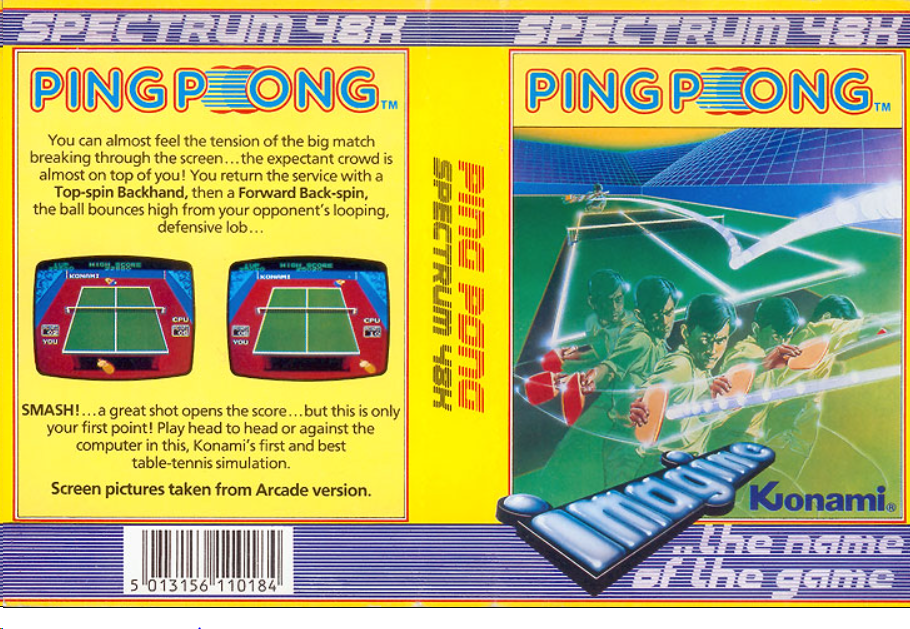
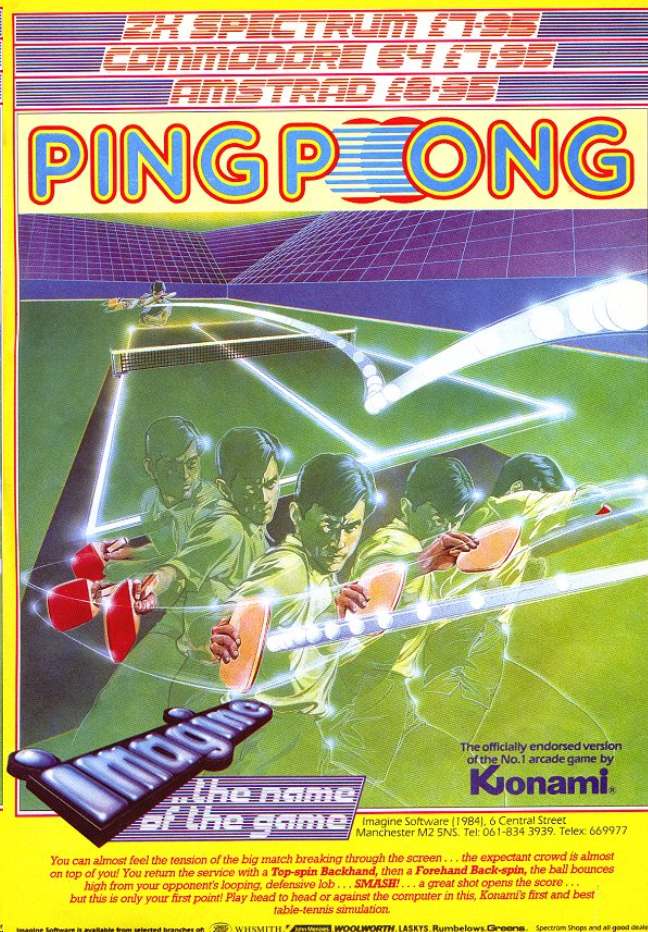
Years after the groundbreaking Pong game, which played a pivotal role in the emergence of the computer games industry, Imagine took on the challenge of releasing a Ping Pong game, a departure from the early bat and ball game, resembling the sport of table tennis more closely. Imagine’s Ping Pong is an adaptation of Konami’s arcade game, faithfully adhering to all the rules and regulations of table tennis, all overseen by a computerised judge – leaving no room for tantrums in this virtual match. The objective is simple: be the first to score eleven points, with an exception for a 10-10 tie, and there are five levels of play, ranging from a leisurely pace to an oriental-style frenzy at the speed of sound.
The game adopts an overhead perspective from behind the base line of the table, positioning your bat about a quarter of the way up the screen. Player One consistently plays from this viewpoint, while the computer or second player occupies the top end of the table, with no change of ends. Score and other pertinent information, including the judge’s calls, are displayed on either side of the table. The audience is split on both sides of the screen – the right side cheering for the computer or Player Two, and the left side erupting in applause and cheers when you score a winning point.
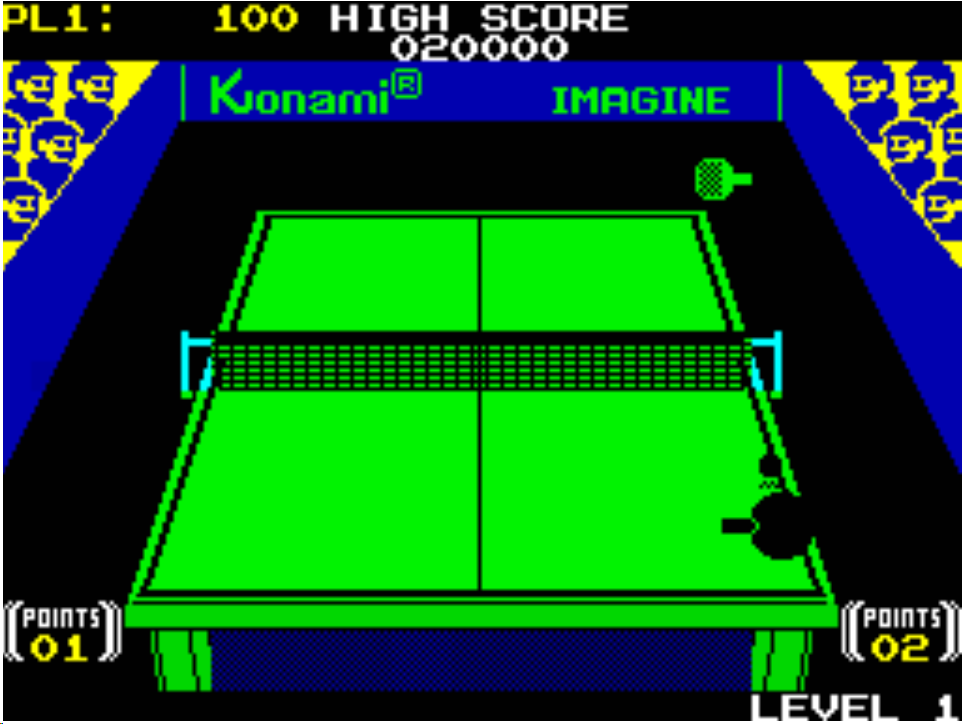
Control of the bat is managed by a phantom disembodied hand, a clever solution to avoid the challenges posed by full-size figures, making it difficult to see the table. In this game, timing and precise shot execution are crucial. The computer continually tracks the ball, ensuring your bat is always positioned behind it. As the ball approaches the bat, select the type of shot by pressing left, right, or up. For instance, pressing right results in a cut, left produces a drive, and up delivers a smash (only smash when the ball is lobbed). The timing of the strike dictates the direction in which the ball moves, veering to the left or right of the table. The default grip is forehand, but pressing the fire button switches to backhand mode, enabling you to return a ball hit to the extreme right-hand corner of the table.
The initial serve in the game is always the responsibility of the human player, accomplished by pressing down to toss the ball into the air, followed by a regular shot. A seven-second time limit applies to each serve, and failing to cross the net within this timeframe awards a point to the opponent. Once five points are scored, the service changes hands unless the score is tied at ten points each. In the latter case, service alternates until one player gains a two-point advantage or reaches fifteen points.

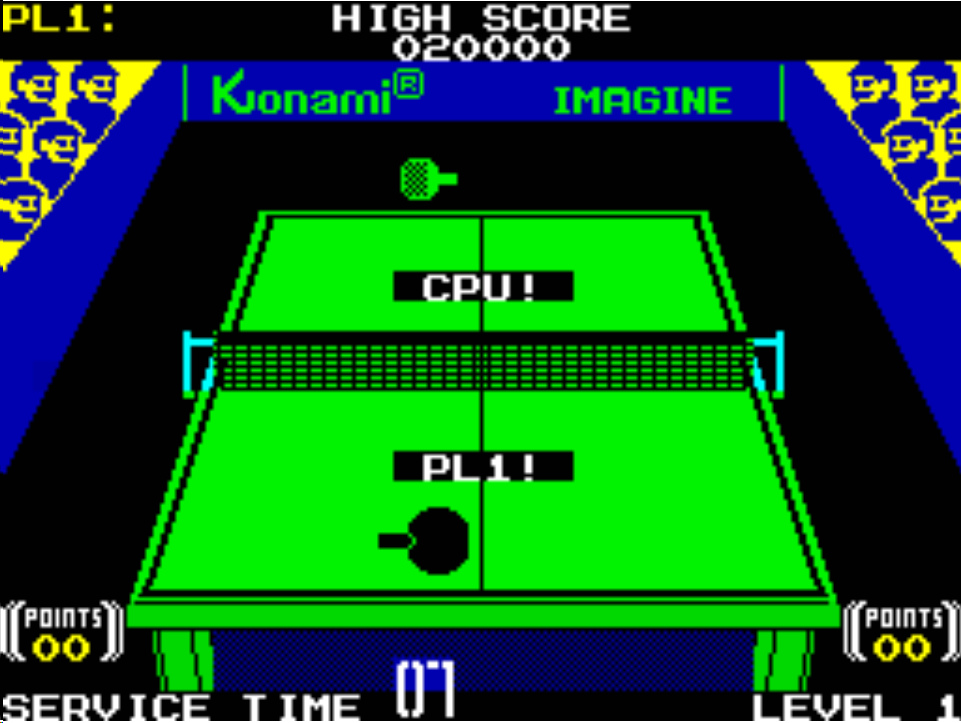
Beyond the crucial match points, players can accumulate points during the game, vying for a coveted spot on the Ping Pong high score table. Each successful hit earns the player ten points, with a substantial five hundred points awarded for executing a successful smash and securing a game point. As a bonus at the end of each play level, the winner receives one thousand points for each game point in the winning margin.
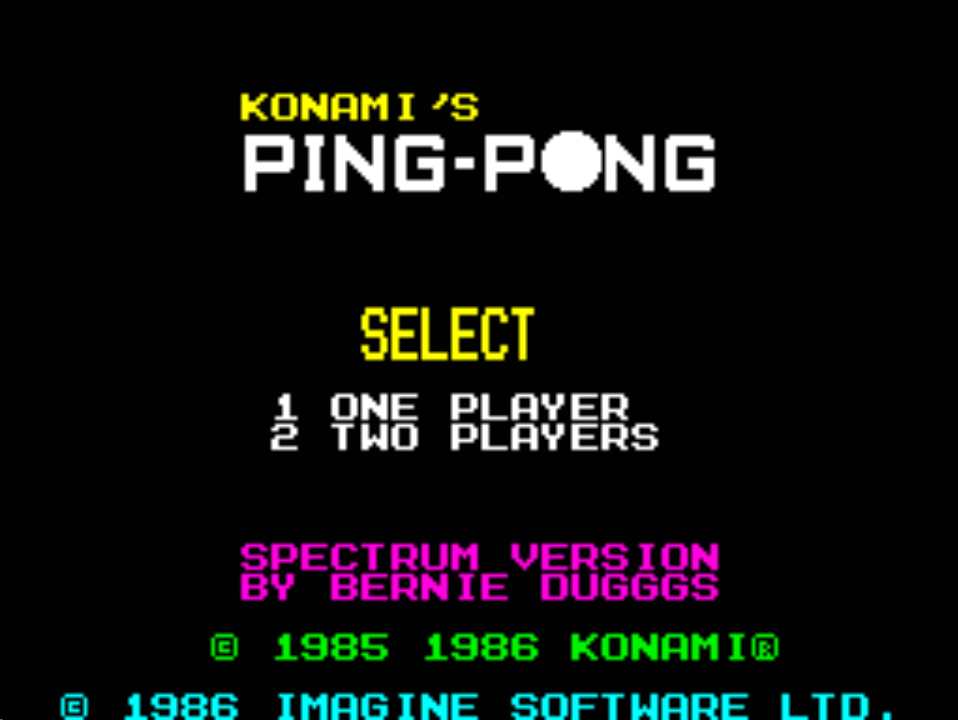
In the one-player mode, where the human player competes against the Spectrum’s Central Processing Unit, the difficulty level advances with each CPU loss. Two-player matches follow a best-of-three format to determine the winner, allowing participants to choose their preferred skill level.

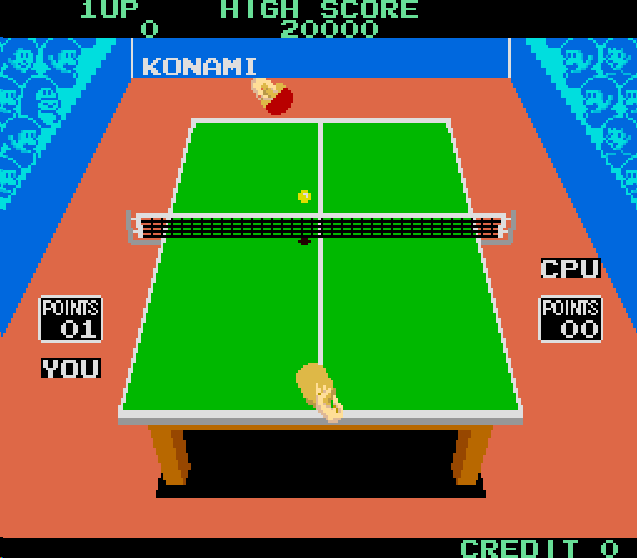
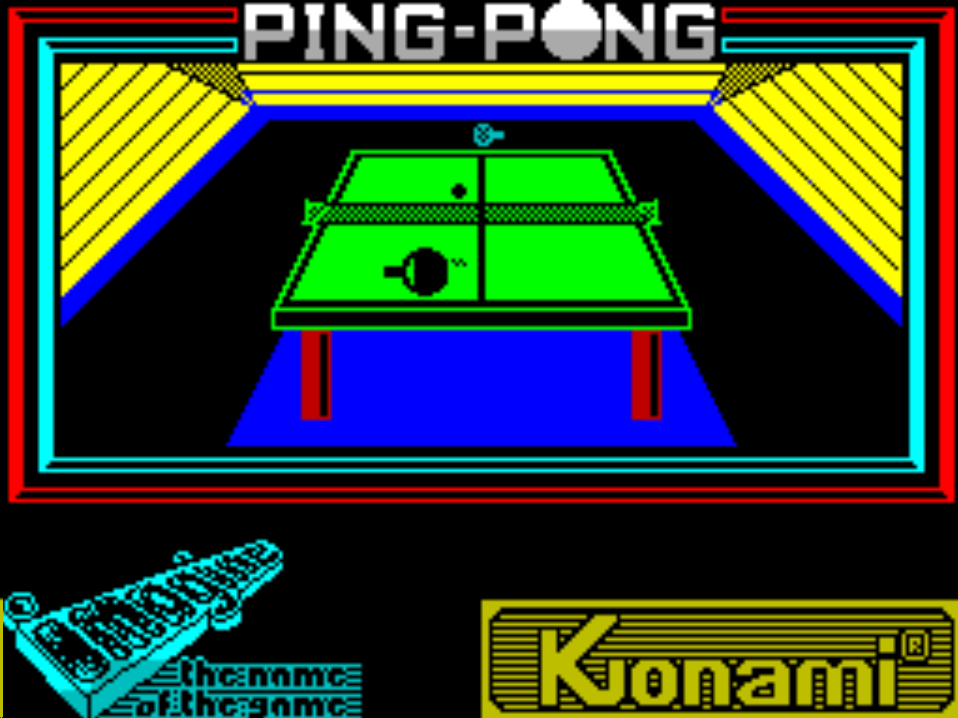
While the loading screen may not meet the typical standards of Ocean/Imagine quality, any concerns are swiftly dispelled upon hearing the tune – undoubtedly one of the Spectrum’s finest! My primary critique lies in the somewhat limited graphics and movement of the bat; it appears to be controlled solely by wrist action at the moment. However, aside from this minor flaw, the game boasts all the essential elements of a great gaming experience – it’s visually appealing, highly addictive, and exceptionally playable. Imagine has truly delivered a standout title deserving of a Gold Star.
BREAKDOWN:
GRAPHICS: 82%
MUSIC/SFX: 95%
PLAYABLITY: 91%
OVERALL: 90%

Platform: ZX Spectrum
Genre: Sports-Individual-Other
Developer/ Publisher: Imagine
Release: 1986
Franchises: Konami’s Sports