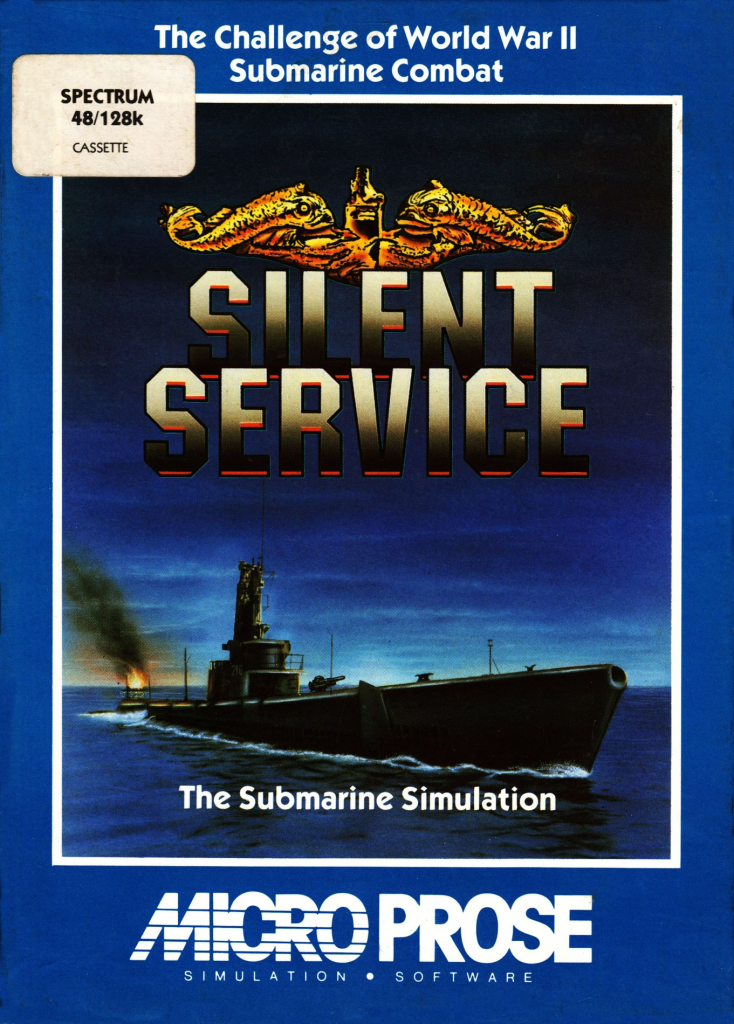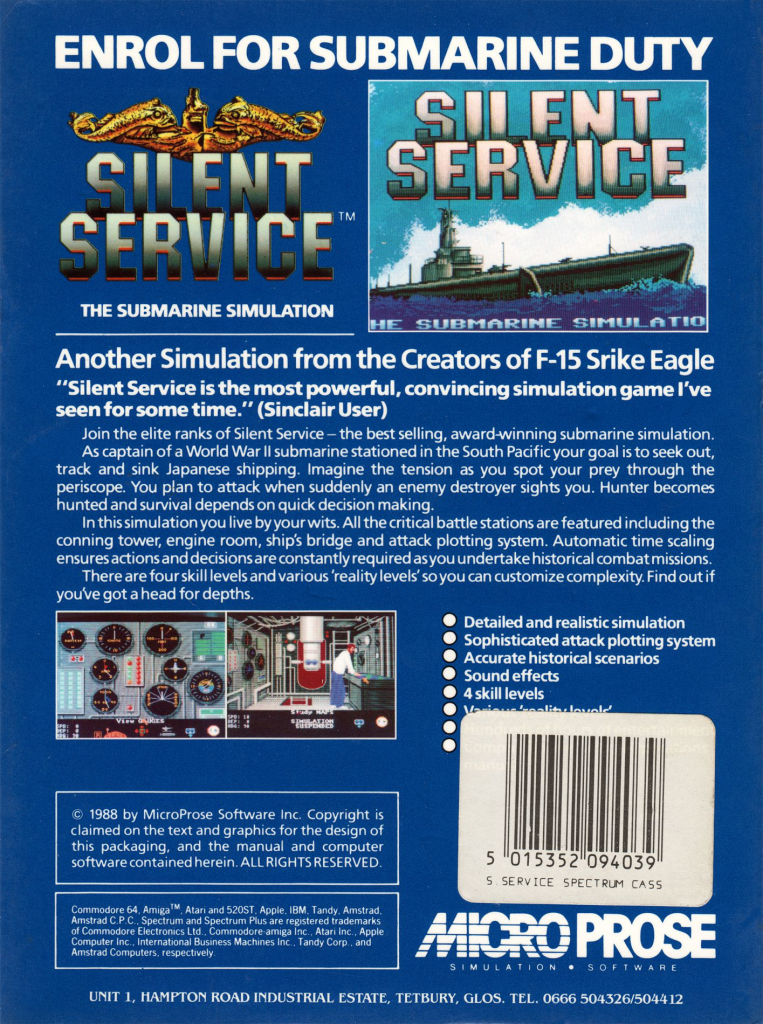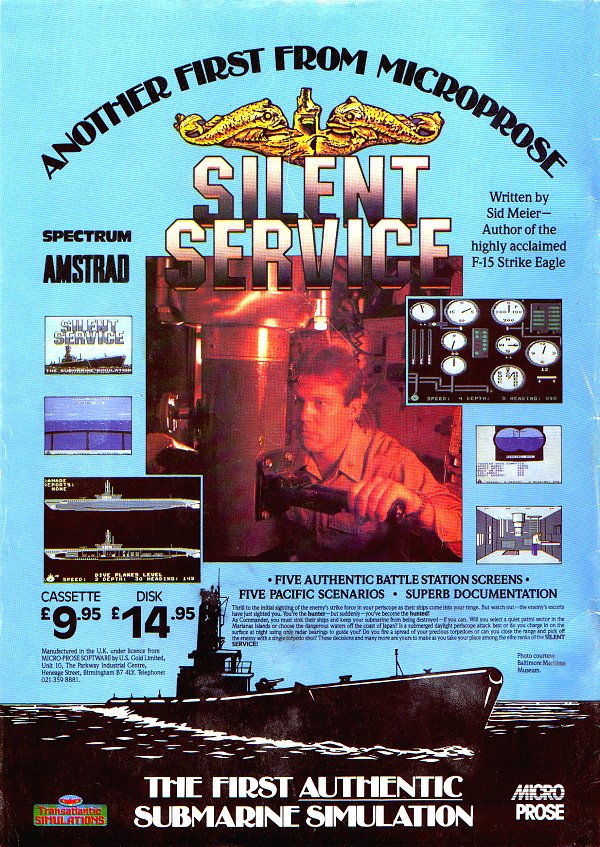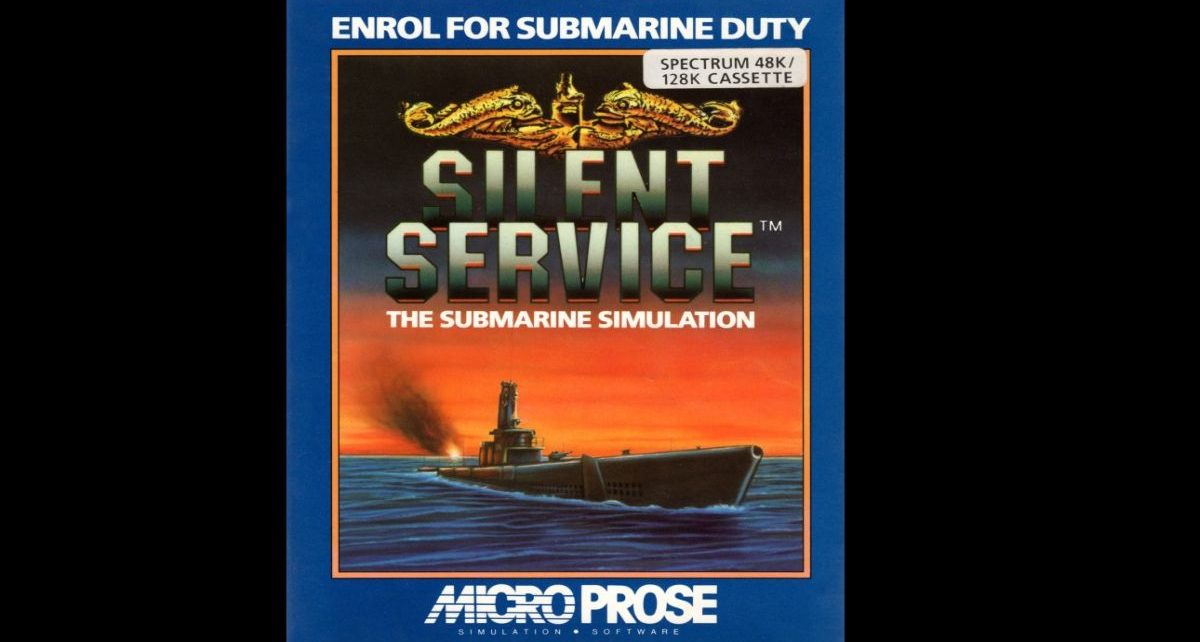
Extremely complex, but impressively squeezed onto the 48k Spectrum……
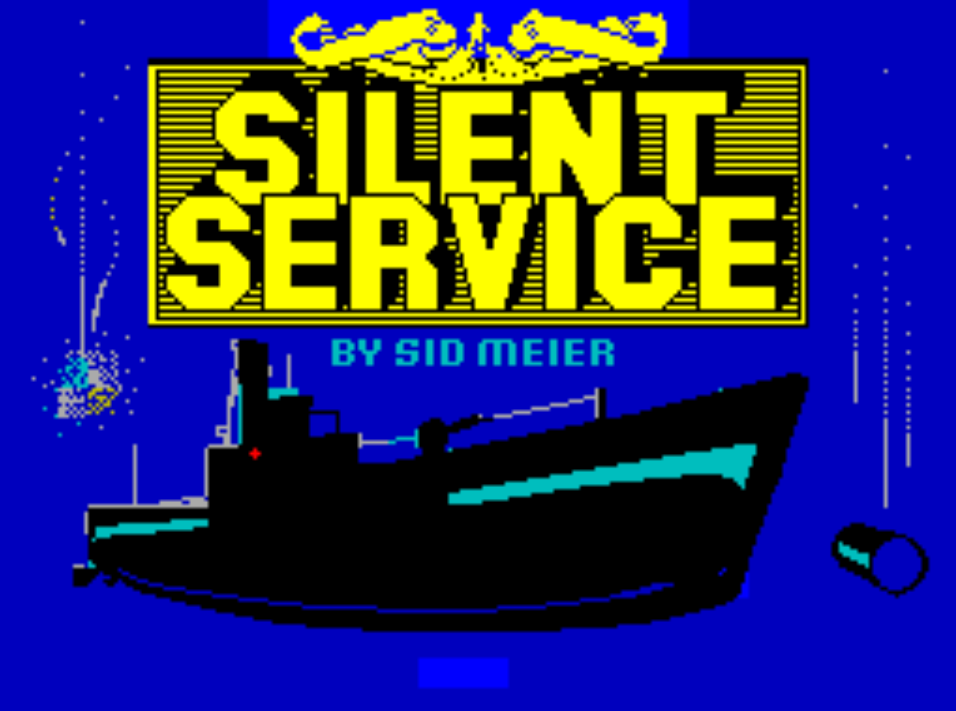
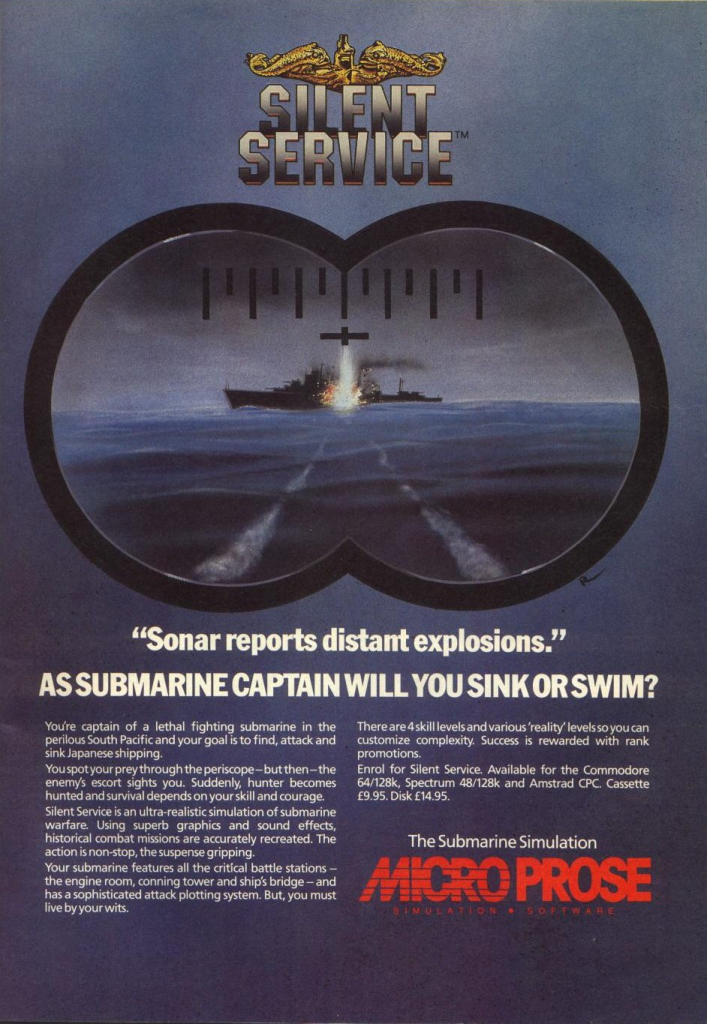
Silent Service is backed by exceptionally thorough documentation, packed with historical background, technical explanations, and a wide range of maps, diagrams, and charts. For a simulation of this depth, clear and engaging instructions are essential—and in terms of content, the game delivers. Unfortunately, the physical format of the “manual” lets it down. Instead of a proper booklet, the instructions are printed on two large glossy sheets intended to be folded repeatedly to fit into a cassette case. Unsurprisingly, they quickly become creased, worn, and difficult to navigate. Had this material been presented as a bound manual, it would have been a pleasure to consult; as it is, finding specific information can be frustrating. That said, the instructions themselves are excellent, detailing the game’s scenarios, stages, and the real-world history and operation of the equipment being simulated.
The game offers three types of scenario: Practice, Convoy Action, and War Patrol. Practice places your submarine near the Allied base at Midway, surrounded by stationary cargo ships that are conveniently anchored in place. This mode is designed to teach you the submarine’s controls and the mechanics of aiming and firing torpedoes. While generally useful, the supposedly stationary ships have an annoying tendency to drift, making it harder than expected to line up clean shots.
Convoy Action scenarios drop you into specific historical encounters somewhere in the Pacific. You face moving convoys using submarines appropriate to the era, making these missions far more challenging than Practice. Targets think, react, and evade—forcing you to plan attacks carefully.
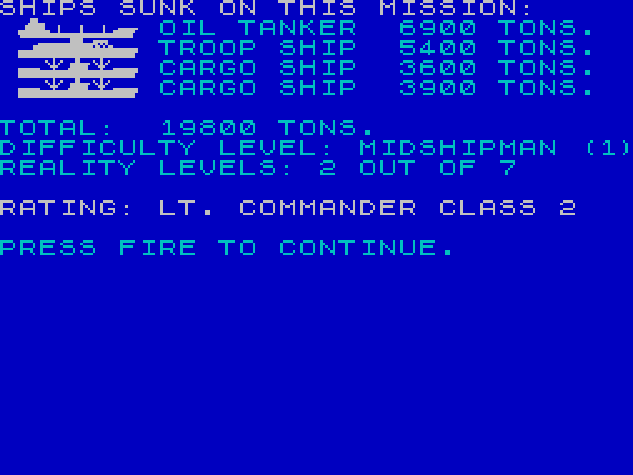
The heart of the game, however, lies in the War Patrol mode. This is where Silent Service truly shines. You begin with fifty days of fuel and complete freedom to roam the South Pacific. Using a large-scale strategic map, you must locate convoys yourself and engage them at your discretion. The goal is simple: sink as much Japanese shipping tonnage as possible.
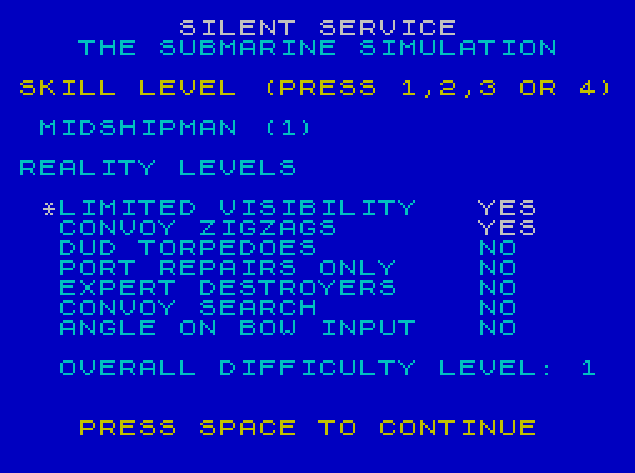
Difficulty is handled through two complementary systems. In addition to four skill ranks—Midshipman, Lieutenant, Commander, and Captain—the game includes “reality levels.” These allow players to toggle realistic complications such as limited visibility or the possibility of defective torpedoes. This layered approach to difficulty is one of the game’s strongest design choices, letting players fine-tune the experience to their taste. In War Patrol mode, you can also choose from a range of historically accurate submarines, each reflecting the technological advancements made over the course of the war and fully explained in the documentation.
While the first two scenarios simply place your submarine in the appropriate combat zone, War Patrol opens with a sweeping map of the entire South Pacific. Convoys are plentiful, and shipping lanes—where high-value targets such as oil tankers and troop transports are most likely—are clearly marked. The map can be zoomed through four levels of magnification, eventually revealing your submarine’s position relative to nearby vessels.

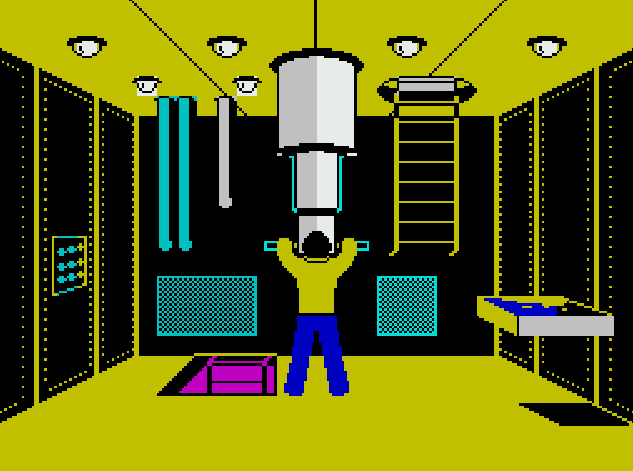
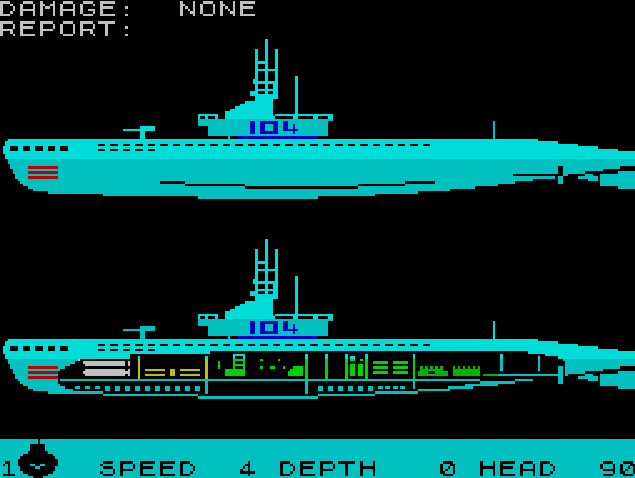
Submarine control centers around the conning tower screen, which displays an interior view complete with a crewman representing the player. This perspective can feel oddly detached, as though you’re stepping in and out of your own body, slightly diminishing the sense of immediacy. Functionally, however, it acts as a visual menu: moving the crewman to different positions selects various control screens via the joystick, though direct key commands are also available. The game is paused while in the conning tower, so action only resumes when you switch to another view.
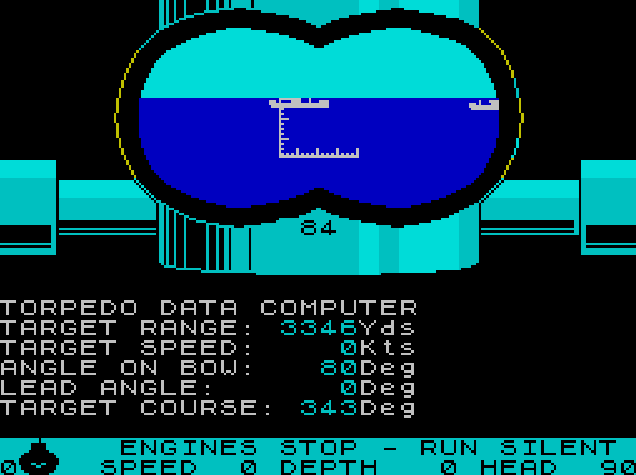
Climbing the ladder takes you to the bridge, offering a literal view of the surrounding ocean and current visibility conditions. With binoculars, you can scan the horizon for distant ships beyond radar range, although doing so from inside the submarine using the periscope is generally safer. The periscope operates at depths of up to 44 feet (assuming you remember to raise it) and can rotate independently through a full 360 degrees. This screen is critical during combat, identifying targets when they are centered in the crosshairs and displaying key data such as speed, bearing, distance, and angle on the bow. Additional screens show instrument panels detailing submarine status and damage reports.
Manoeuvring the submarine is relatively straightforward, relying mainly on rudder control to adjust heading. Importantly, you don’t need to point the submarine directly at a target to fire torpedoes. The periscope handles aiming, while the torpedo computer calculates an intercept course based on target data. Advanced players can disable the computer and attempt these calculations manually, though this significantly increases the difficulty.
While the underlying simulation appears sound, visual feedback during torpedo strikes can be underwhelming—and occasionally confusing. It’s realistic that some torpedoes fail to detonate, as the instructions warn of mechanical faults, but it’s harder to accept moments when a torpedo appears to pass cleanly by a ship only to register a hit anyway. Successful strikes are marked by an eerie silence, while damage to your own submarine is indicated by a flashing screen border—a rather crude and unconvincing effect.
Japanese convoys are typically escorted by destroyers, and the intended tactic is to eliminate these threats before tackling the cargo ships. In practice, however, convoys often scatter once an attack begins, turning engagements into prolonged and sometimes tedious pursuits. A time-compression feature is included to reflect the lengthy nature of real submarine patrols, but on this version it doesn’t always function as smoothly as one might hope.
That Silent Service achieves all this within the confines of a 48K Spectrum is genuinely impressive. Both concept and execution are strong, and it’s difficult to fault the ambition or craftsmanship on display. Of course, enjoyment depends entirely on whether you’re willing to invest the time to understand its many systems. Those put off by complexity will find little here to entice them.
But for players prepared to embrace its depth, Silent Service is immensely rewarding. It stands as one of the most accurate and demanding simulations ever produced for the Spectrum—a true simulator in every sense, brimming with controls, detail, and authenticity.
BREAKDOWN:
GRAPHICS: 71%
MUSIC/SFX: 66%
PLAYABLITY: 86%
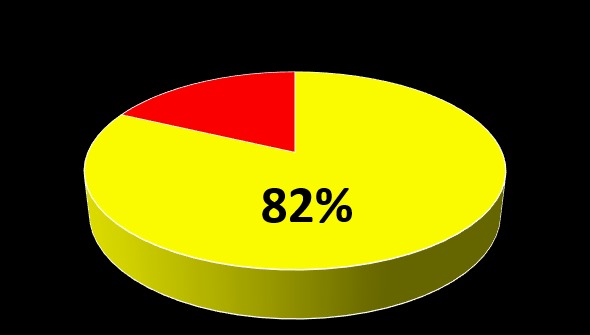
OVERALL: 82%
Platform: ZX Spectrum
Genre: Simulation – Marine – Combat
Developer/ Publisher: Microprose
Release: 1986
Franchise: Silent Service