The King of the Arcade Racers…..
Ever since Atari’s Gran Trak 10 hit the arcades back in 1974, the race to create the perfect driving experience was on. The ’70s had Sprint 2, the ’80s gave us Pole Position, and every decade since has seen developers chasing that elusive blend of speed, control, and pure exhilaration.
But here’s the thing—too many modern racers think “more” automatically means “better.” More cars, more tracks, more customization. Yet all the content in the world won’t save a game that isn’t fun to drive. A racing game lives or dies on how it feels.
Back in the early ’90s, when 30 tracks were considered excessive and a smooth frame rate was a luxury, Sega took a bold step. Building on the success of Out Run—a driving game more about style and freedom than racing—Sega released Virtua Racing in 1992. It was groundbreaking: polygonal graphics, smooth performance, and a sense of realism that arcade-goers had never seen before.
But then Namco fired back with Ridge Racer a year later, upping the ante with stunning visuals, high-energy techno, and that legendary drift mechanic. Sega needed to respond—and respond they did.
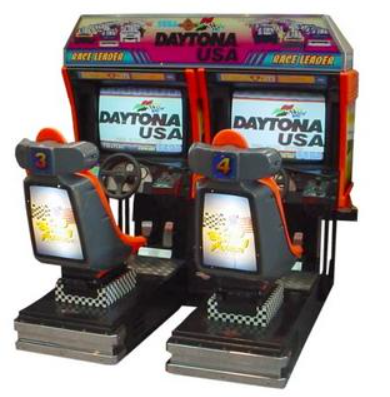
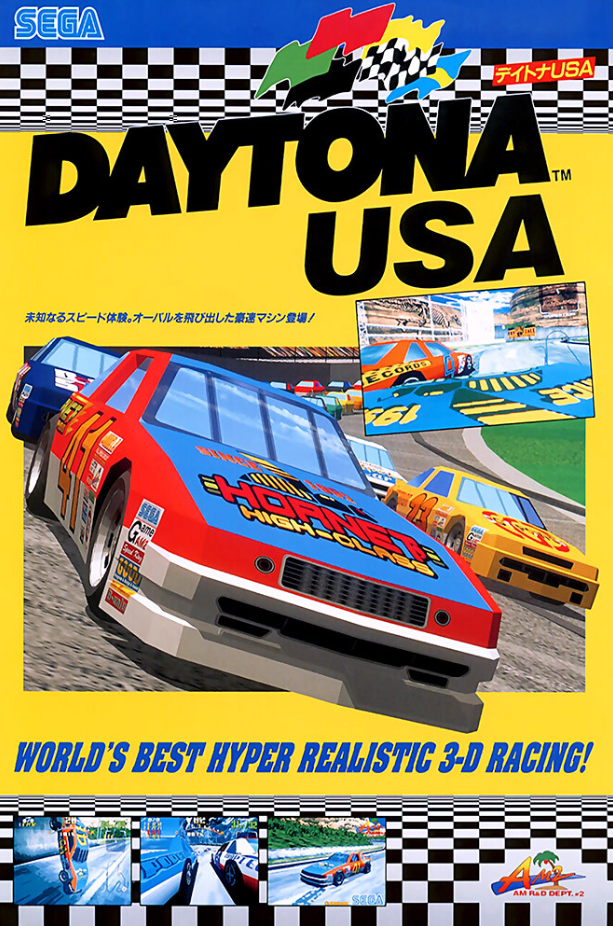
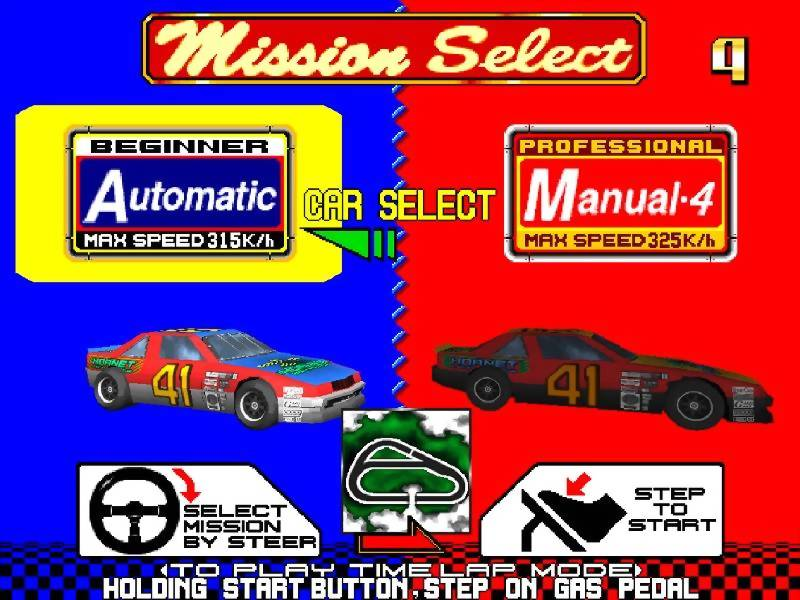
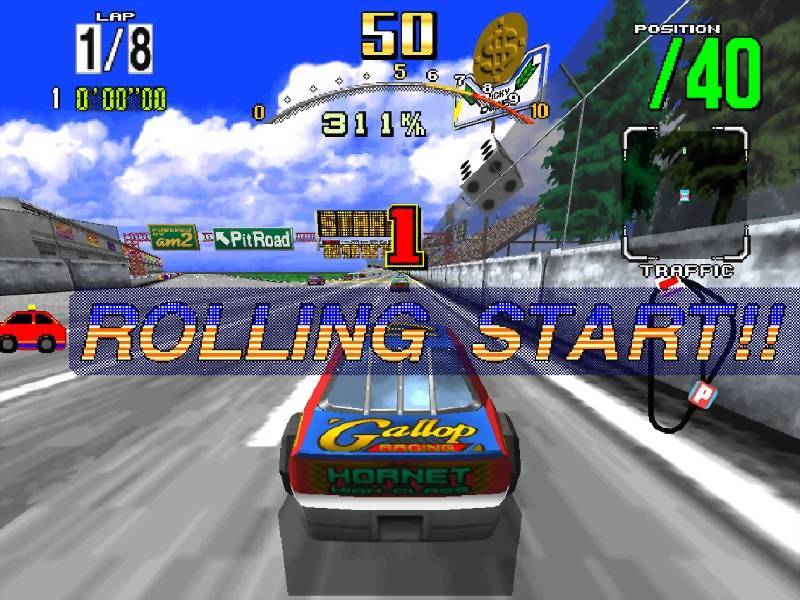
Later that same year, they unleashed Daytona USA. Gone were the single-seaters of Virtua Racing; in their place were roaring stock cars. It ran on Sega’s new Model 2 arcade board, boasting better handling, smoother graphics, and the now-iconic four-gear shifter. Multiplayer—up to eight players—arrived shortly after. And just like that, Daytona USA became a legend.
A Game That Defined the Arcade
Daytona USA wasn’t just another racer—it was the arcade. For years, it dominated game centers across the globe. It’s often cited as the highest-grossing deluxe arcade game of all time, and to this day, it’s still one of the few from its era that you can regularly find humming away in arcades.
Ridge Racer cabinets have all but vanished. Virtua Racing? Practically extinct. But Daytona USA endures—a symbol of Sega’s golden age.
Unfortunately, its legacy was tarnished by a string of weak home conversions. The Saturn and PC ports were clunky shadows of the original, and even the Championship Circuit Edition lost the spark that made the arcade version special. The Dreamcast re-release in 2001 came close, but its physics never quite captured that same magic.
Yet no botched port can diminish what the original arcade version achieved. The only true way to experience Daytona USA is as it was meant to be played: in an arcade, surrounded by the roar of engines and the cheers (and curses) of your friends.
The Look and Sound of Speed
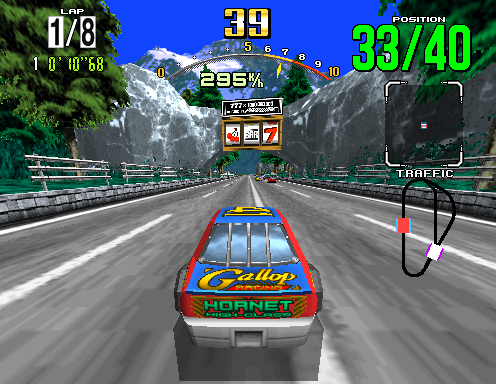
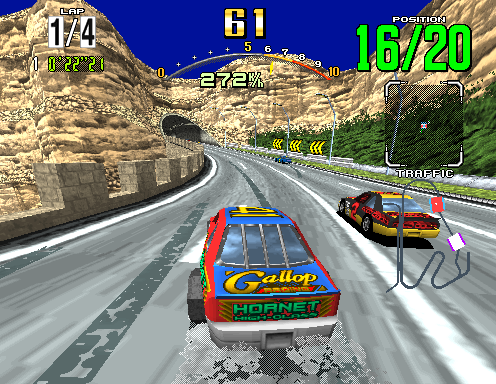
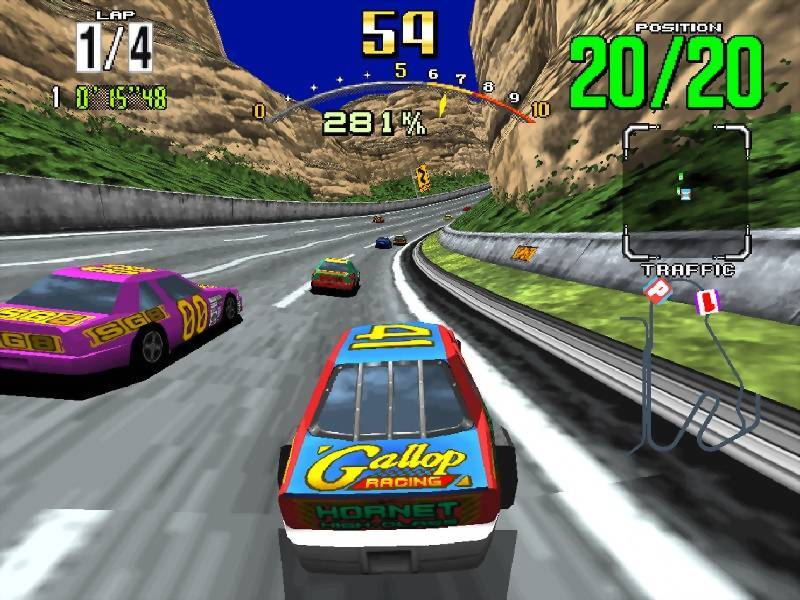
In 1994, Daytona USA looked like the future. Running at a blistering 60 frames per second, the Model 2 hardware delivered fluid motion, crisp lighting, and incredible detail for the time. The cars gleamed, the tracks felt alive, and the sense of speed was intoxicating.
Sure, the tires were basically octagons, but when everything else looked this good, who cared?
The sound design sealed the deal. Explosive engine roars, satisfying crashes, and, of course, that soundtrack—equal parts cheesy and unforgettable. Songs like “Let’s Go Away” might divide opinion, but love it or hate it, you remember it. And for the purists, pressing the green button at startup unlocked “Pounding Pavement,” one of the best hidden tunes in any racer of the era.
The Drive of Your Life
All the visuals and music in the world wouldn’t matter if the game didn’t feel right—and this is where Daytona USA becomes untouchable.
It’s easy to pick up but brutally hard to master. Techniques like the legendary 4-2-3-4 downshift drift, controlled braking, and feathering the gas through turns separate the Sunday drivers from the true champions. Mastering them isn’t just difficult—it’s an art form.
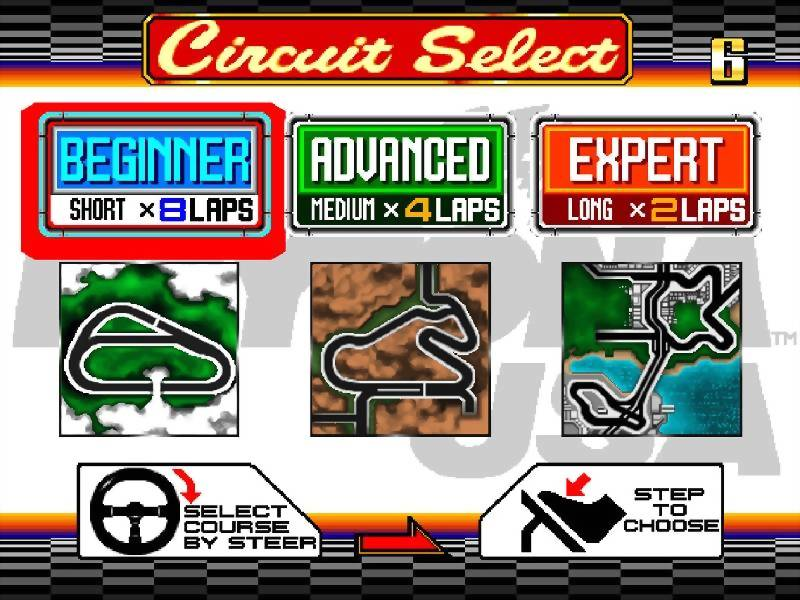
The Beginner track eases you in, with a flowing layout and forgiving corners. But move on to the Advanced and Expert tracks, and Daytona shows its teeth. The Expert course in particular is a monster—demanding absolute precision. The best players can clock in under 3 minutes 20 seconds; for most mortals, just finishing is an achievement.

Multiplayer Mayhem
Then there’s the 8-player mode.
This is where Daytona USA stops being a racing game and becomes a full-blown event. The thunderous start as everyone guns it off the line, the desperate scrambles for position, the spectacular pileups as four cars slam into the same wall—no other racer captures that same blend of chaos and camaraderie.
The built-in handicap system ensures close competition, letting even newcomers stay in the mix. It’s impossible not to grin when you sling past your mates in a perfect drift… or curse when they repay the favor.
Three tracks. One car. Endless replayability. That’s Daytona USA’s genius—it doesn’t need more, because what’s there is pure perfection. It’s a game that’s just as fun for beginners as it is for experts chasing milliseconds.
Why It’s Still one of the Best
Decades later, I still haven’t grown tired of Daytona USA. It’s the only racer where I can honestly say the three rarest words in gaming: All is well. No frustration, no cheap mechanics, no grind—just unfiltered fun.
Every mistake is yours, every victory earned. And when everything clicks—the gear shifts, the drift, the roar of the crowd—it’s pure euphoria.
If I ever came across an 8-player Daytona USA cabinet for sale, I’d seriously consider buying it. That’s how much this game means to me.
So if you ever spot one of these machines in an arcade, don’t walk past. Drop in a coin, grab the wheel, and prepare for one of the greatest rides in gaming history.
Because Daytona USA isn’t just another racer—it’s the racer. The ultimate blend of speed, skill, and style.
BREAKDOWN:
GRAPHICS: 92%
MUSIC/SFX: 93%
PLAYABLITY: 96%
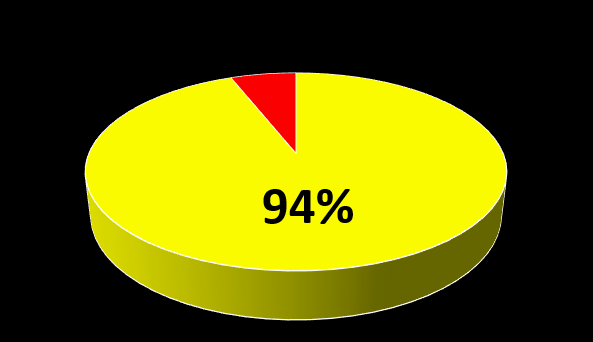
OVERALL: 94%
Platform: Arcade
Genre: Racing-Arcade-Automobile
Developer/ Publisher: Sega
Release: 1994
Franchise: Daytona USA