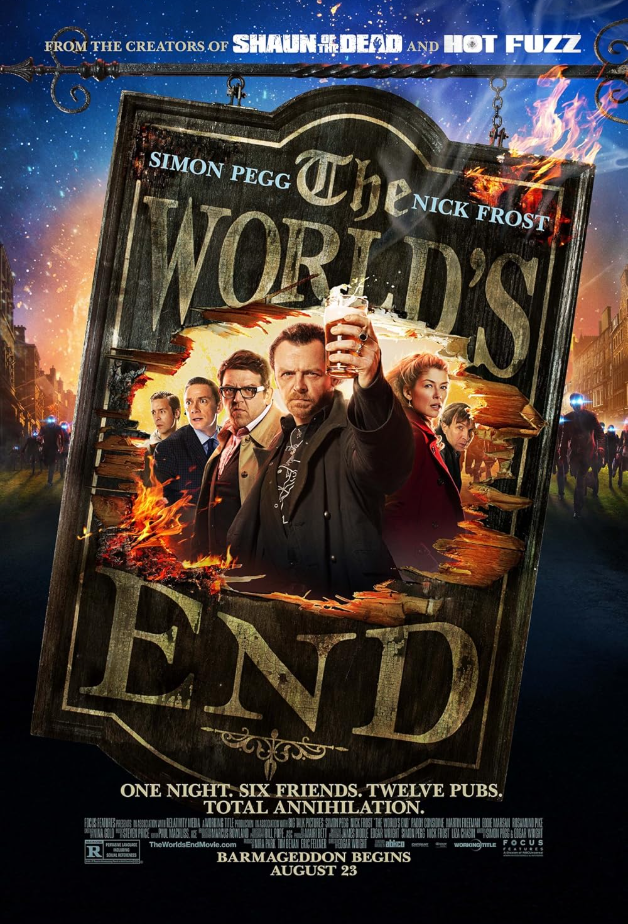
You wouldn’t expect a slapstick comedy about middle-aged pub crawlers brawling with superhuman extraterrestrials to have genuine heart, wit, and emotional insight—but “The World’s End” delivers all of that and more. It’s one of those rare films that really is as fun as everyone says.
Directed by Edgar Wright, from a script by Wright and his longtime star Simon Pegg, the movie feels surprisingly intimate despite all the chasing, fighting, exploding, and the gallons of neon-blue alien goop flying across the screen. The special effects are smartly used, always in service of story and character. And even when Wright tips his hat to his genre inspirations—John Carpenter most obviously—or sets up some of the most cleverly choreographed brawls this side of early Jackie Chan, he never treats the film’s quieter moments as filler. The characters can sit around reminiscing over a pint, or trade stories mid-fight, or even sip a beer during the fight, and the film never loses its energy. It’s that kind of movie.
At the center is Pegg’s character, Gary King, a self-styled legend who calls himself “The King.” He’s the sort of person you enjoy for ten minutes and tolerate for an hour—and then need to escape from entirely. His old friends feel exactly the same. They tell themselves they grew up; Gary insists they sold out. The film wisely refuses to side with either view.
The old gang has moved on in different ways.
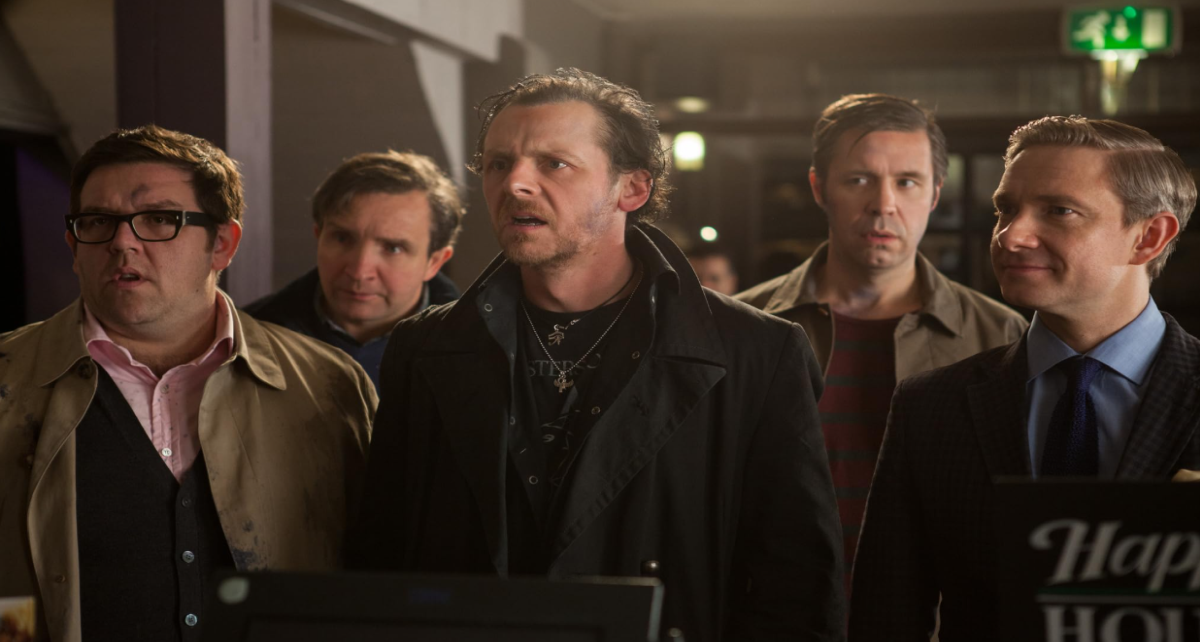
- Oliver (Martin Freeman) is a fussy real estate agent glued to a Bluetooth earpiece.
- Steven (Paddy Considine), an architect and Gary’s former romantic rival, is freshly divorced and loudly compensating for it.
- Peter (Eddie Marsan), once the timid, bullied kid of the group, now sells cars for his father.
- And Andrew (Nick Frost), now a lawyer, refuses to acknowledge Gary at all. Gary claims it’s over an unpaid debt, but the real reason is far deeper—and when the film reveals it, it hits hard.
The first act follows Gary as he “gets the old band back together” to reenact their half-finished 1990 pub crawl across their hometown, Newton Haven. The pubs’ names—The Two-Headed Dog, The Trusty Servant, The World’s End—suggest myth and fate. Gary can’t let go of the fact that they never completed their twelve-pub odyssey. He needs a triumphant ending to a story that never quite closed.
Beneath the banter and the slapstick, the film carries a quiet sadness about aging, missed opportunities, and the fragility of friendship. Gary is an addict, a screwup, a perpetual child dragging others into chaos. When he asks, “Why should getting older affect something as important as friendship?” the desperation behind the question is unmistakable.
And if the movie had been only about a bittersweet reunion, it might still have been a small masterpiece—Wright’s craft is that sharp. But then the film takes a sharp turn into sci-fi conspiracy thriller territory, nodding to Invasion of the Body Snatchers and Carpenter’s The Fog and Prince of Darkness. It’s the third Wright film where an apparently dull community hides supernatural danger, but this one never falls into formula. The genre twist is bold, hilarious, and constantly tied to the film’s themes. Nothing is wasted, no matter how wild or surreal.
The movie’s alien invasion plot becomes a metaphor for assimilation, conformity, and the dread of losing one’s identity. The pubs have all been “Starbucked,” as the characters put it—stripped of personality, rebuilt into identical chains. The connected digital world, the very one allowing you to read this review, becomes another tool of control. The film’s unexpectedly philosophical climax echoes A Clockwork Orange, suggesting that a perfectly safe, orderly world might be worse than letting people be messy, flawed, and free.
Wright remains a virtuoso of rapid-fire editing, physical comedy, and explosive action. As in Shaun of the Dead, Hot Fuzz, and Scott Pilgrim vs. the World, even the smallest actions—pouring a pint, turning a key—are shot with apocalyptic grandeur. His style rarely slows down; sometimes you wish the film would linger longer on the cast’s excellent chemistry, which recalls Barry Levinson’s best ensemble dramas. Frost in particular gives a standout performance, balancing sadness with unstoppable, Goodman-like physicality.
But in an era where so many mainstream movies feel rhythmically flat, “The World’s End” moves with confidence and joy. It’s clever, heartfelt, thematically rich, and tremendously fun—proud of its own absurdity but never smug. It wears its ideas openly, laughs at itself, and charges straight into chaos with a grin.
In short: it’s magnificent.