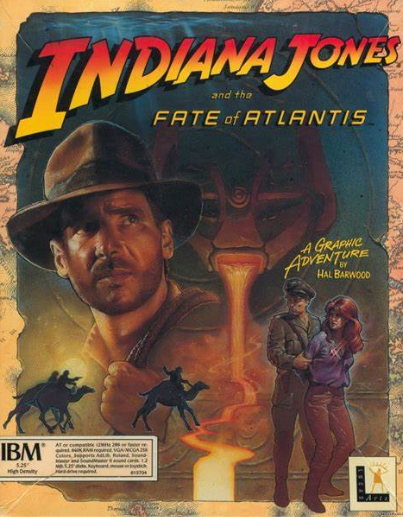
As good as Point & Click game as you will ever find…….

As a child, I harboured aspirations of emulating Indiana Jones, envisioning thrilling adventures around the globe, uncovering hidden temples rigged with traps, unearthing ancient mystic relics, and thwarting nefarious plots for world domination. Little did I realize that the era of Nazis had long passed, and a career in archaeology would primarily involve endless excavations in the most remote corners of the Earth. “Behold, an ancient amulet! It bears an inscription: ‘Made…in…Taiwan.'” Unquestionably, blame can be laid at the feet of George Lucas. Those iconic Indiana Jones films were brimming with action-packed sequences, whip-cracking exploits, and intense confrontations. Therefore, it might initially appear peculiar that LucasArts opted to transform this high-octane franchise into a point-and-click adventure game. Remarkably, this decision paid off handsomely.
Plot
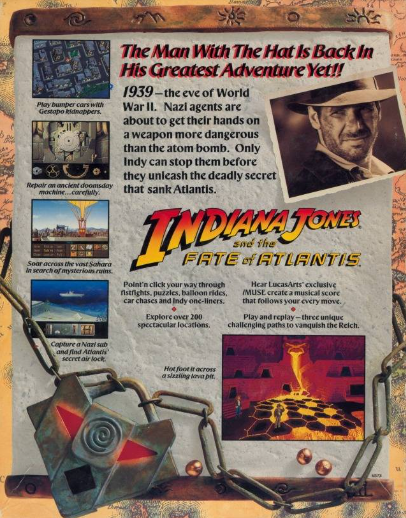
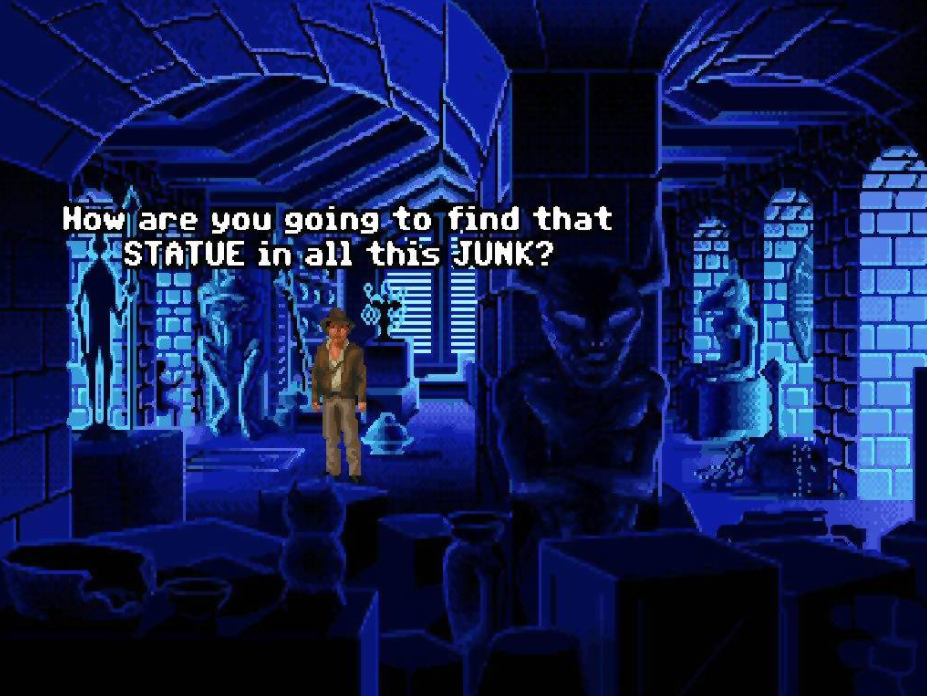
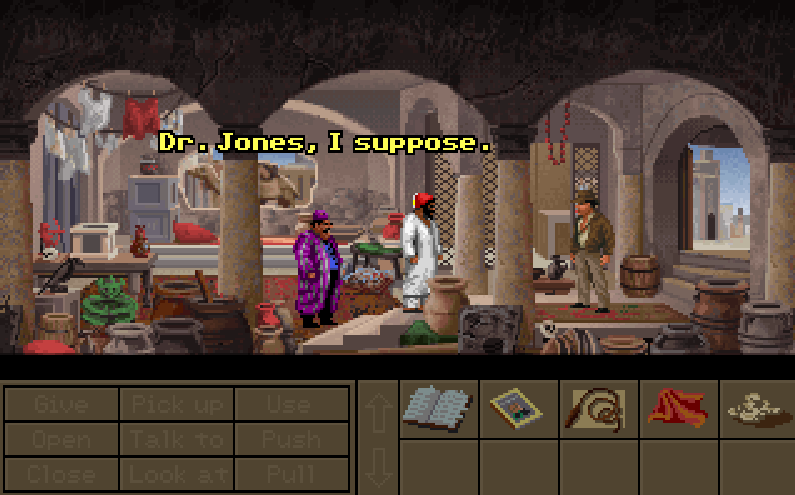
Indy returns from a triumphant expedition only to be double-crossed by some familiar antagonists – the Germans (a surprise to no one) – who are in hot pursuit of the elusive city of Atlantis. Indy must race against time to reach this mythical city before his adversaries and thwart their enigmatic scheme. Though straightforward, the plot is well-crafted and effectively conveyed through dialogue and cinematic scenes. While it may not attain the comedic brilliance of Monkey Island, the game maintains a light-hearted tone, never taking itself too seriously. What truly sets it apart is its authenticity; the storyline seamlessly mirrors that of an Indiana Jones film. It’s evident that a considerable effort was invested in maintaining authenticity, and despite the absence of voice acting in the original version, each character exudes a distinct personality. This serves as a refreshing departure from the generic narratives and characters that saturate modern gaming.
Gameplay
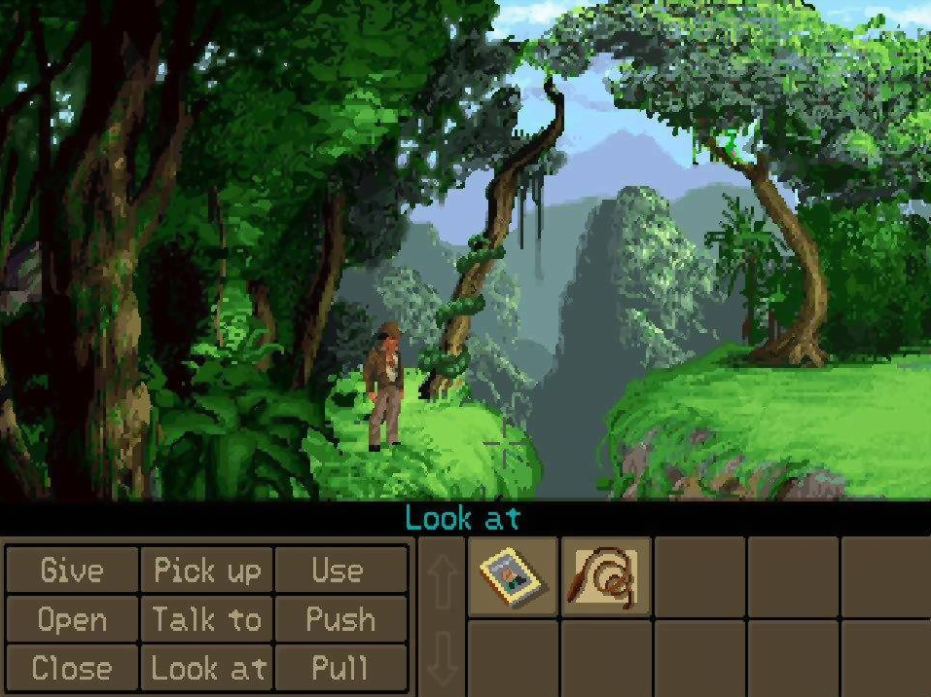
In essence, “Fate of Atlantis” adheres to the classic point-and-click adventure style, employing LucasArts’ venerable SCUMM engine. For the uninitiated, this involves interacting with the game world, non-player characters, and your inventory of items via a set of commands at the bottom of the screen (such as “Walk to,” “Pick up,” “Talk to,” and so forth) to solve puzzles and advance the storyline. For instance, at one juncture, Indy must cross a chasm, and a slender tree appears as a possible bridge – unfortunately, a venomous snake coils around it. In the nearby undergrowth, a small rodent scurries about. Employing his trusty whip from his inventory, Indy cracks it in the direction of the rodent, causing it to dash out from the underbrush and distract the snake, thereby clearing the path for Indy. The solution is both inventive and straightforward.
However, “Fate of Atlantis” deviates from most point-and-click adventures in both positive and negative ways. To address the negative aspect first: it’s possible to fail and be compelled to restart the game from the very beginning, a rarity in this genre and a potential source of frustration for players accustomed to the “try every action on every object” approach when stuck. Nonetheless, this issue is not insurmountable and can be mitigated by frequent saving.
On the upside, this game stands out by presenting puzzles that, while still demanding substantial lateral thinking, are considerably more logical compared to titles like “Day of the Tentacle,” which frequently incorporates obscure solutions. “Fate of Atlantis” imbues a sense of coherence into its puzzles, rendering the game less exasperating and more enjoyable.

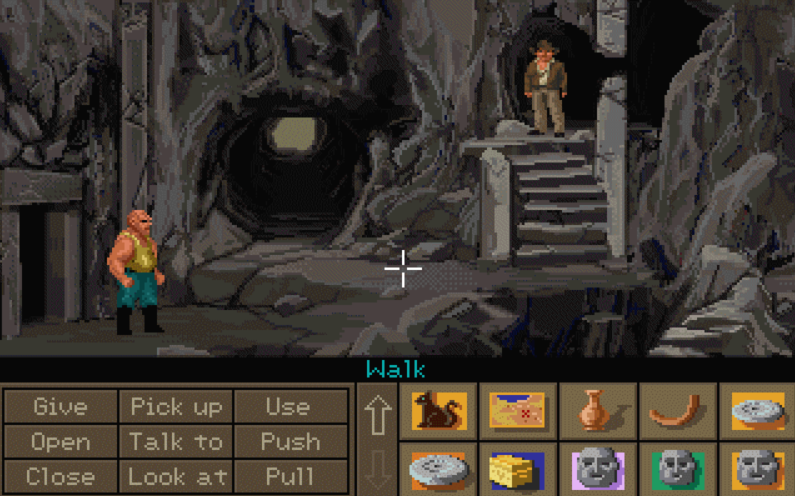
There are a couple of additional elements worth mentioning. Firstly, the game introduces real-time combat, but this feature is optional. When confronted by an enemy guard (a relatively infrequent occurrence), a health bar appears at the bottom of the screen, and you can engage in a face-off, akin to a Street Fighter-style showdown, using the numeric keypad. Nevertheless, the game maintains its point-and-click heritage, allowing players to opt for a simpler approach by merely pressing “Insert” to incapacitate their opponent.
Secondly, and perhaps most notably, the game offers three distinct pathways. This translates to three separate storylines and sets of puzzles, significantly enhancing the game’s replayability, a feature that sets it apart from others in the genre.
Sound
As previously mentioned, the early versions of the game lack voice acting. Regrettably, I cannot provide insights into the quality of the later versions’ Indiana Jones voice acting, as I have not experienced them. However, the music in the game, despite its vintage, is quite commendable. Notably, the main Indy theme makes periodic appearances at appropriate moments, significantly enhancing the overall sense of authenticity. It’s a well-executed effort in this regard.
Overall
Fate of Atlantis remains unparalleled in achieving a perfect equilibrium between lateral thinking challenges and user-friendly accessibility. It seamlessly blends logical puzzles with a stylish presentation, delivering an enjoyable yet demanding experience. Arguably, it stands as the pinnacle of its genre, offering the added bonus of three distinct playthroughs. Undoubtedly, it’s a genuine classic and a game I wholeheartedly recommend to both adventure game newcomers and seasoned veterans alike.
GRAPHICS: 92%
MUSIC/SFX: 91%
PLAYABILITY: 96%
OVERALL: 95%

Platform: PC
Genre: Adeventure-Point & Click
Developer/Publisher: LucasArts
Release: 1992
Franchise: Indiana Jones