The Best of ’85
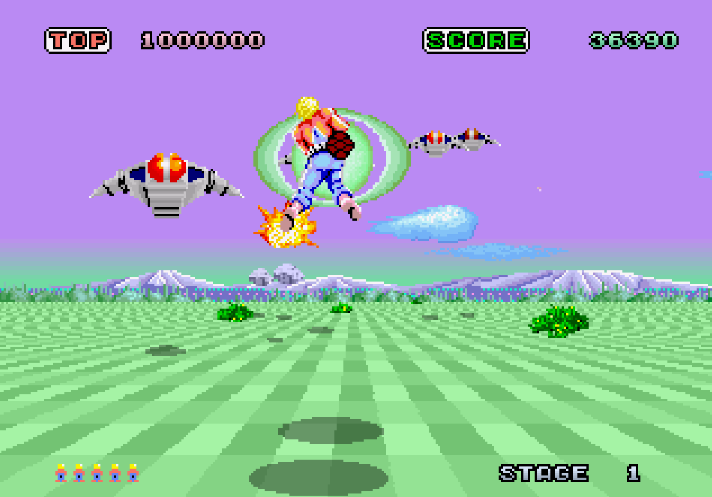
In 1985, Space Harrier stood out as one of the best-looking games of its time. Developed using an engine originally designed for racing games, such as Hang-On, the game offered a unique experience with its forward-moving flying and running shooter gameplay. The speed of the game, combined with large and detailed sprites featuring impressive hardware scaling, created an unforgettable visual spectacle. The non-animated, yet impressively drawn enemies, including the cool giant robots, and the selection of pillars and landscape elements, contributed to the overall excellence of the visual presentation.
FX & Music: The game incorporates basic voice samples and shooting sounds from both the player character and enemies. Sound plays a crucial role in this game, as it is essential for success. Each type of enemy produces a distinct sound, and while they often appear as tiny figures in the distance and may be partially obscured by the landscape, hearing these audio cues is vital for quickly positioning oneself to eliminate enemies early on. Sound that directly impacts gameplay is always a valuable asset. During this period, video game music was beginning to come into its own, and SEGA led the way in pioneering high-quality arcade music. Although the soundtrack is not extensive, it is iconic and represents the pinnacle of game music in 1985.
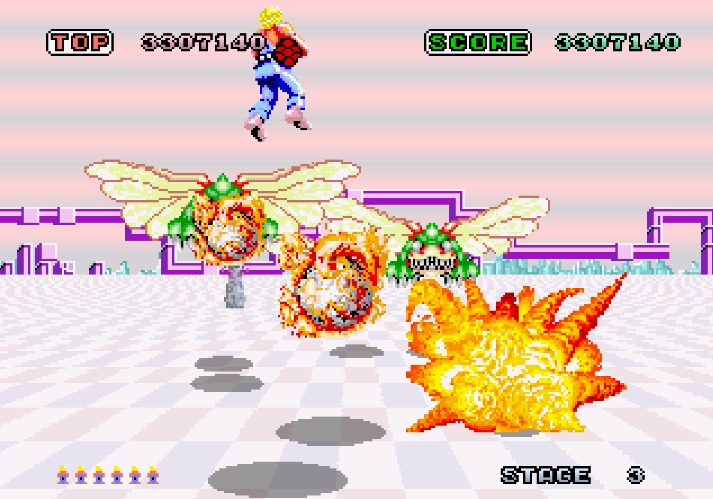
Gameplay: The duration of an arcade game depends on its ability to hold players’ interest. Personally, I aimed to complete the game with a single credit, opting for the easiest settings available in the arcade version. Even on these relatively forgiving settings, the game remained challenging, requiring strategic play to avoid excessive use of quarters. It took me approximately twelve hours to achieve this goal, after which I felt satisfied and ready to move on. SEGA was in a creative stride during this period, delivering depth-oriented games across various genres, including racing. The decision to create an action shooter using this engine and a human character was inspired. Space Harrier featured large and detailed sprites that dynamically grew in size as they approached the player, creating a sense of intensity and speed. The game offered fast-paced action with a wide variety of visually impressive enemies. Space Harrier made a significant impact in its time and even inspired imitators, such as “3d Worldrunner” by Square on the NES, albeit with inferior execution.
The game’s speed and depth create a thrilling experience, although some enemy projectiles are incredibly fast, making it challenging to dodge them. Avoiding enemy fire and indestructible ground pillars while engaging in deadly firefights keeps you constantly on the move. Most of the ground cover can be destroyed, adding to the dynamic gameplay.
Each level culminates in a satisfying boss fight that is not overly difficult but fills the screen with enemy projectiles. If you attempt to avoid killing the boss for too long, they will expire, forcing you back into the main battle where they become more aggressive.
The game incorporates the then-relatively new Continue option to encourage exploration of its 18 levels, including two bonus levels. The game’s difficulty primarily stems from its fast-paced nature. Over time, enemy fire becomes increasingly rapid, and as your movement speed also increases, it becomes even more challenging to dodge.
One of the main sources of difficulty is visual occlusion. Enemies that are in front of your character are mostly hidden, especially when they are distant and small. Their projectiles appear small as well as they quickly approach you. In later stages, it takes less than a second for enemy fire from the farthest distances to reach you. If you are not aware that an enemy has fired at you, it will hit you without you even seeing the enemy’s projectile due to occlusion. The key strategy is to avoid staying in one place for too long.
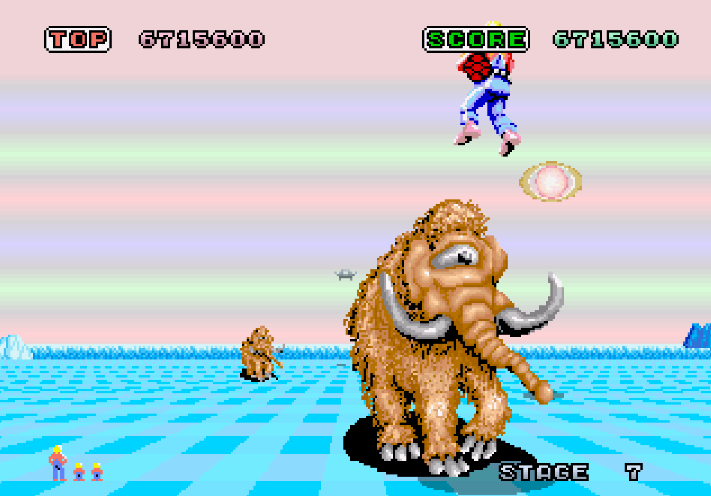
However, the enemy waves in each level are fixed, so as you play the game repeatedly, you start to remember which enemies will appear in each level and can anticipate their order. This knowledge significantly aids your progress. The biggest challenge then becomes avoiding the non-destructible pillars that appear in most levels. As you improve, their seemingly random appearance becomes the main cause of deaths. It is possible that the ground plane in the game repeats horizontally, while the left-right scrolling plane is infinite. This means that as you move horizontally, the appearance of ground items may change, making it difficult to recognize their static placement. This is a suspicion based on observation rather than confirmed information.
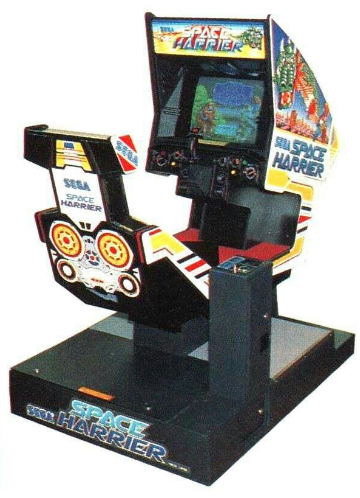
During its time, this game stood out as one of the finest arcade experiences, complete with a unique moving cabinet that added an extra layer of immersion. Unfortunately, I never had the opportunity to come across this gem in its natural arcade habitat.
BREAKDOWN:
GRAPHICS: 82%
MUSIC/SFX: 76%
PLAYABLITY: 87%
OVERALL: 85%

Platform: Arcade Games
Genre: Action-Shooter-Rail
Developer/Publisher: Sega
Release: 1985
Franchises: Space Harrier