Highly Addictive, Exceptionally Original, and a Total Work of Art…..
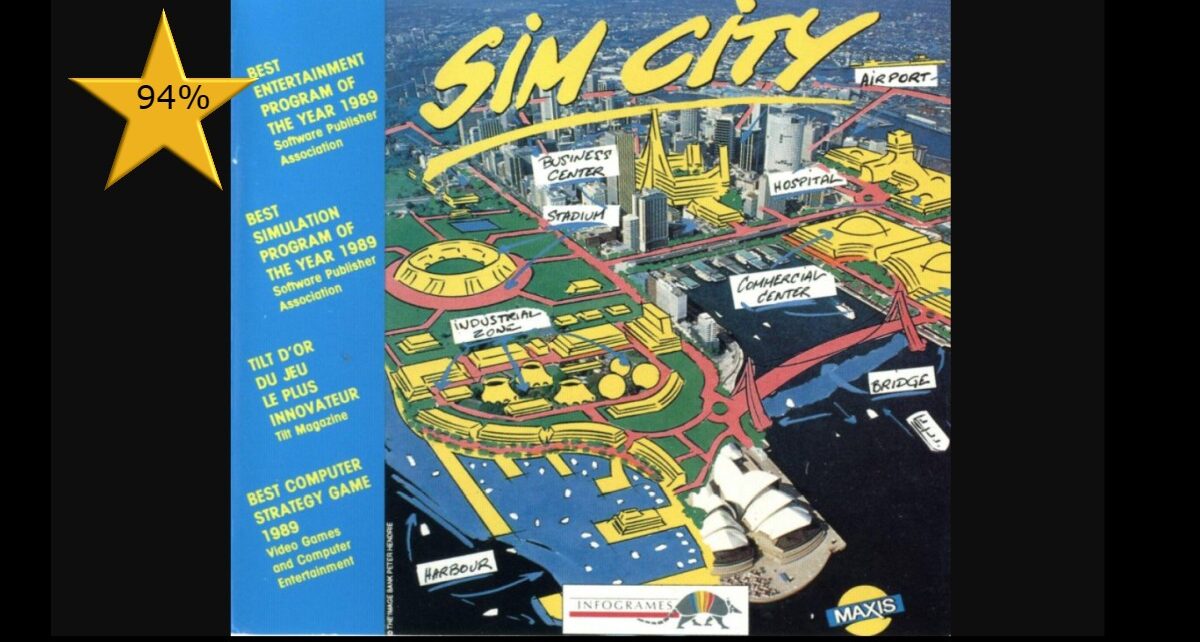
This game is truly a gem, and more than just a game—it’s like having two, or maybe even three, games in one! Sim City stands out as one of the most addictive titles for the Speccy, surpassing even the highly praised Pipe Mania, Castle Master, and others. It has universal appeal, and my dad, not one to easily be impressed, deemed it “Quite good, I suppose,” which says a lot.
Now, what’s the buzz all about? Well, it’s a bit like stepping into the shoes of God, or in this case, the mayor of a hypothetical town (hypothetical because, as of yet, you haven’t built it). Nevertheless, you wield god-like powers. Your task is to create an enticing environment without overspending (to attract and retain residents), and you must skillfully manage everything to ensure a steady flow of tax revenue to keep your city running smoothly. It’s a delicate balancing act that becomes more complex as your city expands.
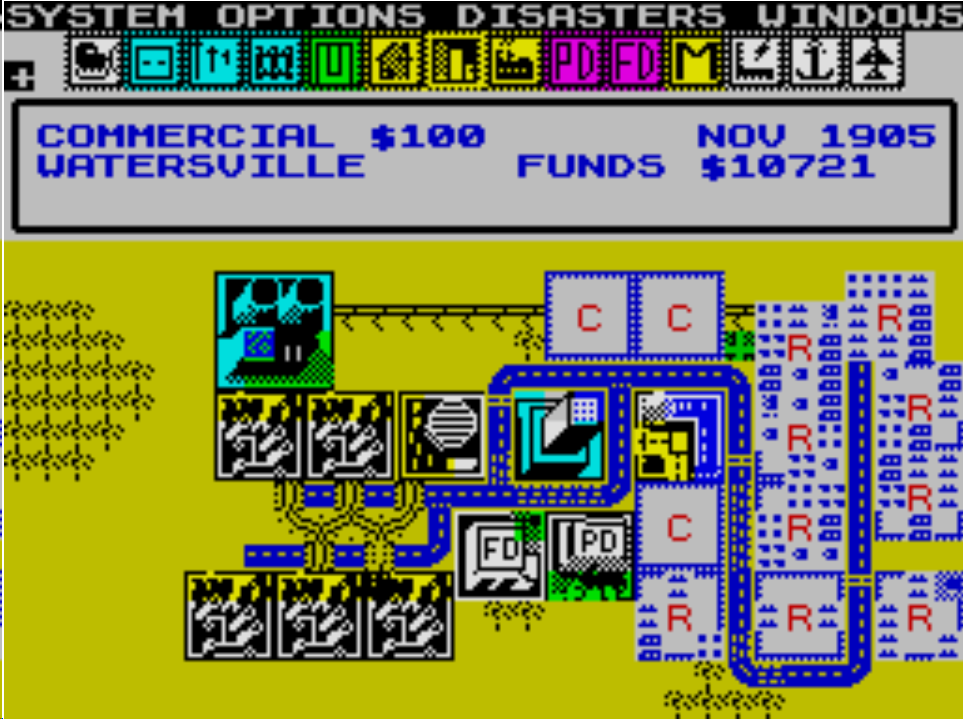
So, let’s dive into the game, shall we? You’re presented with a vast, scrolling (and currently empty) landscape, along with a substantial amount of cash. Time to explore and find the perfect starting point. Ah-ha! This bay area with an island in the middle looks promising—I think I’ll attempt to build my version of San Francisco here (although it might end up resembling Grimsby).
Let’s start with the essentials—some residential zones, a few commercial centers for shopping, and industrial areas. I’ll place a subpar residential zone here next to the industrial sector for the workers, and a luxurious one by the coast for the affluent. I might even add some parkland around the affluent area to enhance its appeal (and more industrial facilities around the less affluent area to make it less appealing). Hee hee. Now, let’s lay down some roads to connect it all. What’s this the computer is telling me? Ah, yes, we need some power! Alright, I have a choice between a coal power station or a pricier nuclear one. I think we’ll go with Mr. Coal-Powered, and I’ll slot it in next to the less affluent homes, so they can enjoy a lovely layer of soot and potentially develop respiratory issues at an early age (or something).
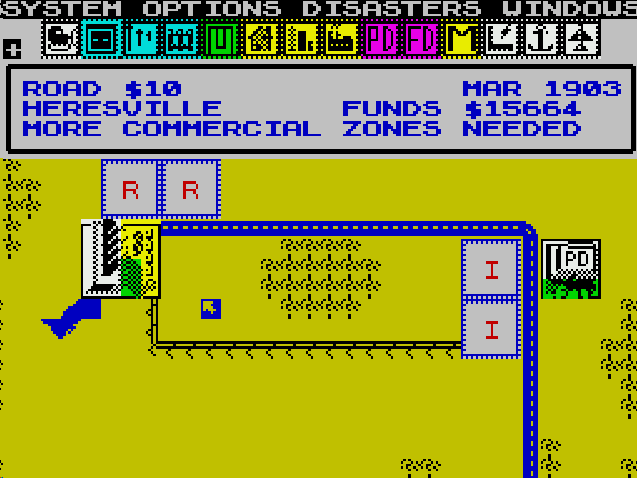
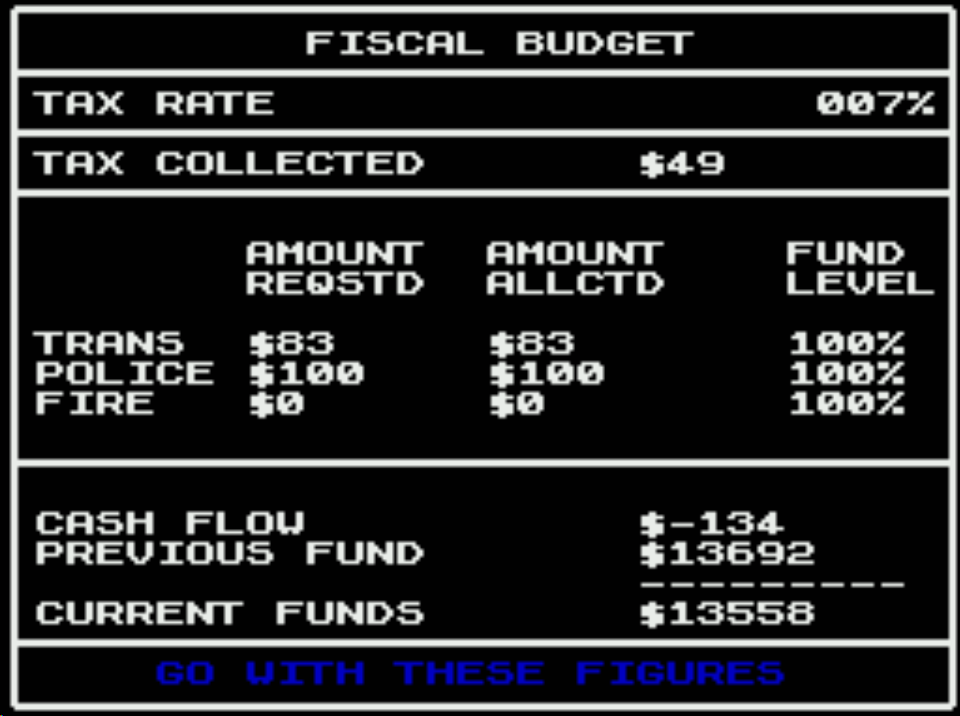
Hmm, what else? Ah, power lines to ensure everything is functioning smoothly would be a wise idea, and a few police stations to curb the rising crime rates (the computer has been warning me about crime since I established the first residential area, but I’ve been neglecting it because I’m frugal!). Now, let’s let a few years pass and check on my popularity ratings. Uh-oh! Only 15 percent of the population thinks I’m doing a good job! And they believe crime and pollution are the most pressing issues! (I might be ousted if I’m not careful!)
So, what’s the plan? Well, I won’t do anything about that power station (demolishing it and constructing a new one would be too expensive), but I might add a few more police stations to keep the citizens content. And perhaps (mumble grumble) I’ll invest in a sports stadium and a few additional parks to address their complaints a bit.
And so the journey continues. Sim City is highly addictive because a) it’s immensely enjoyable to wield complete power and intentionally try to disrupt people’s lives (until they become so frustrated with you that they vote you out of power, of course), and b) once you move past the stage of petty cruelty and start playing strategically (took me a while, but there you have it), it becomes incredibly challenging to balance the budget and plan the development of a vast, bustling metropolis that spans eight, ten, or even 15 screens.
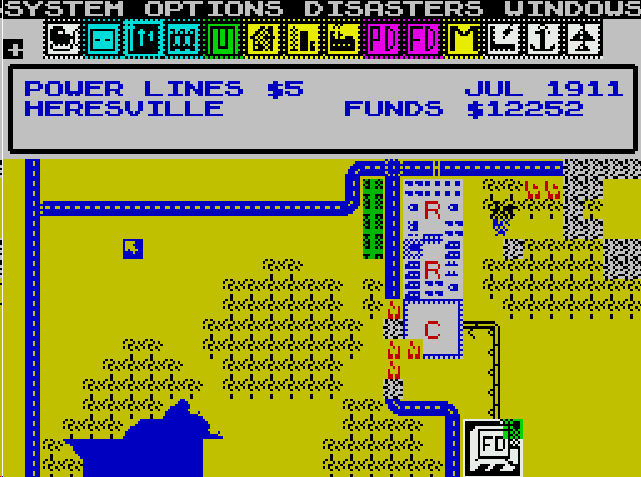
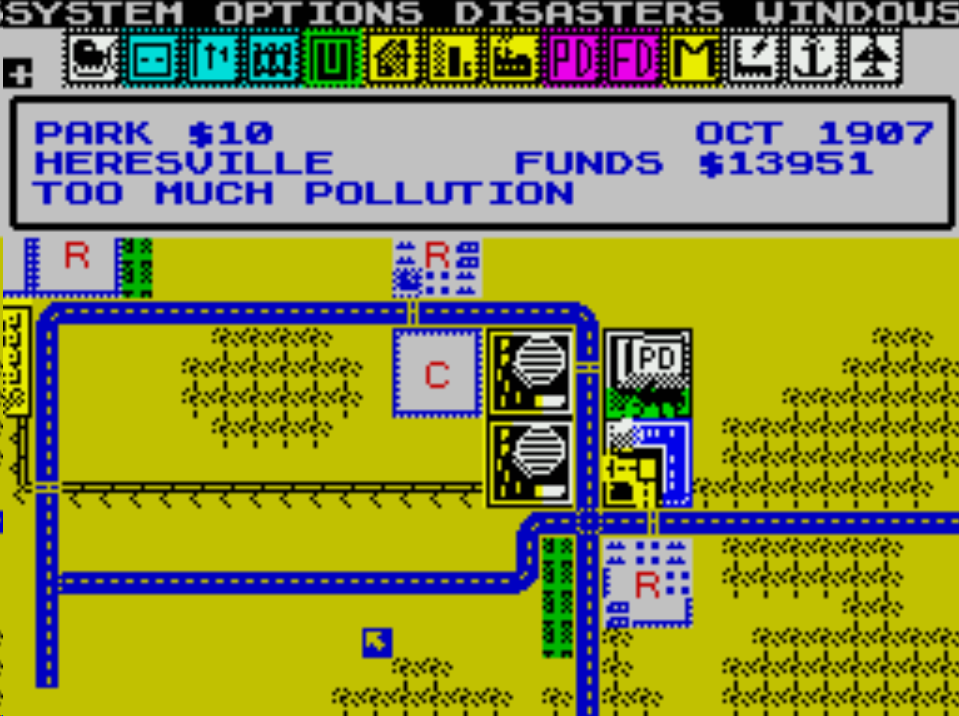
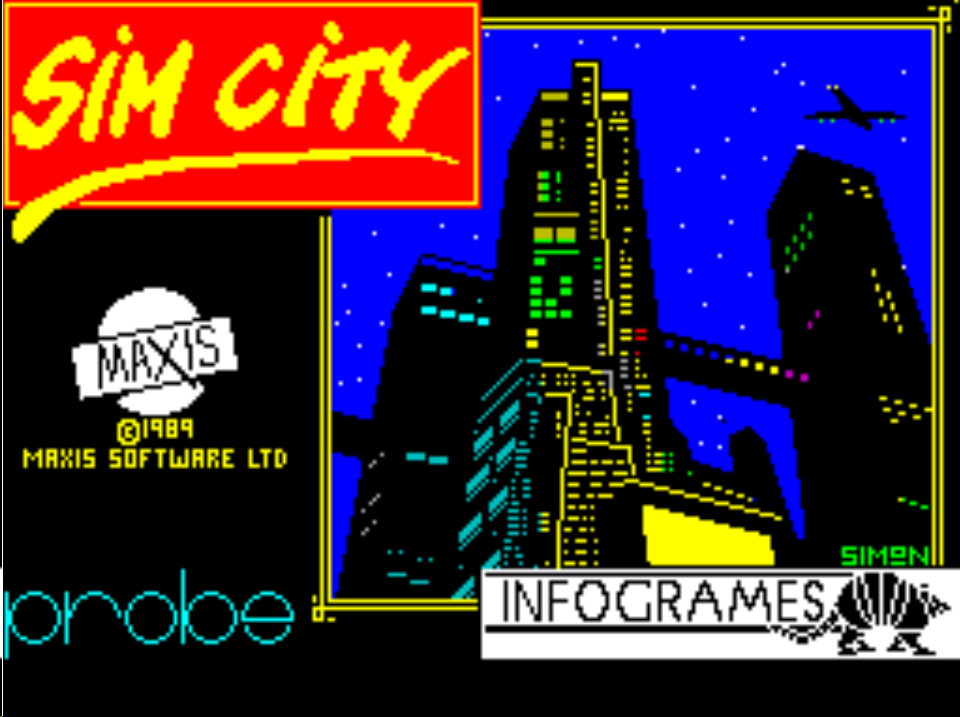
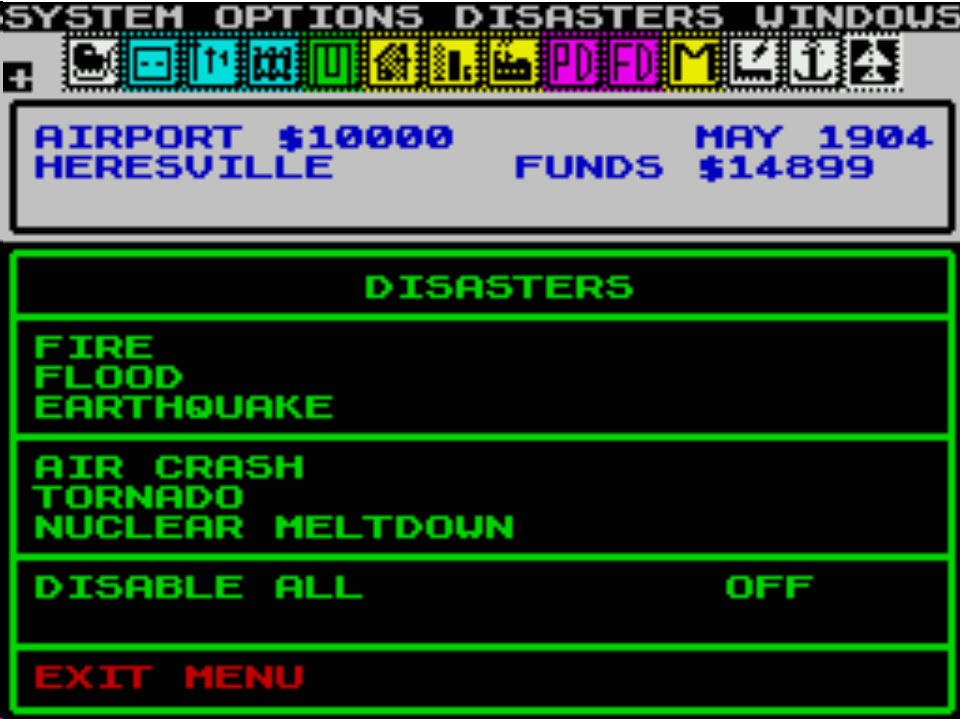
Another commendable aspect, and credit to the team at Probe, is witnessing a brilliant yet complex concept like this being flawlessly executed on the Speccy. It’s remarkable. Aside from losing a few clever features from the original 16-bit versions (such as a mini-Godzilla that could be set loose in your city while you attempted to repair the damage), the game plays flawlessly—it’s one of those instances where the absence of brilliant graphics makes no difference to the sheer enjoyment of playing the game. It’s filled with delightful details too—lay down a train track, and behold, a little choo-choo starts chugging along it back and forth, back and forth. (You might need to look closely, but it’s there). Establish a commercial area (marked ‘C’—industrial zones are marked ‘I,’ and so on), and it begins as a large grey block. However, observe it over time, and little buildings will gradually emerge and grow, while the identifying letter remains intact. If you wait long enough, you’ll eventually see a New York-like skyline (though I’ve always gone bankrupt by then).
In summary, this game is brimming with charming details, beautifully simple in concept, and seamlessly cohesive. It stands as the most original, impeccably programmed game for the humble Spectrum. Disregard the graphics—it’s a masterpiece of absolute genius!
BREAKDOWN:
GRAPHICS: 75%
MUSIC/SFX: 92%
PLAYABLITY: 98%
OVERALL: 94%

Platform: ZX Spectrum
Genre: Strategy-Management-Government
Developer/ Publisher: Maxis / Infogrames
Release: 1989
Franchises: Sim City