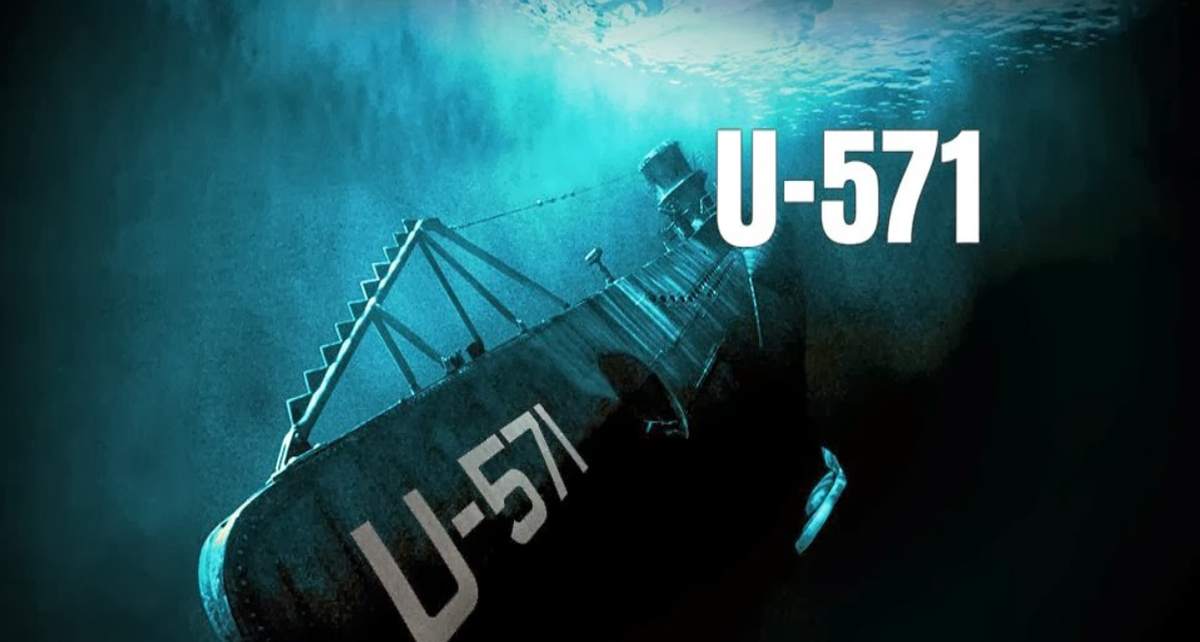
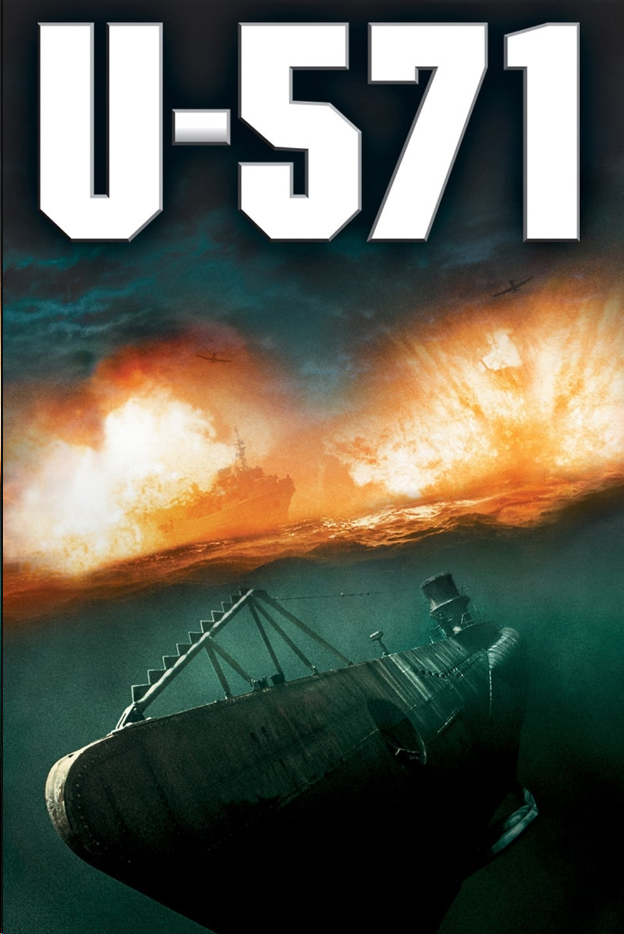
“U-571” unfolds as a meticulously crafted wind-up toy of a film, almost resembling a trailer for a video game. However, when measured against the depth of classics like “Das Boot” or “The Hunt for Red October,” it falls into the category of thin cinematic fare. The characters come across as perfunctory, the action feels recycled from standard submarine formulas, and a moment intended to depict a man drowning inadvertently reveals him standing on the bottom of the studio water tank.
Movies of this nature tend to work on a visceral action level, as evidenced by the suspenseful scenes when the German destroyer is dropping depth charges overhead. The audience finds itself immersed in the tension as underwater explosions draw nearer. Yet, a critical eye catches a flaw during a drowning sequence: the depth charges, initially evenly spaced, explode in quick succession when directly above the sub, betraying a conscious decision by the filmmakers to prioritize spectacle over plausibility.
“U-571” caters primarily to an action-oriented audience, particularly younger viewers. In contrast to “Das Boot” and “The Hunt for Red October,” which delved into the complexities of military professionals, “U-571” relies on a flimsy premise to set the stage for fabricated action sequences. Veterans of submarine service might find the film’s narrative and depiction amusing, perhaps even laughable.
Matthew McConaughey assumes the role of Lt. Tyler, an ambitious young officer eager for his first command. However, Lt. Cmdr. Dahlgren (Bill Paxton) deems him unprepared, withholding his recommendation until Tyler proves he can make tough decisions, including sacrificing lives for the mission. The obligatory movie dance party scene provides the backdrop for this revelation, just before the Navy men are summoned back to the boat on an emergency mission.
The mission at hand involves a disabled German U-boat in the mid-Atlantic carrying the secret Enigma machine, crucial for ciphering messages. The unbreakable Enigma code grants the Nazis control over shipping lanes. Dahlgren, Tyler, and their team are tasked with disguising their U.S. sub as a Nazi vessel, reaching the disabled sub before German rescuers, impersonating Germans, capturing the sub with a boarding party, seizing Enigma, and sinking the sub to avoid suspicion.
A protest from one of the sailors about their lack of Marine training prompts a nonchalant response from a Marine on board, promising to train them in less than a week. Curiously, the film skips any training scenes, leaving the fate of the Marine’s commitment unclear.
I won’t disclose the specifics of the encounter with the Nazi sub. Naturally, Tyler is afforded the opportunity to assume command and demonstrate his ability to make tough decisions, including sacrificing lives for the mission. If you recall the vibrant personalities of sub crews in “Das Boot” and “Red October,” you’ll notice a stark absence of individuality in this film. Dialogue, when present, is functional, sparse, and tailored to advance the plot. Even Harvey Keitel, playing the Chief, is reduced to delivering terse declarative sentences.
The crew members appear notably young, inexperienced, and overly fearful, often bordering on mutiny due to their headstrong nature. In one scene, the disguised U.S. sub is scrutinized by a German reconnaissance plane, prompting a young sailor on the bridge to panic. Convinced the plane will strafe them, he orders the deck machine gunner to fire. Despite orders from his superior officer to stand fast, the young sailor persistently screams, “Fire! Fire!” A logical deduction would suggest he should face a court-martial.
While “U-571” can be enjoyed as a brainless war movie with fast-paced action, it doesn’t escape looking somewhat cheap. Producers Dino and Martha De Laurentiis, along with director Jonathan Mostow (“Breakdown”), rely on rapid action to divert attention from the implausibility of many sea scenes, especially those involving the boarding party on the raft. Inside the sub, clichés abound, with the vessel diving beyond its rated depth, metal plates creaking, and bolt heads loosening under pressure.
The film follows the standard sub movie convention: submarines endure relentless attacks, suffering leaks, fires, damaged gauges, ruptures, broken air hoses, weak batteries, and inoperable diesel engines. Yet, miraculously, everything somehow works in the heat of the action—perhaps better than the screenplay.
Regarding historical accuracy, the German sub showcased at the Museum of Science and Industry in Chicago is U-505, captured not by submariners but by sailors from the USS Pillsbury, part of the escort group of the carrier USS Guadalcanal. This capture did not involve an Enigma machine. The actual acquisition of an Enigma machine occurred on May 9, 1941, when HMS Bulldog captured U-110. On Aug. 23, 1941, U-570 was captured by British planes and ships, though without an Enigma machine. The film, centered on a fictional U.S. submarine mission, concludes with end credits acknowledging these real British missions. Notably, the British successfully deciphered the Enigma code, achieving much of what the Americans do in this fictional portrayal.