One of the worst Arcade Beat-’em-up’s

As we delve into the world of Violence Fight, it becomes apparent that words alone cannot fully capture the essence of its peculiar plot. In an attempt to provide insight, let’s turn to the game itself for a description:
“During the early 1950s in the United States, an extraordinary game known as ‘Violence Fight’ gained popularity among the Mafia, daredevil drivers, and enterprising businessmen. ‘Violence Fight’ emerged as the ultimate contest for the coveted title of ‘No. 1 Quarreler,’ with fighters converging from all corners of the nation, boasting about their strength. Alongside the honor, the ‘winner’ would claim a substantial amount of prize money. In the heart of downtown L.A., a determined young fighter named ‘Bat,’ accompanied by his manager ‘Blinks,’ relentlessly pursues the opportunity to seize the championship and the accompanying rewards. Can Bat truly attain the esteemed position of No. 1 in the entire USA?”
Well, there you have it. Although it may be perplexing to comprehend the inclusion of reckless drivers in this tale, we must ponder whether they have a peculiar induction process involving a predetermined number of traffic violations. And yes, you read it correctly—our protagonist, Bat, aspires to claim the highly sought-after “No. 1 place of the USA.” Quite the inspiring goal, isn’t it?

Before Bat can revel in the glory and prize money that await him, he must navigate through a colorful array of adversaries hailing from diverse corners of the nation. Each possesses their own fascinatingly poorly written background. Bat, or rather Bad Blue, the previous year’s champion, enters the competition with overwhelming favouritism. He epitomises the exaggerated bravado of 1980s jocks, resembling a fusion of Final Fight’s Cody and Emilio Estevez from The Breakfast Club, clad in Levi jeans. And let’s not overlook Ben Smith, who, despite being reduced to the role of the “Generic Black Dude,” possesses exceptional agility and showcases impressive acrobatic feats. Meanwhile, Lee Chen, a Miami native, embraces a persona reminiscent of a Steven Seagal wannabe, journeying to mainland China during his childhood to master the art of deadly hand-to-hand combat.
And let us not overlook the final contender in the ring: Lick Joe. Yes, you read it correctly—Lick Joe. Amidst the clichéd character designs and comically dreadful biographies, Lick effortlessly steals the spotlight. With his calf-high boots, multiple chins, and spandex attire tightly clinging to his legendary beer belly, he embodies the epitome of a robust gentleman. But hold on, it gets even more intriguing! As a former wrestler, Lick Joe’s “professional license was revoked after inadvertently causing the demise of 13 wrestlers during matches.” Not only is Lick Joe a formidable force, but he’s also a certifiably unhinged one. Undoubtedly, he’s a top contender for the coveted title of “No. 1 Quarreler.”
Now that the lineup of fighters has been introduced (with a few hidden surprises awaiting in the final rounds), you have the opportunity to select one of these resilient heroes and assist them on their quest for glory. Each character possesses unique special attacks, although executing them often involves haphazardly mashing buttons and hoping for a stroke of luck. As the computer whimsically decides between countering your every move or allowing itself to be pummeled, you find yourself embroiled in a constant guessing game. In truth, your best bet is to rely on monotonous punches and kicks (jump attacks are utterly futile due to subpar hit detection). Once you’ve successfully cornered your opponent, a relentless assault on their vulnerable areas, such as repeated strikes to their unmentionables, proves sufficient to chip away at their health points. While the process may be ridiculously effortless, it is undeniably mind-numbingly dull.
Unfortunately, the limited number of animation frames further exacerbates the situation. Lick Joe couldn’t possibly transition from a waddle to a hefty punch and swiftly follow it up with a gut-pummeling kick in a mere second. Yet, miraculously, he does. The same can be said for the other characters—despite their frustratingly slower movements compared to the average arcade fighter, the scarcity of animation frames imbues them with an almost superhuman quality. The game attempts to distract players by overlaying cartoonish sound effect bubbles above the fighters whenever an attack lands. However, instead of the typical “BAM!” or “SMACK!”, you’re greeted with oddities like “BOGOON!” or “DAGON!”—equally nonsensical choices. As the fight concludes, a poorly drawn image of your trainer appears, offering words of encouragement such as “CAMON BOY,” “KILL YOU,” or the entirely random “SAMMY YOU!”

Considering the unconventional arenas in which these underground “Violence Fight” tournaments take place, you’ll need all the inspiration you can muster. Forget about stepping into a traditional boxing ring; instead, prepare to unleash havoc amidst wooden crates near the docks, maintain balance atop precarious pipelines, and engage in gritty combat inside a weathered barn. While the levels may lack excitement, they possess a certain peculiar charm. You’ll catch glimpses of the New York City skyline (albeit curiously overbuilt for a 1950s setting), utilize crates as makeshift weapons, and even endure a shower of broken bottles and debris from the raucous onlookers in the background. Though not visually stunning, it could have been worse.
However, let’s be honest—Violence Fight falls far from the realm of good games. In fact, it’s arguably one of the worst arcade fighters ever created, rivaling the ill-fated Pit-Fighter by Midway. Unsurprisingly, both games share striking similarities: laughable character designs, sluggish and unresponsive controls, abysmal animation quality, flawed hit detection, poorly implemented AI, and a translation that rivals Zero Wing in its sheer lack of quality. If Violence Fight possesses some profound philosophy, it eludes me entirely. I’m still struggling to decipher the true meaning behind “BOGOON!”
BREAKDOWN:
GRAPHICS: 70%
MUSIC/SFX: 46%
PLAYABLITY: 9%
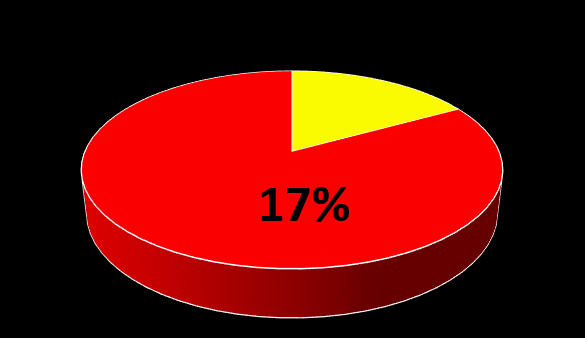
OVERALL: 17%
Platform: Arcade Games
Genre: Action-Fighting-2D
Developer/Publisher: Taito Corporation
Release: 1990