The Jinx of the Superman franchise continues…….

Take a moment to ponder an interesting fact before we delve into this game review: it’s widely accepted that a truly exceptional Superman game was never created for the 8-bit or 16-bit home game consoles. And that disappointing excuse for a game released on the Nintendo 64? Well, let’s just say it didn’t exactly soar to great heights (no pun intended).
Considering this, one would expect an arcade Superman game to be a resounding success, right? Just imagine the possibilities of showcasing the iconic superhero on an arcade cabinet, especially when developed by Taito! How could such a combination possibly go awry?
Gameplay
So let’s discuss the concept of the game, which initially seems captivating and thought-provoking in its originality: Superman embarking on a mission to save cities from alien forces. That’s the premise. The game features four levels, taking you from Metropolis to San Francisco, Las Vegas, and finally to the nation’s capital in DC, before confronting your formidable adversary in the fifth stage. However, my enthusiasm is laced with heavy sarcasm.
One would assume that Taito, with a plethora of Superman enemies to choose from, could have selected any captivating antagonist to challenge the Man of Steel and endanger the entire nation. Instead, they opted for Brainiac, neglecting the opportunity for more diverse foes. Furthermore, the absence of cameos or appearances from beloved characters like Jimmy Olsen or Lois Lane within Metropolis is disappointing. It wouldn’t have been too much to ask for even a single background or foreground appearance from these iconic characters.
The layout of the first four stages is replicated identically: the first part takes place on the ground, the second involves vertical flight on the screen, and the third transitions to horizontal flight until you reach the stage boss. Speaking of bosses, they are the same in each stage, albeit in different contraptions that you must destroy. The fifth and final stage introduces slight variations, but the monotonous repetition of the previous stages becomes tediously irritating.

As I mentioned earlier, the enemies you encounter consist of generic alien flying types, interspersed with spiders and towering adversaries. In the horizontal stages, you face obstacles like meteors, rocks, missiles, and destructible blocks that pose a threat if left untouched (oddly, no Kryptonite is included).
However, the most glaring issue with the game is evident. This is a two-player game, implying that Superman, who typically operates alone outside of his time with the Justice League, is granted a partner. Can you guess whom the programmers at Taito deemed fit as his companion? A mere palette swap of Superman, dressed in red instead. Yes, that’s their answer to the question of who the second player should be. They could have explored various options, such as including Supergirl or even depicting Jimmy Olsen in his superhero form. But Taito’s decision to lazily introduce a palette swap is both disappointing and uninspired.

Controls
The controls are fairly straightforward, but the frustrating delays and hesitations create numerous issues. Taito assigned a punch and kick button, and you can fly during ground sections of the stages by pressing up and maneuvering. In the horizontal stages, you can unleash laser vision while airborne and even charge up for a super punch. However, Taito falters in the execution of these moves. Charging up the super punch takes an agonizingly long time, and the standard punch and kick operate with noticeable delays. To make matters worse, the punch can only harm a single common enemy at a time.
Graphics
The graphics, on the whole, are decent, with the standout moment being Superman’s transformation from Clark Kent to his superhero form at the start of level one. The enemies, however, are unremarkable and easily forgotten. The backgrounds display some level of detail, particularly in San Francisco and Las Vegas, which effectively convey the sense of location. However, Taito missed the mark by not including the Daily Planet in the Metropolis level. And since when did Mount Rushmore find its way to Washington DC? I understand the symbolism of patriotism, but did this alien really want to mess with the entire USA.
Sound & FX
One of the major criticisms of previous Superman games was the absence of the iconic John Williams theme song. Fear not, for it does make an appearance in this game, playing during the first two parts of stages one through four. However, there are not many memorable sound effects, and only one or two other songs to captivate the player. It’s as if Taito decided to call it a day after including the Superman theme, and that’s it.

Overall
There’s no denying that this game can be challenging. Many of the problems stem not only from the delayed attacks but also from how certain high-ranking common enemies can incapacitate you and deliver the finishing blow before you can retaliate. It does help that you receive three lives per quarter, but if you fail to collect the small blue or yellow diamonds, you’ll never see a power-up. Who knew that so many common enemies were laced with the deadly green substance that proves fatal to poor Superman?
Superman’s arcade game falls somewhere between being terrible and great—it manages to surpass many of the other Superman games that came before or after it, but it still fails to live up to its full potential, leaving players with unfulfilled ideas. While the graphics and sound are commendable, the gameplay and controls fall short. It reinforces the notion that Superman has been unlucky when it comes to quality game adaptations, unlike his DC counterpart and occasional crime-fighting ally, Batman.
BREAKDOWN:
GRAPHICS: 68%
MUSIC/SFX: 69%
PLAYABLITY: 29%
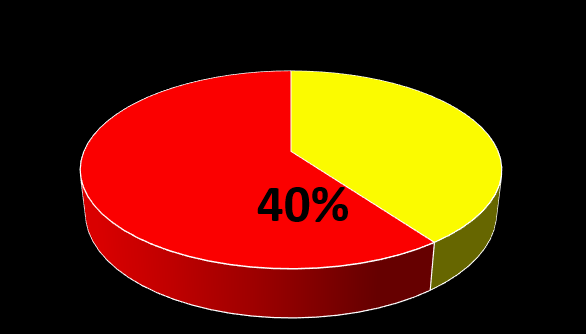
OVERALL: 40%
Platform: Arcade Games
Genre: Action-Beat-‘Em-Up-2D
Developer/Publisher: Taito Corporation
Release: 1988
Franchises: Superman