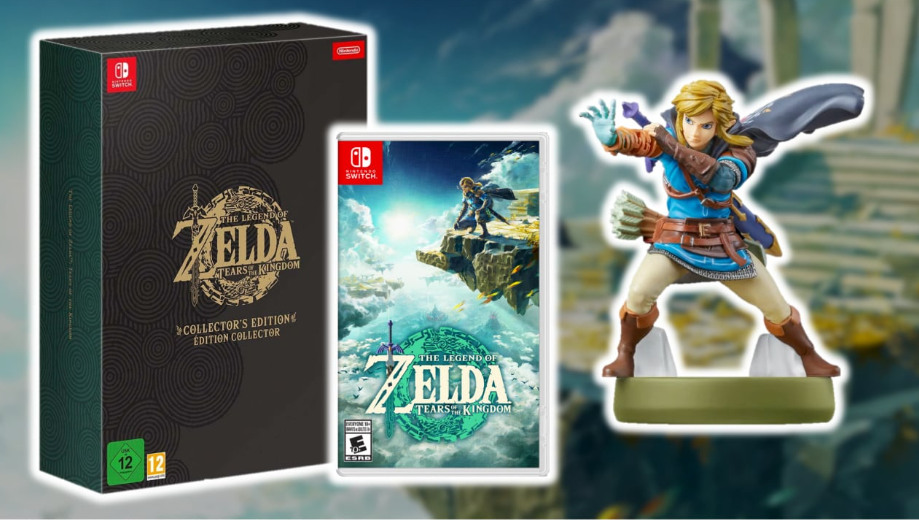
Unparalleled, Unrivalled, Absolutely Scintillating ……..
In 2017, Nintendo introduced The Legend of Zelda: Breath of the Wild as a groundbreaking open-world adventure, accompanying the launch of their Switch console. The game garnered immense acclaim for its innovative blend of ideas borrowed not only from previous Zelda titles but also from other renowned gaming series and genres. It seamlessly merged these elements into a landmark project that received overwhelming praise, solidifying its place as a genre-defining masterpiece for years to come. While Breath of the Wild represented a departure from its predecessors in many ways, it still evoked that familiar sense of captivating exploration found in the earlier entries of the series. As a massive and immersive game, Breath of the Wild could easily consume hundreds of hours as players delved into the vast landscapes of Hyrule. Personally, it consumed a significant portion of my gaming life and became one of my all-time favorite games for the system.
When news of the sequel broke in 2019, my curiosity was piqued. How could Nintendo possibly surpass their largest and most ambitious game to date? The anticipation grew during the years of development, and now, in 2023, we finally have the highly anticipated follow-up to Breath of the Wild: The Legend of Zelda: Tears of the Kingdom. After watching a couple of gameplay trailers, many fans, myself included, began to ponder whether this sequel would offer a completely fresh Zelda experience or if it would simply be a refined version of Breath of the Wild. Let’s explore the answer to this question.
Storyline
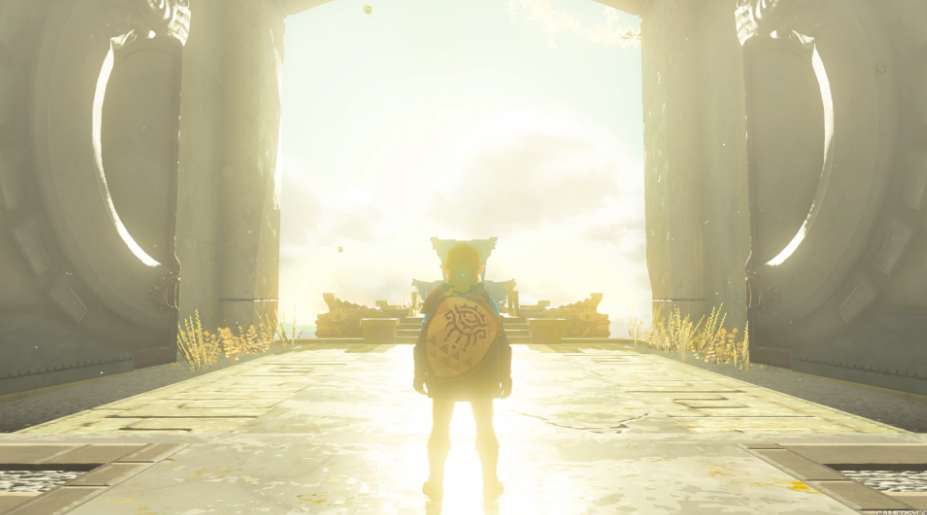
First and foremost, it is important to note that playing through Breath of the Wild is not necessary to comprehend the plot of Tears of the Kingdom. Zelda briefly references the events of Breath of the Wild at the beginning of the story, and from there, a new narrative unfolds. The game commences with a captivating cutscene featuring Zelda and Link exploring the depths of Hyrule’s castle underground. As they delve further into the caverns, they stumble upon ancient symbols depicting the long-lost Zonai race. Zelda documents these murals using the Purah Pad, a device for capturing images. Among the murals is a depiction of the “Demon King” and a Zonai figure descending from the sky, implying that the Zonai were the creators of the Royal Family and the founders of Hyrule. Intrigued, Zelda urges Link to venture even deeper, leading them to encounter a strange dark substance obstructing their path. Finally reaching the bottom, they make a shocking and horrifying discovery—details of which I will refrain from discussing to avoid spoilers in this review. After a series of scenes, Link finds himself stranded on a sky island, his arm replaced, and his Master Sword shattered. A mysterious voice instructs him to rise and embark on a quest to rescue Princess Zelda from an ancient evil that has befallen Hyrule.
Initially, I was curious about how Nintendo would craft the story for this game, considering the events of Breath of the Wild. However, I was pleasantly surprised by the outcome. Tears of the Kingdom presents a much more engaging and nostalgically Zelda-esque storyline. Similar to Breath of the Wild, the plot allows for non-linear progression, granting players the freedom to shape their own journey. Since delving into specific plot details would venture into spoiler territory, I will conclude this section by stating that Tears of the Kingdom’s script, while rooted in the classic Zelda storytelling style, surpasses the setting of Breath of the Wild in terms of narrative quality, in my opinion.
Gameplay
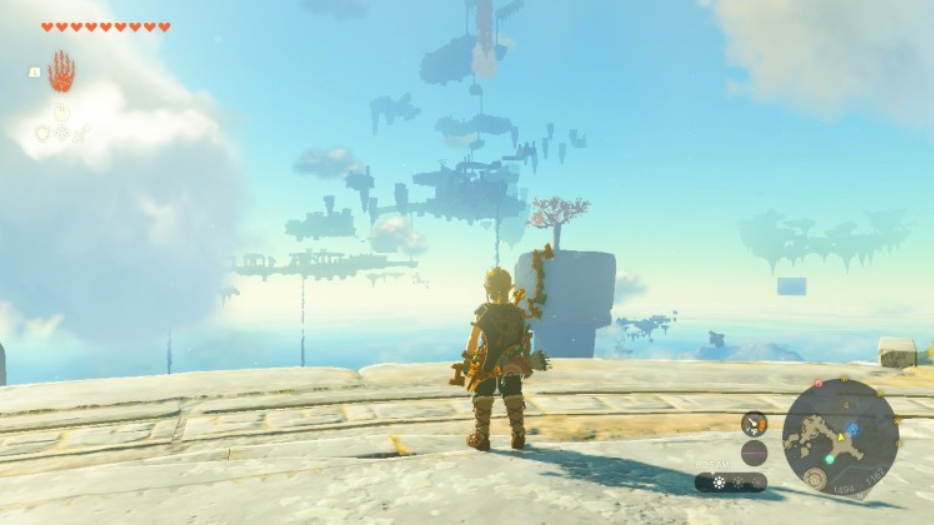
Oh dear, there’s an absolute truckload to discuss in this section. Tears of the Kingdom follows the same gameplay style as Breath of the Wild but expands upon its foundation by introducing new mechanics and enhancing existing ones. The game begins on sky islands, serving as a tutorial area similar to the Great Plateau, where Link starts off completely unequipped. As you explore the islands, you acquire new abilities along the way.
These new powers in Tears of the Kingdom are distinct from the runes in Breath of the Wild. The first ability, Ultrahand, allows Link to manipulate objects by sticking them together to create a variety of structures and vehicles such as bridges, rafts, and self-driving mine carts. It’s a fresh addition that sparks creativity and enables players to craft impressive constructions. The second ability, Fuse, allows Link to enhance weapons and shields by fusing them with other items, boosting their power, durability, and even granting special effects. For instance, fusing a shield with a mushroom creates a smoke screen when blocking, or fusing an arrow with a Keese eyeball transforms it into a homing missile. This feature significantly impacts weapon longevity, as weapon durability and breakage make a return.
The third ability, Ascend, enables Link to pass through ceilings, albeit with certain limitations. This ability proves to be quite useful when navigating the vast expanse of Hyrule. The fourth ability, Recall, allows Link to reverse time for a single object. It allows for riding fallen boulders or blocks, recovering thrown weapons, and redirecting projectiles. While there are other abilities in the game, they are introduced later, so I won’t spoil them in this review. However, it’s worth noting that the four abilities mentioned above will be your primary tools throughout the game.
Undoubtedly, the most frequently used ability will be Ultrahand, and I absolutely love it. It unleashes your imagination and allows for the creation of incredible structures and vehicles within the game. I’ve seen numerous YouTube videos showcasing players constructing astonishing creations like Gundam robots, flying laser drones, trains, Trojan horses, tanks, and giant buggies. The possibilities are endless, and it’s an absolute blast! Admittedly, getting used to playing with Ultrahand may feel a bit clunky initially, but once you grasp its mechanics, you’ll be building all sorts of structures and vehicles in no time.
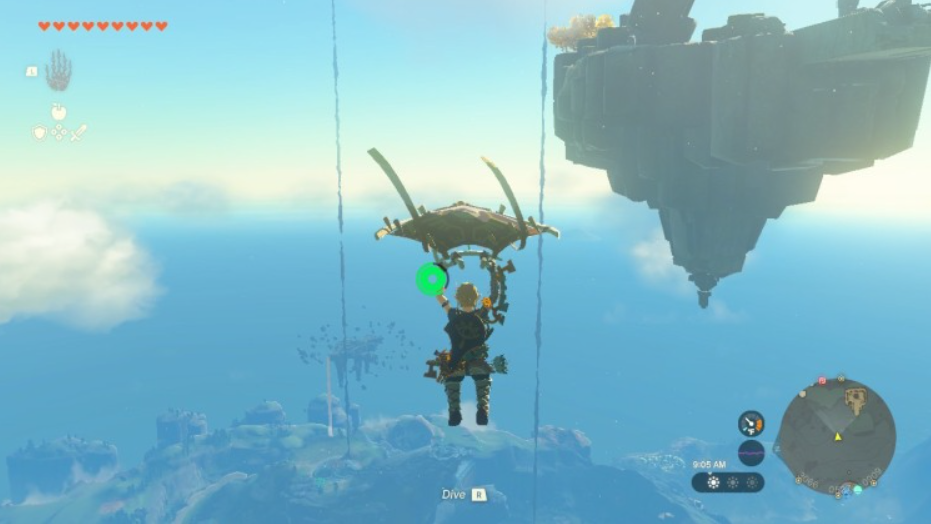
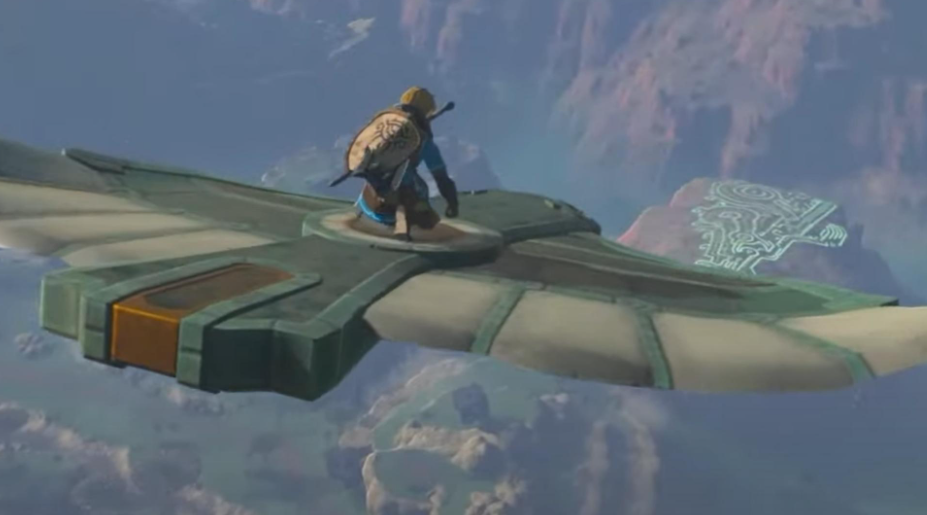
Alongside acquiring new abilities, Link also discovers Zonai devices scattered throughout the world in Tears of the Kingdom. These devices enable Link to create and upgrade structures and vehicles. There are various parts available, including fans, wings, hover stones, springs, flame/ice/shock emitters, batteries, sleds, rockets, air balloons, and more. These parts can be found on the ground, obtained from treasure chests, or acquired through gacha-like machines called Device Dispensers. Playing around with these objects is an absolute delight, reminiscent of being a child and experimenting with Lego pieces to create something fun and unique. Additionally, a Zonai portable pot is introduced, allowing Link to cook food on the go, which proves to be incredibly convenient.
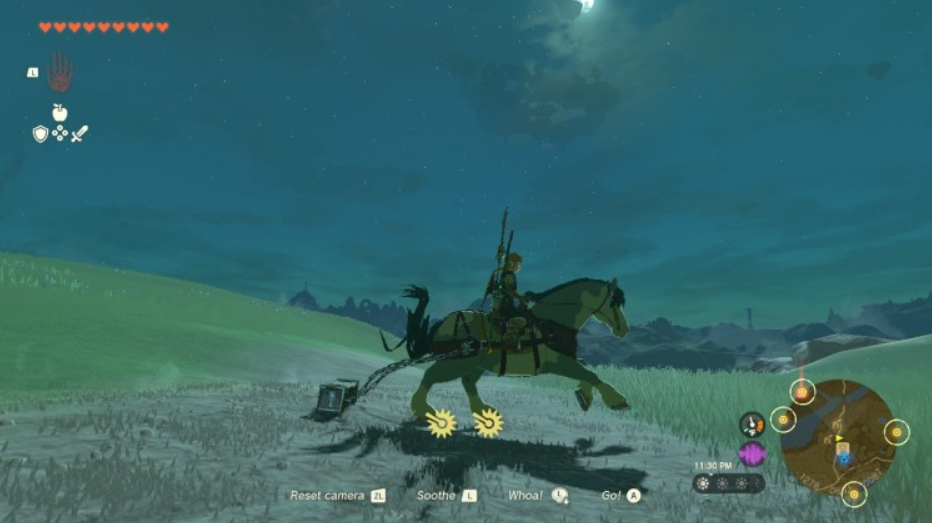
As Link obtains his abilities, he must complete the first four shrines in the game. Yes, shrines make a return, structured similarly to those in Breath of the Wild. They primarily make use of Ultrahand, with occasional utilization of Ascend and Recall. Once this tutorial area is completed, which takes approximately four to five hours, Link leaps from the sky island and lands in the Kingdom of Hyrule. From this point onward, the player is free to explore the vast open world before them. Tears of the Kingdom follows the same formula as Breath of the Wild, and in my opinion, it works splendidly. Yes, the game reuses the map from its predecessor, but as you traverse Hyrule, you’ll notice changes in certain environments and locations, as well as the addition of caves and wells. Exploring the surface of Hyrule, you’ll come across small, large, and even massive chasms filled with a dark, reddish substance. These chasms lead to the underground world of Hyrule known as The Depths. This underground area is nearly as expansive as the surface of Hyrule itself! It’s a dark and treacherous place (requiring special light-emitting items for easier navigation), inhabited by tougher and more menacing enemies. I won’t reveal any spoilers, but there are some truly harrowing sights down there. While I believe the developers could have introduced more visual variety to The Depths, I thoroughly enjoyed delving into the mysteries of this eerie and foreboding region. The inclusion of sky islands allows for not only horizontal exploration but also vertical exploration, effectively expanding the world’s size almost threefold. And yes, Tears of the Kingdom features story-related dungeons. Although more traditional in nature, they incorporate similar mechanics to the Divine Beasts in the previous game. I found their layouts and puzzles to be satisfying, although it’s a shame that there aren’t too many of them. I won’t divulge further details to avoid spoilers, but rest assured, this game does offer genuine dungeons.
Naturally, with a world of such vast size and proportions, there is an overwhelming amount of things to do in Tears of the Kingdom. The sheer number of distractions you encounter while traversing the world map is truly staggering. Discovering the diverse regions of Hyrule, stumbling upon new towers and shrines, exploring caves, wells, and chasms, collecting items, Zonai parts, and materials, obtaining armor sets, engaging with NPCs, embarking on side quests and adventures, participating in monster-hunting raids, and the list goes on. Ascending to great heights in the sky or delving deep into the underground—it all left me in awe. Even after playing for 15 hours, I felt as though I had barely scratched the surface of Tears of the Kingdom. Another 15 hours later, and I still felt like I had only dipped my toes in the water. It’s truly astounding how much content Nintendo has packed into this game. At times, I found myself utterly overwhelmed. Contrary to popular concerns, revisiting the same map from Breath of the Wild was not an issue for me—I thoroughly enjoyed rediscovering Hyrule and even experienced moments of nostalgia while revisiting places like Kakariko, Hateno, Lurelin Village, and more.
Now, I must address the return of a particular type of collectible—Korok seeds. Just like in BotW, there are hundreds of them, and once again, they are used to upgrade Link’s weapon, bow, and shield slots. While the developers introduced some additional variety to the process of finding Koroks, there is one new type of Korok that I wanted to mention: the lost Koroks. These Koroks request your assistance in reaching their friends, who may be on the other side of a river, mountain, island, or elsewhere. These specific Koroks require the use of the Ultrahand ability, as the player must construct a device or vehicle to transport the Korok to its companion. After completing around ten of these missions, I found them rather tedious, repetitive, and frankly, dull. I wish the Nintendo team had introduced more variety in terms of collecting Korok seeds.
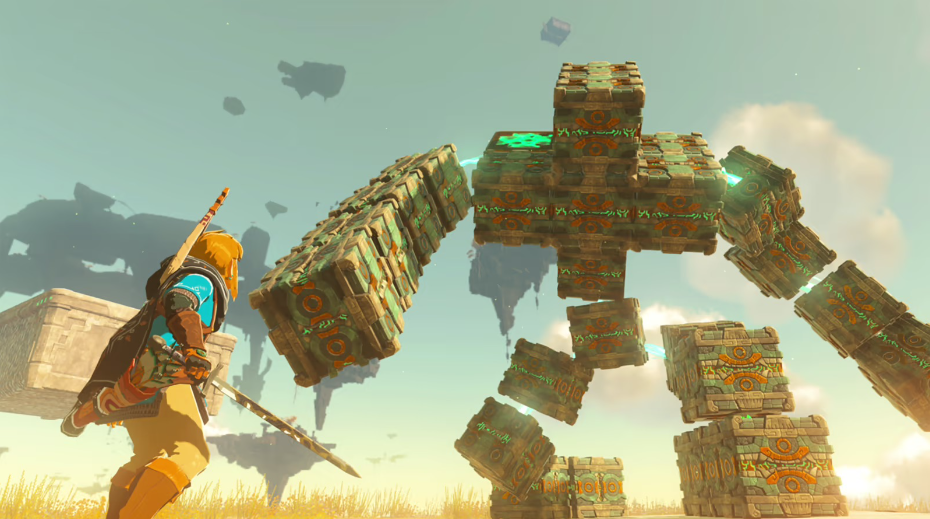
The combat system in Tears of the Kingdom is a refined and enhanced version of BotW’s combat. It retains all the mechanics of its predecessor while expanding upon them, allowing players to fully utilize Link’s new abilities. If you prefer not to engage in direct combat with a regular weapon, you can construct a robot or a drone using Ultrahand to fight on your behalf. When faced with enemies throwing rocks, you can use Recall to send the projectiles back their way. To prolong the lifespan of your weapons, you have the option to fuse them with rocks, monster parts, precious stones, or even other weapons, increasing their durability and attack power. For instance, fusing an Ice Chu Chu jelly with an arrow will cause your strikes to freeze enemies, while fusing an arrow with a dazzlefruit will temporarily blind them. If you attach an ice emitter to your shield, you can even freeze enemies by blocking their attacks. The game’s combat encourages players to think creatively, experiment, and discover new and exciting ways to overcome their opponents.
While I wasn’t particularly impressed with the enemy variety in BotW, Tears of the Kingdom seems to have nearly tripled the number of monsters. Although many familiar foes from BotW make a return, the introduction of new enemies and bosses adds an interesting and enjoyable dimension to battles.
Graphics
Let me begin by stating that Tears of the Kingdom adopts a visual presentation style very similar to Breath of the Wild. Considering that the game was developed for the Nintendo Switch, which is now six years old, the initial version of Tears of the Kingdom encountered some graphical issues that prompted Nintendo to release a patch even before the game’s official launch. The primary concern revolves around the framerate, which occasionally dips as low as 20fps. This may prove bothersome to certain players who were expecting a more polished graphical performance. While playing the updated version of the game, I noticed infrequent framerate drops, although they were still present, particularly in areas crowded with NPCs or when utilizing Link’s abilities in locations with numerous movable objects. The game runs at a dynamic resolution of 900p when docked and 720p when played in handheld mode. It’s worth noting that Nintendo has made visual improvements in various areas, enhancing textures and introducing new assets and structures. This constitutes a notable enhancement over the environments of Breath of the Wild. Personally, I was particularly impressed by the improved water visuals, which appear more natural and provide a satisfying splashing animation when diving into it from elevated positions. Textures are crisper, and the shadows appear more defined and smoother, especially at different times of the day. It’s truly remarkable how Nintendo managed to enhance the graphics to such an extent while simultaneously expanding the game world by nearly double. However, due to the framerate problems, I have deducted a couple of % from the visuals score. These issues are inherent to the technical limitations of the aging hardware, but as someone who firmly believes that graphics alone do not define a game, I do not consider these problems to significantly impact the final score of Tears of the Kingdom. Overall, the game remains visually appealing and stands as one of the more visually impressive titles for the Nintendo Switch.
Sound/FX
When it comes to the soundtrack, Tears of the Kingdom remains faithful to its predecessor. Much of the music for the Hyrule overworld, towns, and stables is the same. Once again, the game opts for a minimal ambient score, allowing players to immerse themselves in the sounds of nature, occasionally accompanied by subtle piano melodies or other sounds. The music swells in certain locations or when enemies detect and approach Link. Special mention must be given to the composers for their excellent work on the sky islands and underground themes, which create a truly atmospheric and memorable experience. The main theme of the game stands out, sounding absolutely magnificent and grand. Despite the reuse of Breath of the Wild’s music, the sound design remains a brilliant concept. It makes sense considering that players are exploring a familiar world, invoking a sense of sweet nostalgia. Moreover, the soundtrack never becomes tiresome to listen to, which is crucial for a game that one may play for hundreds of hours. The in-game sound effects are also familiar, featuring the same jingles when obtaining common or special items, heart containers, stamina vessels, and more. These sound effects were loved in Breath of the Wild and are just as enjoyable here. As for the voice acting, it is commendable, with actors delivering their performances convincingly, lending believability and distinctiveness to their characters. Overall, I found Tears of the Kingdom’s soundtrack to be a delight, and I encountered no complaints during my playthrough.
Replayability
Tears of the Kingdom is an astonishingly vast game, offering an abundance of captivating activities. With its three interconnected layers of the overworld, the game presents an overwhelming array of interesting things to do. As you set out on your journey, you’ll find yourself constantly drawn to new distractions, embarking on one quest only to be enticed by another nearby, and before you know it, hours have slipped away in delightful exploration. While this propensity for diversion was present in Breath of the Wild, Tears of the Kingdom takes it to another level, multiplying the number of enticing diversions you encounter along your path. Apart from the main story, the game offers a plethora of side quests, adventurous undertakings, shrine discoveries, cave explorations, forays into the underground, Korok seed collection, culinary escapades, gear acquisition and enhancement, experimentation with Zonai parts, monster hunting, cooperative raids with NPCs, horse taming, and the sheer joy of playing with your abilities and the game’s physics system. The sheer volume of collectibles and activities may leave your head spinning, and I assure you, I’m not exaggerating. Tears of the Kingdom is all about the freedom to explore and engage in a myriad of different experiences. It exemplifies the essence of a true adventure, where the joy lies not only in reaching the destination but also in the journey itself. To fully delve into the vastness of this game’s world, I would estimate you’ll need several hundred hours. This remarkable depth and breadth of content is a tremendous advantage, providing an immersive Zelda experience that will keep you happily lost for an extended period of time.
Overall
Is Tears of the Kingdom simply a Breath of the Wild 2.0? Well, yes and no. If anything, this game transcends being a mere sequel and propels Breath of the Wild into a whole new realm. Nintendo has poured their heart and soul into crafting a truly awe-inspiring experience, elevating and expanding upon the foundation set by its predecessor. Tears of the Kingdom is a game of grandeur, bursting with an abundance of content and a level of intricacy that left me astounded. It deviates from the minimalist approach of its predecessor, immersing you in a world brimming with activity and choices. It’s a game that envelops you with its monumental scale, capable of diverting you in countless directions before you even reach your original destination. With its innovative item fusion and creation system, Tears of the Kingdom takes experimentation to unimaginable heights, pushing the boundaries of what a Zelda title can offer. And let’s not forget the ingenious puzzles that stimulate your intellect and spark your creativity.
Recently, I heard someone refer to Zelda as an “adventure generator.” I couldn’t think of a more fitting description for Tears of the Kingdom. It’s a game that ensures each person’s playthrough is a unique and personal experience. The moments of euphoria I encountered during my nearly hundred-hour journey were not contrived; they were genuine. This game exists, or rather, lives and breathes on its own, responding dynamically to the actions I take within it. From capturing falling star fragments while soaring on a Zonai wing under the night sky to attaching an eyeball to an arrow, transforming it into a homing missile, Tears of the Kingdom bestows these remarkable abilities without relying on tedious in-game tutorials. You learn and discover these mechanics through your own endeavors. It’s these elements that make traversing Hyrule an extraordinary and unparalleled adventure. In Tears of the Kingdom, you are never told “You can’t do this!” Instead, you are presented with a single question: “What new and exhilarating possibilities can you envision?”
I am enthralled, overwhelmed, and sometimes left speechless. The Legend of Zelda: Tears of the Kingdom surpasses my wildest expectations. Allow me to summarize this review in one sentence: When you intend to play for only an hour but find yourself engrossed for five hours straight, oblivious to the passing of time, that’s when you know you are immersed in an unparalleled open-world gaming experience.
I have little option in awarding this game one of the highest accolade scores.
BREAKDOWN:
GRAPHICS: 97%
MUSIC/SFX: 98%
PLAYABLITY: 100%
OVERALL: 99%

Platform: Nintendo Switch
Genre: Action Adventure – Open World
Developer/Publisher: Nintendo
Release: 2023
Franchises: Legend of Zelda