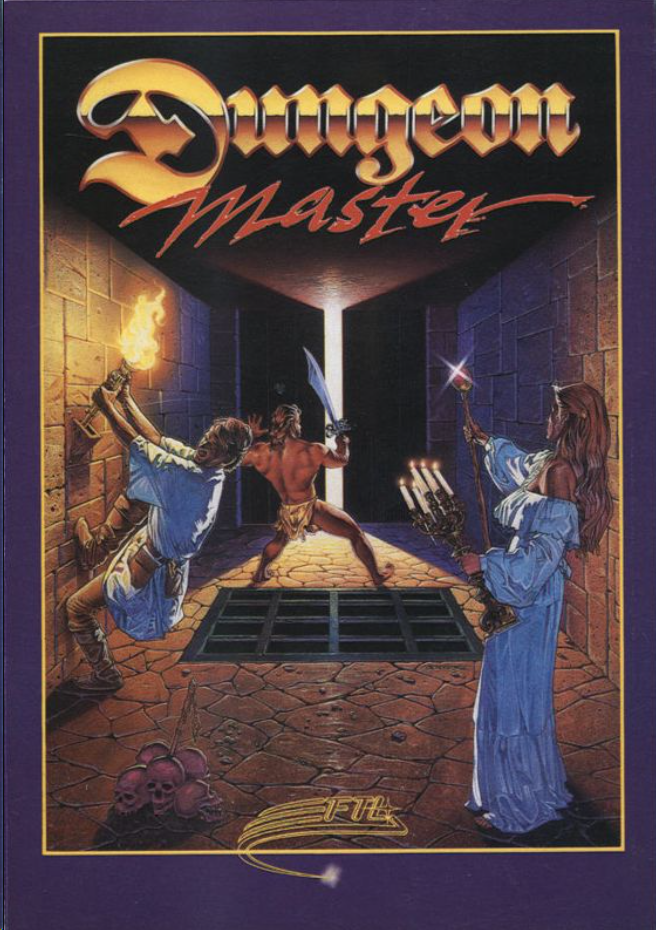
Touted by many as the best ST game ever produced, it handsomely snatches number 1 spot for us, good show, epic stuff…….
Introduction
Once upon a time, in the realm of the Hall of Champions, beyond the cheese, bread, and corn on the cob, a dark staircase descended into a dungeon of shadows. Deep within this dungeon lurked Lord Chaos and his malevolent minions. To survive the perils of Chaos’s domain, one needed to embody the true essence of a dungeon master.
Description
Dungeon Master, an early release for the ST, masterfully blended various gaming genres. Drawing inspiration from the Dungeons & Dragons formula, it paved the way for later titles like DOOM and Wolfenstein 3D during the mid-1990s. Dungeon Master immersed players in a 3D labyrinth filled with puzzles, monsters, and an array of food, objects, and weaponry crucial for progression and triumph in battles.
A standout feature was the introduction of real-time battles, injecting fear and intensity as players unexpectedly encountered opposition. Learning how to approach each type of foe became essential; some creatures succumbed to hand weaponry, while others required a magical fireball assault or strategic retreat. Additionally, players had to master the art of casting spells by diligently practicing the incantations found on scrolls throughout their journey.
Survival was further complicated by the scarcity of food and water. Players had to ration supplies meticulously, scavenging flesh from defeated beasts and seeking secure hideouts to rest and recuperate when fatigued or injured.
Details
Dungeon Master unfolds across 13 interconnected floors accessed through stairways. Initially, each floor operates as a self-contained level with linear progression. However, beyond level 5, the game adopts a non-linear structure, requiring players to create maps and navigate between multiple floors.
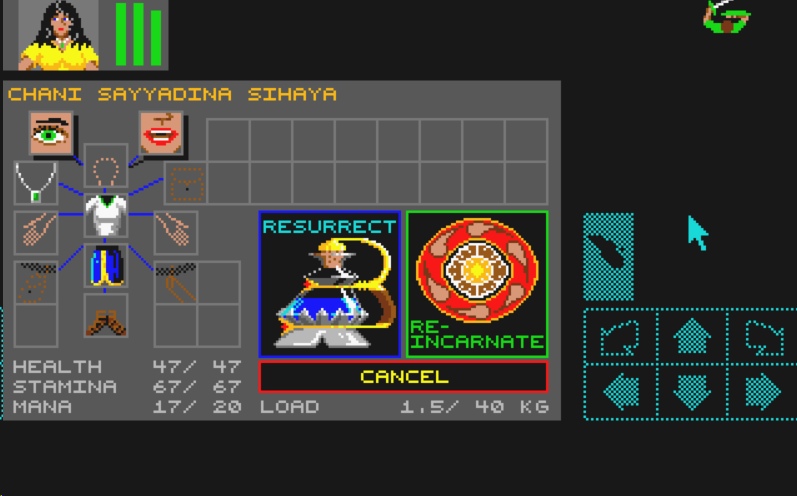
THE HALL OF CHAMPIONS: Players assume the roles of four heroes revived from the Hall of Champions. The selection process is crucial, with heroes possessing distinct Fighting, Ninja, Wizard, and Priest skills. Fighting units excel in heavy weapon combat due to their strength and effective blow absorption. Ninjas showcase proficiency with precision weapons, leveraging better judgment and faster reflexes. Wizards contribute offensive magics and mastery of the elements, while Priestly skills bring gentle magics such as divine protection, healing, and enemy pacification. Fighting and Wizardry skills stand out as the most crucial and frequently used, while Priest and Ninja skills, though less visibly impactful, play supporting roles that aid and ease victory in battle.
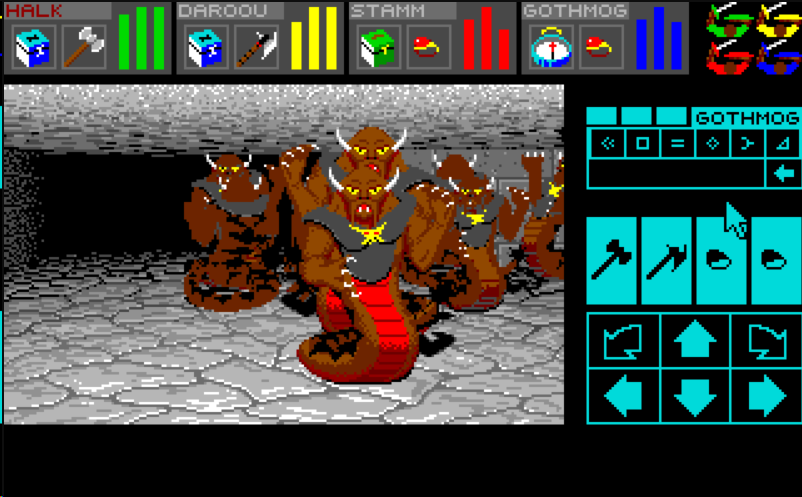
Extreme lightweight units lack effectiveness in combat and load-carrying, tiring easily and requiring protection. On the other hand, extreme heavyweight units may struggle to learn or perform any magics. The choice of units for resurrection is a personal one, guided by expertise grades that include Neophyte, Novice, Apprentice, Journeyman, Craftsman, Artisan, Adept, Expert, Master-1, Master-2, Master-3, Master-4, Master-5, Master-6, and Archmaster. Understanding the strengths and weaknesses of each hero is essential to assembling a well-balanced and formidable party capable of navigating the challenges within the dungeon.
The Champions : A diverse group of champions, each with their unique skills and abilities, includes Iaido Ruyito Chiburi, Zed Duke Of Banville, Chani Sayyadina Sihaya, Hawk The Fearless, Boris Wizard Of Baldor, Alex Ander, Nabi The Prophet, Hissssa Lizar Of Makan, Gothmog, Sonja She Devil, Leyla Shadowseek, Mophus The Healer, Wuuf The Bika, Stamm Bladecaster, Azizi Johari, Leif The Valiant, Tiggy Tamal, Wu Tse Son Of Heaven, Daroou, Halk The Barbarian, Syra Child Of Nature, Gando Thurfoot, Linflas, and Elija Lion Of Yaitopya.

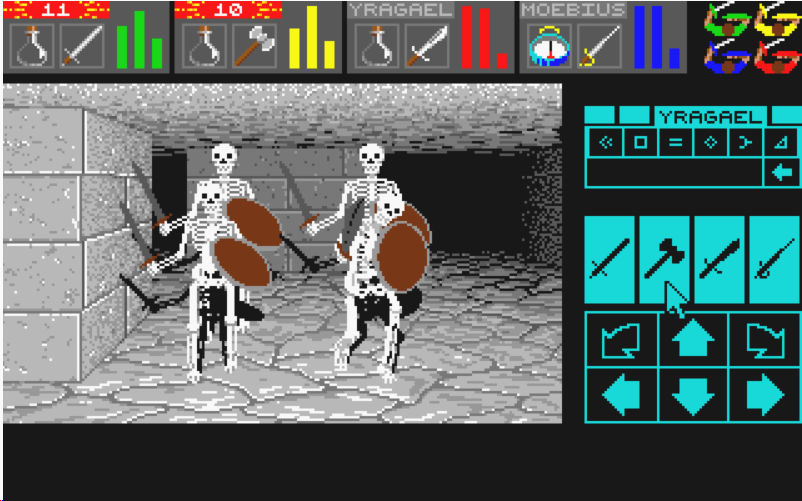
Encountering various creatures as you descend through the dungeon floors, each presenting unique challenges and requiring specific strategies for survival:
- Mummies: Humanoid figures wrapped in white bandages dominate the early levels. Caution is advised in large groups. Combat options include hand weapons, light power fireballs, or using poison gas. Avoid getting cornered.
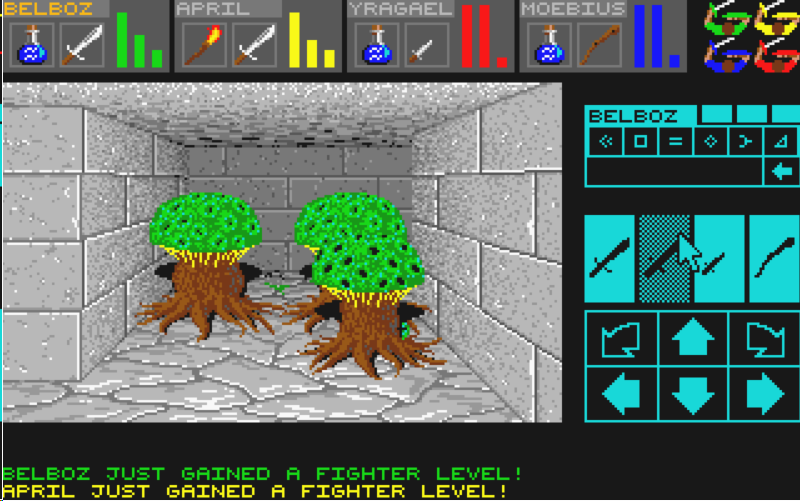
- Screamers: Small, shrieking tree-shaped creatures move slowly and cause light damage. Combat with low power fireballs or heavy hand weapons. Their remains, “Screamer Slices,” serve as a valuable and essential food resource.
- Rock Piles: Slow-moving nuisances that can cause medium damage and have a poisonous bite. Destroy them with medium power fireballs. Their remains, rocks, can be used as contingency throwing weapons.
- Blue Ogres (Trolin): Fast-moving neanderthals in herds, wielding clubs and causing heavy damage. Best dealt with using medium power fireballs. Avoid hand-to-hand combat unless necessary.
- Giant Wasp: Very fast with a poisonous sting, difficult to outrun. Trap behind a door or use a combination of magic and weaponry for close-range destruction.
- Magenta Worm: Tough and agile, usually found in pairs. Use level-3 fireballs or relentless aggression to drive them away. Edible remains, “Worm Rounds,” provide limited nutrition.
- Ghost: Fast-moving entities causing moderate damage. Unaffected by conventional tactics, require banishment with an anti-elemental spell.
- Swamp Slime: Relentless creatures attacking at a distance, rapidly reducing health. Destroy with a single heavy fireball.
- Coatl: Snake-like flying creatures, tougher than wasps. Requires armor and prepared magics for safe elimination.
- Skeleton: Humanoid figures operating in gangs. Combat apprehension with decisive action using various weapons. Leaves behind wooden shields for potential armour.
- Wizard Eye: Flying eyes throwing fireballs. Counter with fireballs or projectile weapons, taking cover to avoid their deadly attacks.
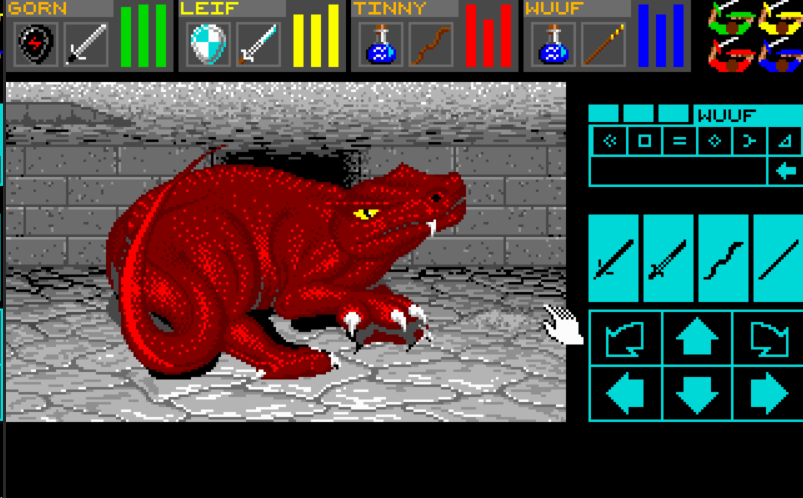
Encounters in the latter stages of the game introduce a new set of creatures, each with its own distinct characteristics and challenges: Giggler, Stone Golem, Ruster, Vexirk, Giant Rat, Scorpion, Water Elemental, Animated Armour, Oitu, Materializer, Black Flame, Demon, Red Dragon, and the formidable Lord Chaos.


MAGICAL ARTS: The game’s magical system revolves around uttering a sequence of verbs/symbols that draw from the caster’s mana reserves. While players can experiment with random combinations, it often results in wasting mana. Workable spells are inscribed on scrolls found within the dungeon. Some spells, like magical healing and poison cures, must be bottled into a flask to create a potion. Repeatedly casting spells grants the caster experience, gradually elevating their level from Novice to Archmaster. This journey increases their mana reserve, enables the casting of more potent spells, boosts mana regeneration (wisdom), and unlocks access to the most arcane spells.
The first verb/symbol is POWER, determining the spell’s strength, such as the explosive damage of a fireball or the brightness and duration of magical illumination. Six power levels exist, with novices starting at the lowest. By the first-floor’s end, wizards should routinely generate level 3 fireballs, aiming to master all six levels by the dungeon’s halfway point.
The second verb is the Element, drawn from metaphysical theory: Earth, Water, Air, Fire, and two new ones – DES (space) and ZO (nihility). For example, fireballs use elemental fire.
The third verb is the Form, an arcane set: Poison, Creature, Explosion, Levity, Benefactor, Adversary. The fourth verb is the Alignment verb: Martial, Dexterity, Wizardly, Priestly, Order, Disorder. Not all spells require verbs three and four.
Potions made using an empty flask and a power symbol include:
- Venom Bomb: DES VEN
- Bottle of Poison: ZO VEN
- Magical Shield Potion: YA BRO
- Poison Cure Potion: VI BRO
- Health Restoration: VI
- Stamina Restoration: YA
- Mana Restoration: ZO BRO RA
- Strength: FUL BRO KU (carrying strength and melee action)
- Vitality: YA BRO NETA (recovery speed)
- Dexterity: OH BRO ROS (ninja skills)
- Wisdom: YA BRO DAIN (mana regeneration)
Other spells include:
- Poison Cloud: FUL IR
- Lightning: OH KATH RA
- Plasma: ZO KATH RA
- Illumination: FUL
- Strong Illumination: OH IR RA
- Darkness: OH IR SAR
- Anti-Elemental: DES EW
- Magical Shield: YA IR
- Anti-Magic Shield: YA BRO
- Fire Shield: FUL BRO NETA
- Remote Door Operation: ZO
- Magical Footprints: YA BRO ROS
- Invisibility: OH EW SAR
- Invisible Walls: OH EW RA
Graphics & FX
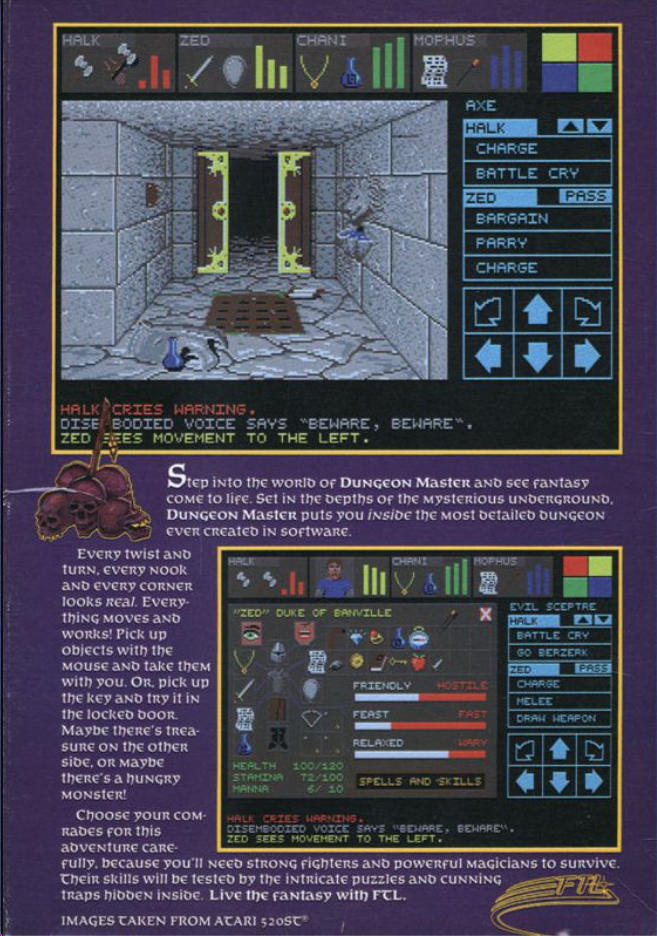
Controlled primarily through the mouse (with key options available), the game’s controls stand as a potential weakness due to occasional awkwardness and unresponsiveness (if you want me to nit pick). Graphics updates and loading/saving times are relatively slow, yet the game remains immensly playable. Given its nature as a weeks-long adventure, a few extra minutes of waiting are deemed tolerable.
Despite a limited 16-color palette, the graphics are impressive, showcasing meticulous detail in objects, creatures, and environmental elements. The rendering time, while slightly slow between frames, compensates with high-quality visuals, warranting full marks. A minor concern lies in repetitive wall/floor graphics, though the game incorporates two variations for movement, surpassing some dungeon master clones that employ only one.
Sound features a variety of noises accompanying combat, pain, explosions, and interactive elements like doors and switches. The labyrinth’s inherent silence, devoid of distant footsteps or in-game music (including an initial theme), contributes to an eerie atmosphere, which can be perceived as a bonus. However, the range of sounds appears somewhat limited when compared to the richness of the graphics.


Overall
Dungeon Master stands as one of the most intricate games crafted for the Atari ST, showcasing a harmonious blend of programming expertise, graphic artistry, and structural design.
Since its 1987 release, Dungeon Master has consistently dominated Atari ST game rankings, earning acclaim as the best game on the platform. While it extended its presence to other platforms such as Amiga, SNES, AppleII-GS, X-68k, and PC, its impact on these systems was not as pronounced. Nevertheless, even over three decades later, the game boasts a dedicated fanbase and several websites dedicated to its legacy.
Produced in the early years of the ST’s existence, Dungeon Master emerged less than two years after the system’s inception, well ahead of the peak of commercial investment. Whether attributed to luck or genius, Dungeon Master established itself as the benchmark for personal computer adventure games.
The game follows a timeless narrative formula—a lone hero embarking on an arduous journey, grappling with fears and physical limitations, ultimately triumphing over formidable adversaries and evil forces. This tradition, rooted in ancient civilizations and enriched through medieval and Victorian ages, found renewed life in the 20th century through horror films, Dungeons and Dragons, and digital adaptations. Dungeon Master, in turn, paved the way for successors like Doom and the acclaimed Warcraft series.
Dungeon Master serves as a chapter in the enduring human tradition of hyperbolic battle stories, symbolizing the innate human desire to assert control over the environment, whether in reality or fantasy.
While Dungeon Master might not claim the title of favourite ST game by everyone’s standards, possibly due to a quickly tiring dungeon environment, it undoubtedly holds top spot for sentimental reasons. Its enduring ability to captivate and engage has kept gamers reflecting on it for nearly four decades. In summary, Dungeon Master deserves the utmost respect as THE standout ST game in my book.
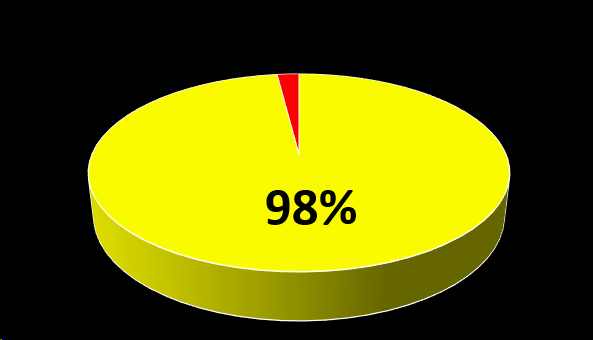
Gold Star, 98% rating and have the coveted Position 1 rosette as well.
BREAKDOWN:
GRAPHICS: 96%
MUSIC/SFX: 91%
PLAYABLITY: 99%
OVERALL: 98%
Platform: Atari ST
Genre: Roleplaying-Western Style
Developer/Publisher: FTL Games
Expansion: 1 Available
Release: 1987
Franchises: Dungeon Master