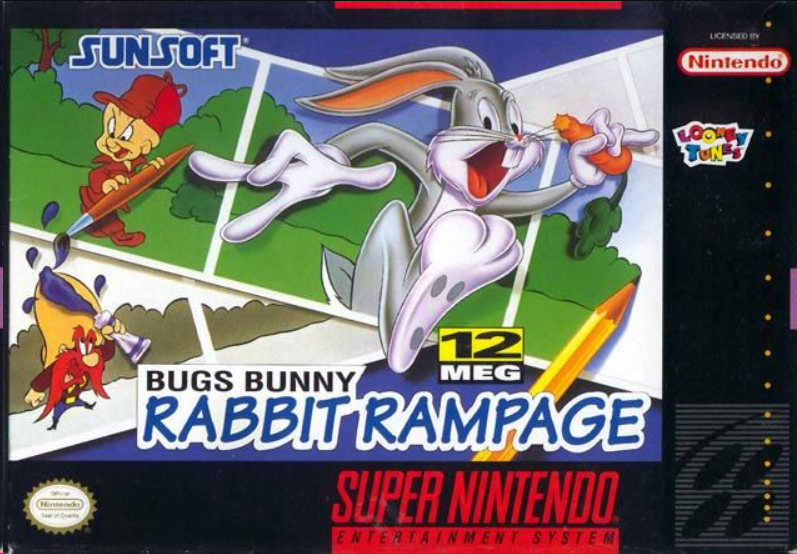
Although far from perfect, the game remains a well crafted little gem…..

Looney Tunes. The undisputed king of Saturday morning cartoons. Chances are, during your early years, you shared a bond with the iconic carrot-crunching rabbit sporting the signature catchphrase, “What’s up, doc?” The infectious laughter and chaos of Looney Tunes held a special place in childhood memories.
Enter Rabbit Rampage for the Super Nintendo—a timeless fusion of cartoon humour and video game magic, offering a unique escape for retro gamers even two decades after its release.
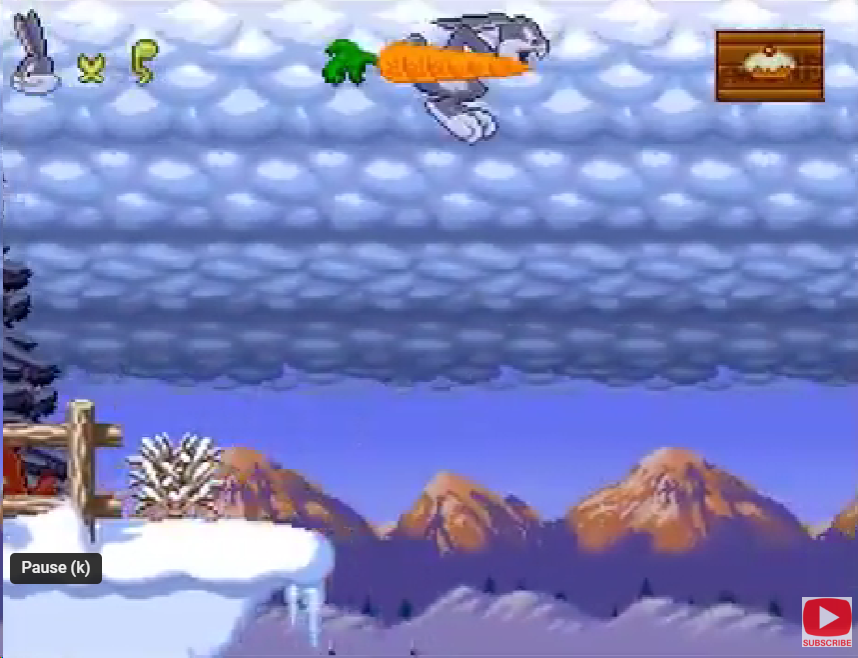

The essence of Looney Tunes permeates every aspect of the game, starting with its story. Bugs Bunny finds himself ensnared in a perilous world crafted by an anonymous artist. The unfolding mystery of the artist’s identity adds depth to a simple yet remarkably original narrative—a hallmark of the Looney Tunes franchise.
The game’s presentation on the Super Nintendo is consistent and captivating. Each level boasts a distinct environment vividly brought to life through vibrant graphics. Cartoon-like textures abound, enchanting players with their colourful charm. The music, infused with Looney Tunes melodies, expertly sets the tone for each scenario. While some sound effects, like Bugs Bunny’s bouncing, may verge on repetitive, others, especially during cartoon combat, enhance the overall experience, adding to its enjoyment.


Alongside its stellar presentation, a hallmark of the Super Nintendo, Rabbit Rampage delivers on gameplay, albeit with a minor hiccup in length. With only ten levels, the game might seem short, but each stage offers a unique challenge that requires time and mastery to conquer, ensuring a fulfilling experience. From a snowy martial arts mountain to a wild west bar teeming with gun-toting cowboys, the diversity of atmospheres and environments keeps players engaged from start to finish.
As players progress, they encounter new enemies, items, and objectives, adding layers of complexity and variety to the gameplay. Some levels focus on reaching a destination, while others center on strategic boss battles, offering a dynamic range of gameplay mechanics. Notably, each level introduces fresh challenges and never recycles bosses or gimmicks, keeping the experience consistently engaging. Enemies are uniquely tailored to their environments, showcasing distinct attack patterns and behaviors.
Bugs Bunny’s repertoire of moves, including a high hop, quick kick, and swift spinning fists, captures the essence of his cartoon persona. Players can also utilize a variety of items, many of which exploit enemies’ weaknesses with humorous results. While some items may seem frivolous at first, mastering their use adds depth to the gameplay and comedic charm. One particularly vital item is an arrow that marks a checkpoint for Bugs Bunny’s respawn, allowing players to strategically choose their respawn location and optimize progress.


Speaking of life loss, Rabbit Rampage presents a notable challenge with its health system, revolving around carrots as a health indicator. However, the lack of clear divisions within the carrot’s health representation can be frustrating, as different enemies and attacks inflict varying amounts of damage. This ambiguity often leaves players uncertain about their true health status, requiring familiarity with enemy strength to navigate effectively. Additionally, falling into pits, a common hazard in video games, results in instant death, leading to situations where players may feel unfairly punished, such as being knocked back into a pit by an enemy.
To offset the frequent deaths, the game offers numerous opportunities to earn extra lives, replenish carrot health, and obtain continues. Extra lives are strategically placed throughout levels, some requiring hidden discoveries to access, while others are more readily available. Discovering secrets within levels becomes essential for maximizing resources and testing player mastery of the level design. Moreover, end-of-level ratings reward players based on their performance, offering additional lives and health boosts for future challenges.

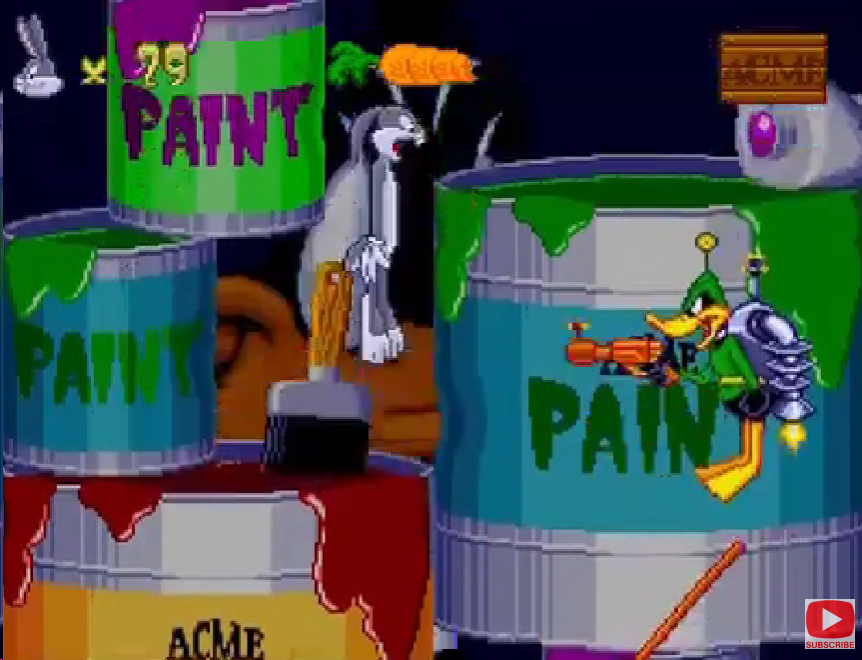
While Rabbit Rampage provides a diverse array of objectives and level structures, controlling Bugs Bunny can be challenging due to the delayed response in his jumping mechanics and his fixed walking speed. This limitation may frustrate players, particularly in critical moments where swifter movement is desired. However, the game compensates for this by designing levels that accommodate Bugs Bunny’s movement pace, ensuring a balanced gameplay experience. As players progress, the gradual increase in action complexity aligns with the game’s escalating difficulty, allowing for a smoother learning curve in mastering Bugs Bunny’s controls within the context of the level design.
While Rabbit Rampage boasts charming levels infused with the whimsy of Looney Tunes, its primary drawback lies in its lack of replayability. Once players have completed its ten unique levels, there’s little incentive to revisit the game beyond reliving the initial experience. Absent are customizable difficulty settings or competitive scoring systems, leaving replay value solely dependent on personal enjoyment and the desire to revisit specific moments.
However, despite this limitation, Rabbit Rampage excels in capturing the essence of Looney Tunes humor and atmosphere. Its comedic elements are delightfully presented, evoking laughter and amusement throughout gameplay. Rabbit Rampage stands as a noteworthy addition to any Super Nintendo collection and for fans seeking a 2D platformer imbued with quirky charm and nostalgic appeal, the game remains a special gem well worth considering.
BREAKDOWN:
GRAPHICS: 90%
MUSIC/SFX: 85%
PLAYABLITY: 72%
OVERALL: 80%

Platform: Super Nintendo
Genre: Action-Platformer-2D
Developer: Viacom Media / SunSoft
Release: 1994
Franchises: Bugs Bunny