Decent movie tie-in, lacks star quality but overall, an enjoyable jaunt……
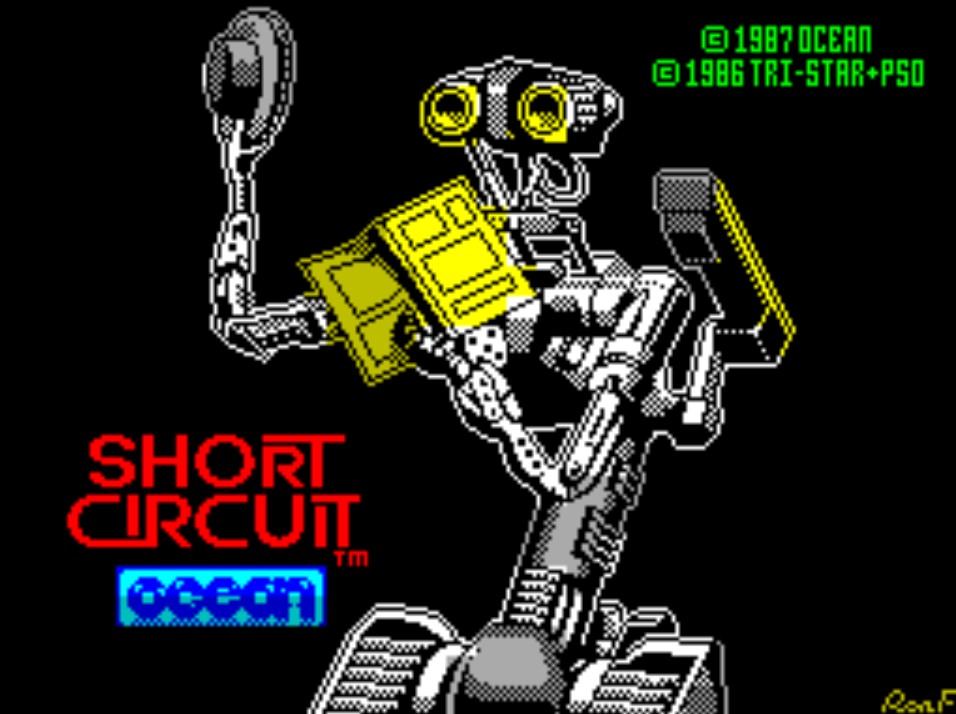
By the late 1980s, Ocean was perilously close to earning an unenviable reputation after a run of decidedly shaky licence tie-ins such as Knight Rider, Street Hawk, and Top Gun. Confidence in movie conversions was wearing thin. Then Short Circuit, based on the film of the same name, arrived and began to turn things around, signalling the early stages of a much-needed revival.
Both the film and the game revolve around Number 5, a robot created by an unhinged and trigger-happy military organisation. As so often happens with the inventions of eccentric geniuses, something goes badly wrong. A malfunction deep within Number 5’s programming causes it to develop—horror of horrors—human-like awareness.
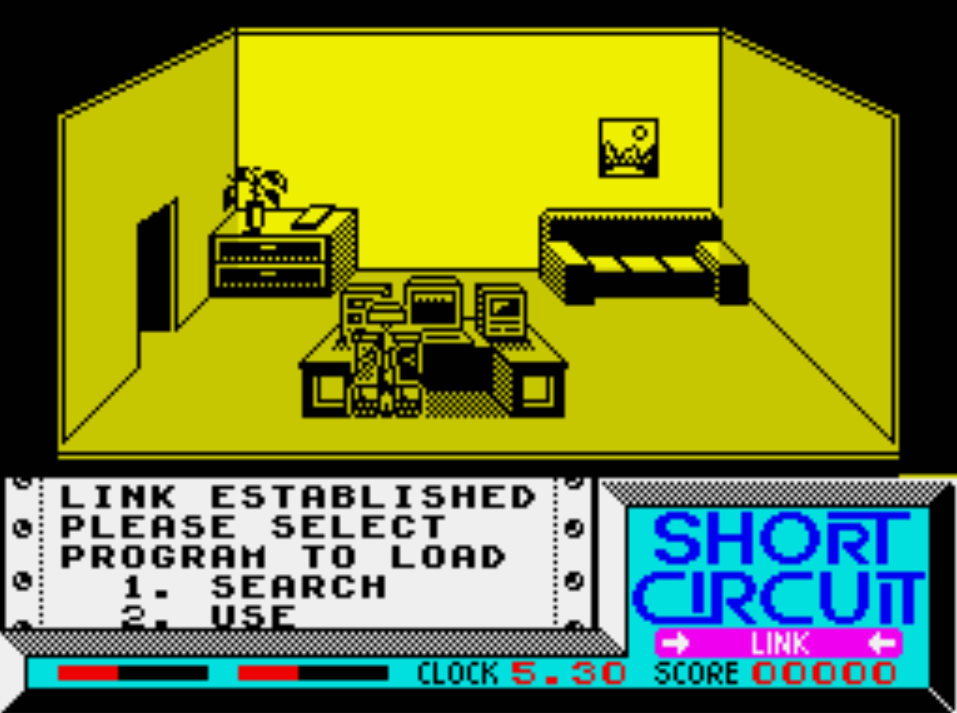
The scientists want their creation back on the workbench to diagnose the fault. The military security forces just want to make sure Number 5 doesn’t go on a rampage with the enormous laser mounted on its chassis. Number 5, meanwhile, is perfectly happy roaming free and would very much like to stay that way. Whether knowing all this actually enhances enjoyment of the game is, frankly, open to debate.
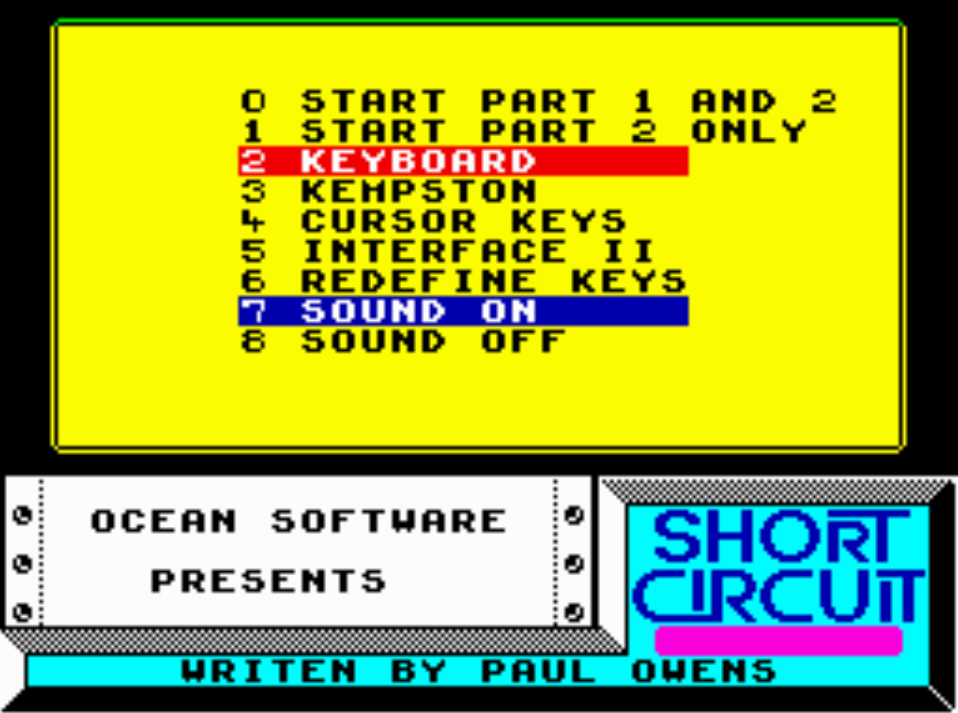
The game is split into two distinct parts. The first is a quasi-3D adventure set across thirty-six rooms filled with benches, tables, chairs, drawers, chests—and an excessive number of palm trees. The palms are particularly annoying, seemingly included to slow progress, as almost every object in the environment can be examined or searched. Items can be hidden anywhere, which means you’re forced to rummage through everything rather than focusing on logical locations.
To make matters worse, Number 5 isn’t exactly a genius. You’ll need to locate software programs that teach it basic actions such as picking up objects, dropping them, breaking items, or searching containers. The goal of this section is to explore the rooms, collect useful items, and use them in the correct way to eventually escape the complex. It sounds straightforward—but it absolutely isn’t.
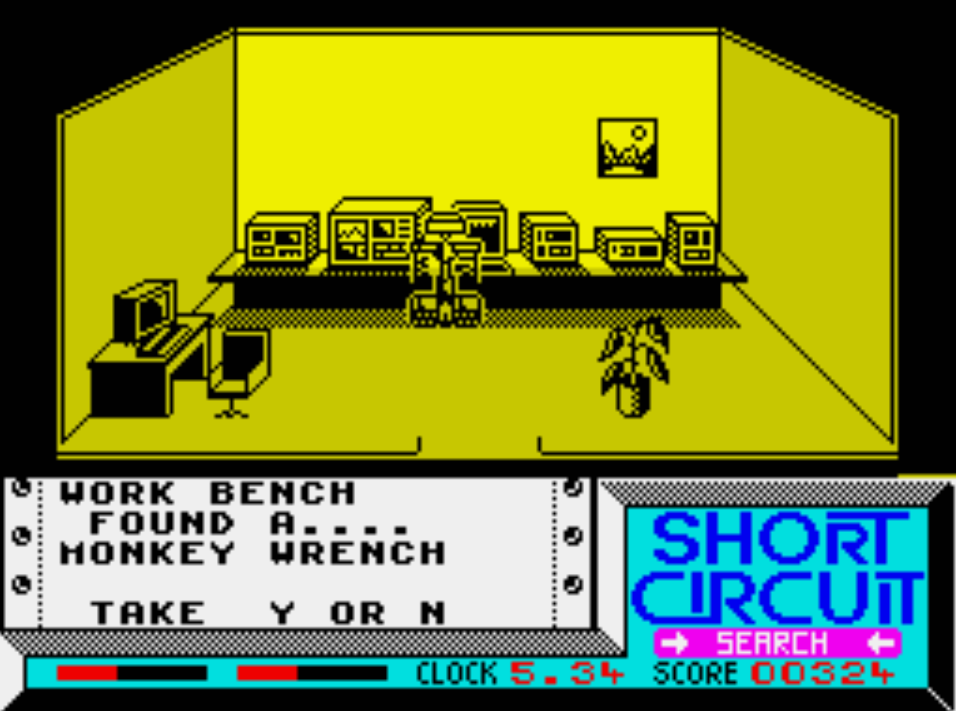
Part Two, which can be accessed either by completing Part One or skipping directly to it, is loaded separately on 48K machines (128K owners can enjoy the luxury of loading everything at once and switching between sections). This half is far more arcade-oriented. Viewed from a side-on perspective, Number 5 trundles steadily from left to right across a scrolling landscape rendered with a pleasing sense of depth.
As the scenery scrolls by, various cute woodland creatures appear—rabbits, squirrels, birds, and the like. Being an environmentally conscious robot, Number 5 is forbidden from harming any living creature. Accidentally running over, shooting, or otherwise killing one results in severe “mental trauma.” Accumulate too much trauma and it’s game over.
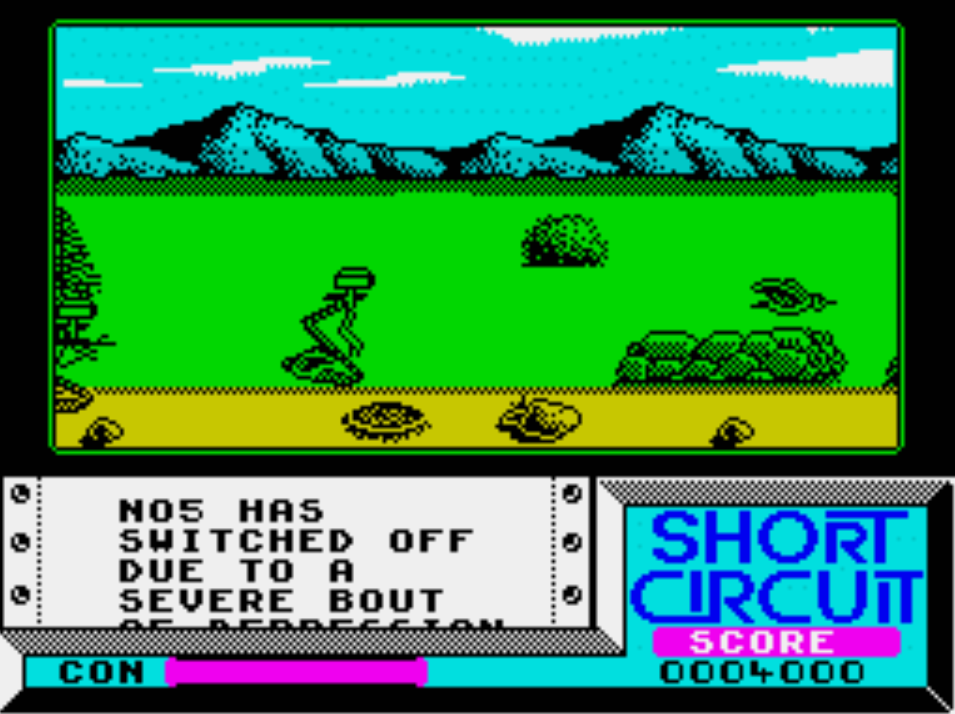
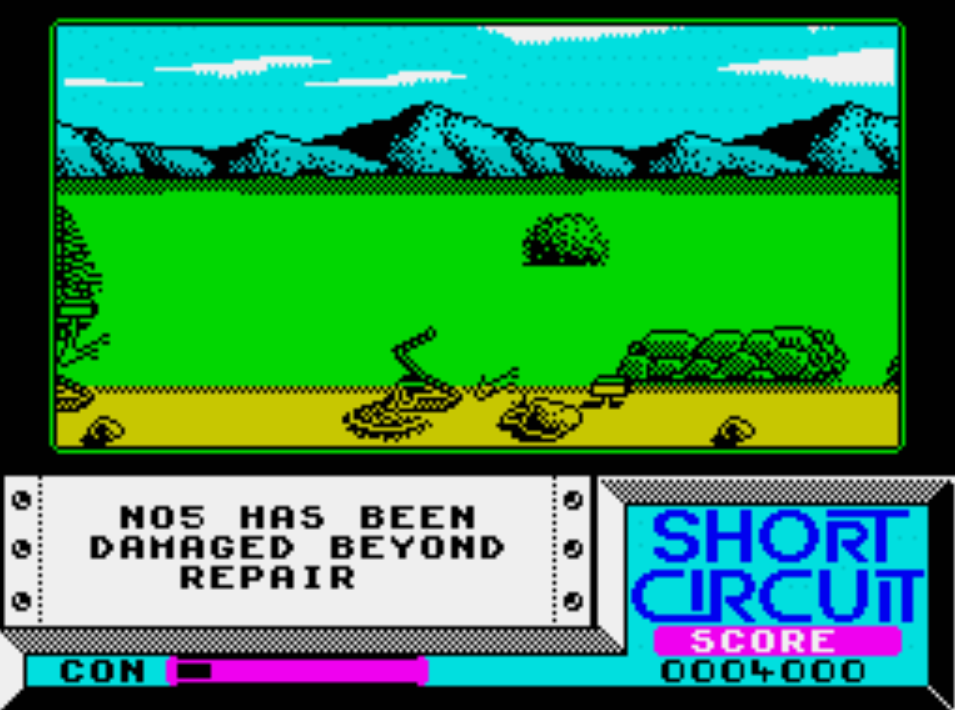
The road is also littered with holes that must be jumped over, as falling into one causes Number 5’s head to pop off—a rather terminal inconvenience. To make life even harder, hostile robots pursue you relentlessly. Colliding with one ends the game, but these mechanical foes can be safely destroyed with Number 5’s laser, since—apparently—robots don’t count as life-forms. The aim here is simply to survive and travel as far as possible before being captured or destroyed.
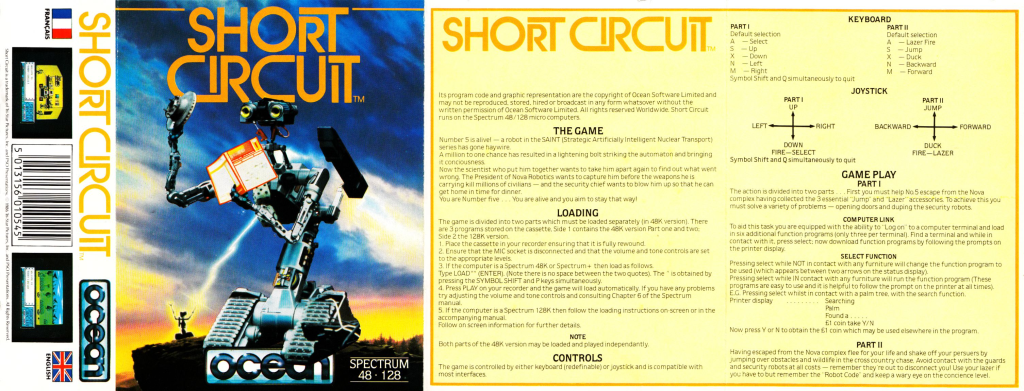
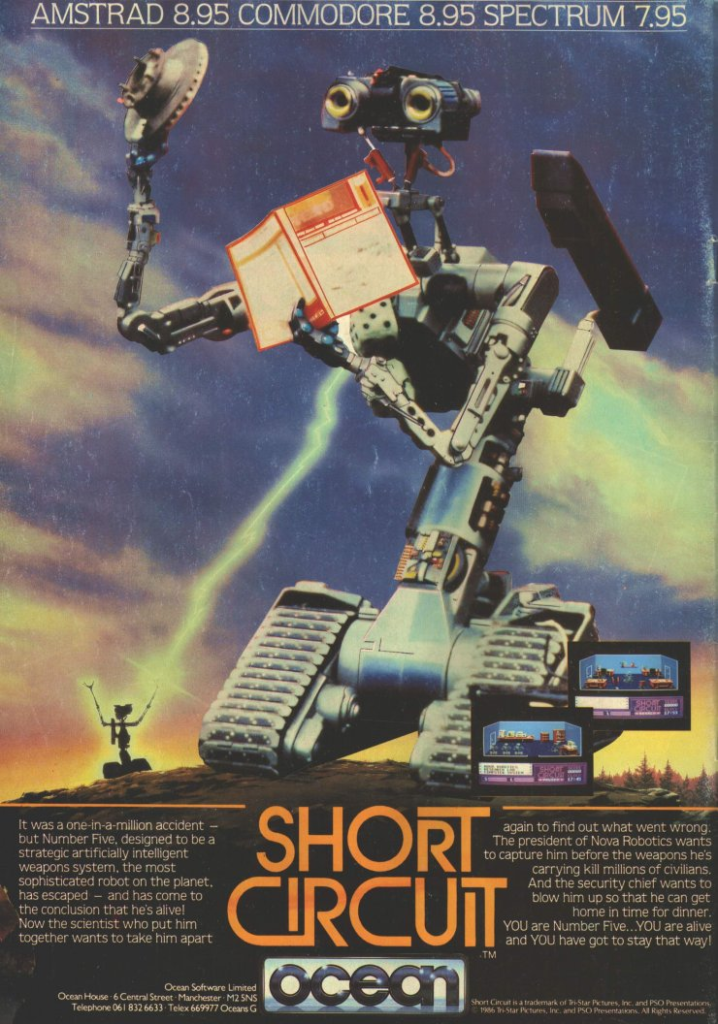
Short Circuit is a solid and enjoyable game overall. Its blend of adventure and arcade action, combined with strong graphics and engaging gameplay, works surprisingly well. Even the notoriously dreadful box art—featuring Number 5 calmly reading a book—has a certain “so bad it’s good” charm. Importantly, the game stands comfortably above the average licensed release of the time.
Overall, the variety on offer, coupled with a strong narrative and attractive visuals, makes Short Circuit well worth playing and a welcome step forward for movie tie-ins of the era.
BREAKDOWN:
GRAPHICS: 82%
MUSIC/SFX: 85%
PLAYABLITY: 72%
OVERALL: 78%

Platform: ZX Spectrum
Genre: Adventure – General
Developer/ Publisher: Ocean
Release: 1986