Decent little shooter but hardly the nest from Konami’s extensive library ……
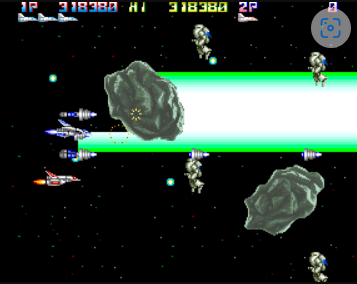
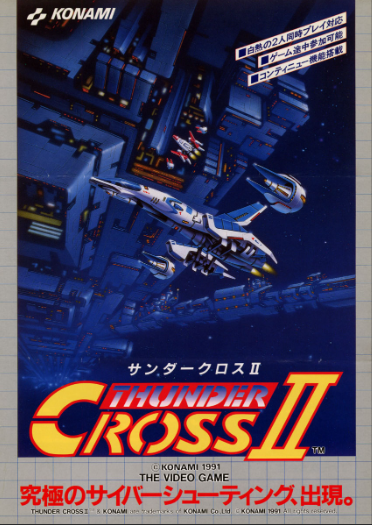
So it’s back to Konami for the next review, and one of their rarer arcade titles. The sequel to Thunder Cross maintains the same formula, offering players another seven levels of intense action. It runs on the same hardware as its predecessor, although there are slight enhancements in the graphics department, and the percussion in the sound design is notably improved. Some minor changes have been made to the weapons, such as toning down the Flamethrower, which now shoots out phoenixes instead of continuous flame streams. While still cool, it may not be as impressive. One slightly frustrating aspect is that the normal blaster can be downgraded if players aren’t careful while cycling through power-ups.
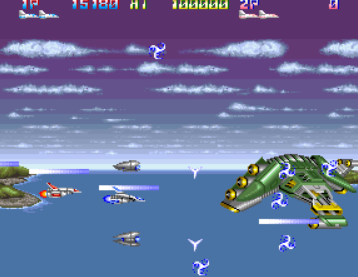
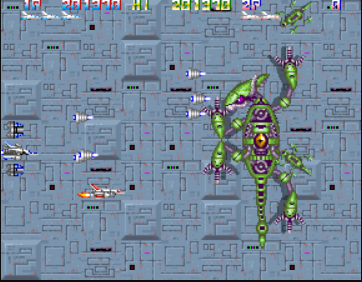
The game introduces some impressive boss encounters, including a robotic rendition of Medusa equipped with a shoulder-mounted bazooka, as well as a robotic chameleon. The ending reveals the whimsical names assigned to these bosses, like “Ragamuffin” for the Medusa robot, along with other peculiar and Engrish-inspired names such as “Brookrans, Works,” “Laze, Zoguylum,” and “Sproutes, Layber.”
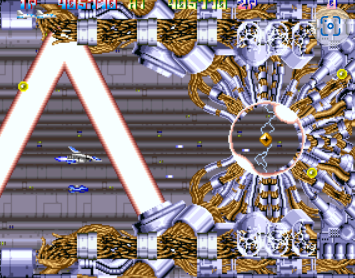
The penultimate boss resembles the final bosses in Gradius games, taking the form of a large bubble situated in the center of the room. However, this boss fights back with reflecting lasers and bouncing bullets. Its design is visually appealing, featuring a network of wires that pulse like veins. Another stage takes place in an asteroid field, a common setting in shooters, but with the added challenge of an off-screen boss firing enormous laser blasts. Players must cleverly utilize gigantic rocks as cover to avoid these attacks, reminiscent of a concept borrowed from Space Manbow.
The composer, Metal Yuuki (also known as Mikio Saiyou), previously worked at Tecmo and has an impressive track record in the gaming industry. Two songs in Thunder Cross II, namely “Dog Fight III” and “Kartas Part 2,” are actually “sequels” to tracks from previous shooters he was involved in, namely Super Star Force and Strato Fighter (also known as Raiga). His other notable works include Ninja Gaiden (Arcade) and Akumajou Dracula X (PC Engine). Metal Yuuki’s style leans towards creating FM synth sounds that resemble electric guitars, providing a heavy metal vibe similar to Technosoft’s Thunder Force series. In the soundtrack CD liner notes, he used the analogy that Gradius is like a heavy tank, while Thunder Cross is like a sports car, which influenced the creation of the rocking boss themes.
While Thunder Cross II is a solid game, it doesn’t quite stand out as the best in Konami’s library. Released in 1991, the same year as Xexex, Thunder Cross II falls short both in terms of technical capabilities and overall design when compared to its contemporaries. Additionally, with the release of Street Fighter II, the popularity of arcade shooters began to decline, which unfortunately led to Thunder Cross II never receiving a port outside of arcades.
Interestingly, the game Castlevania: Portrait of Ruin includes a special move called “Thunder Cross” that references this often overlooked shooter.
BREAKDOWN:
GRAPHICS: 79%
MUSIC/SFX: 72%
PLAYABLITY: 73%
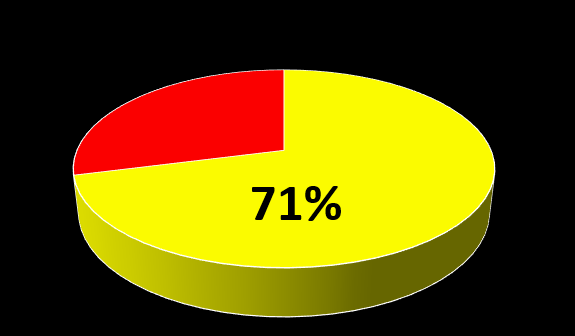
OVERALL: 71%
Platform: Arcade Games
Genre: Racing-Arcade-Automobile
Developer/Publisher: Konami
Release: 1991