Namco, You Beauty!!! An absolute Gem of a Game
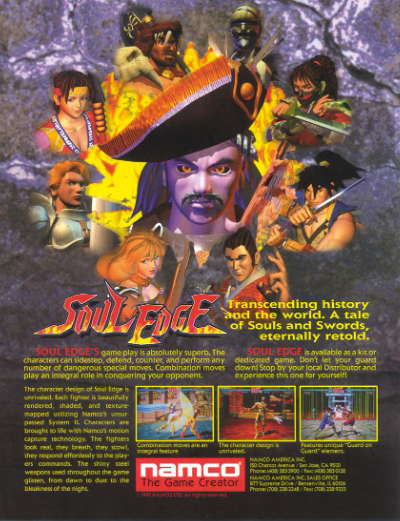
Before the iconic Soul Calibur took center stage, there was Soul Blade, a magnificent fighting game by Namco that, unfortunately, lived in the shadow of its Tekken series. Soul Blade (also known as Soul Edge) introduced a weapons-based combat system, blending elements from Namco’s Tekken and Weaponlord. The outcome was another outstanding title that continues to provide immense enjoyment even years after its initial arcade release. While it may not possess the same depth as the Tekken series, it compensates with pure, unadulterated fun.

Set in the 16th century, Soul Blade revolves around the legend of the Soul Edge, an extraordinary sword that bestows immense power upon its wielder, albeit at a grave cost. Ten warriors embark on a quest to locate this legendary weapon, each driven by their unique motivations. While a gripping narrative is not an essential requirement for a great fighting game, it’s commendable that Namco invested effort into constructing a cohesive storyline that complements the exhilarating melee action, setting it apart from the lackluster attempts at storytelling in the Mortal Kombat series.
Soul Blade encompasses all the familiar modes that fighting game enthusiasts have come to expect from a tournament fighter, particularly those produced by Namco. The Practice Mode has been refined since the early Tekken titles, offering the option to spar against a responsive opponent rather than a mere punching bag. Additionally, the enemy AI level can be adjusted, proving invaluable when facing a particularly challenging adversary. The game provides comprehensive move lists, with only a few moves left out, which can easily be found in an FAQ for the avid practitioners. Other modes include the standard Arcade mode, Vs. mode for competitive battles, Survival mode for testing endurance, Time Attack mode for racing against the clock, and Edge Master mode, adding further depth to the gameplay experience.

The addition of Edge Master mode sets Soul Blade apart from being “just another fighting game.” This mode takes you on a thrilling globe-trotting expedition with your chosen character in search of the elusive Soul Edge. What makes Edge Master mode unique is that each opponent presents specific conditions that must be fulfilled to achieve victory. For instance, you might need to defeat your enemy within a time limit or throw them out of the ring. In some cases, you can only inflict damage through throws or air-combos. The mode even features a Colosseum area where you’ll face a mini-Survival mode, battling up to six opponents consecutively with a single life bar. This mode offers a significant challenge, but the rewards are well worth it. Conquering opponents grants additional weapons for your character, with up to seven unique weapons available for each of the ten main fighters. These weapons possess distinct characteristics such as power, defense, and speed. Some even offer health restoration or weapon strength augmentation during fights. The weapons obtained in Edge Master mode can be utilized in other game modes as well.

Namco’s inclusion of extra armament is a clever move that adds an extra layer of excitement to the game. It’s not merely a compensation for a weak roster of characters. Soul Blade boasts fantastic character design, featuring fighters with distinct fighting styles and personalities. Characters like the pirate Cervantes, the sword-wielding knight Siegfried, and the intriguingly bizarre Voldo are captivating in their own right. The game also includes expected additions like Mitsurugi, Hwang, and Li Long, who bring their unique flair to the traditional fighting game roster. Among the three female fighters, it’s refreshing to see that they are not portrayed in an overly sexualized manner, unlike some other games (cough Dead or Alive cough). Seung Mina, in particular, stands out with her impressive and lethal moves. And then there’s Rock, the American character of the bunch. It’s unfortunate that the archetype of the brainless, musclebound brute was chosen for him, limiting his verbal capabilities. Nevertheless, Rock compensates for his lack of speed with monstrous weapons befitting his formidable size, albeit at the cost of agility.

Controlling the fighters in Soul Blade is a breeze. With just four action buttons for vertical and horizontal attacks, kicks, and guarding, executing special moves is much simpler compared to other fighting games. I found myself experimenting with different characters without having to constantly refer to the move lists. While this means the game may not have the same level of depth as some other fighters, the advantage is that you can easily pick it up after a break and quickly get back into the flow. Unlike returning to a Tekken game after a hiatus, you won’t face as many difficulties here. Soul Blade adds variety by giving each character a Critical Edge attack, triggered by pressing all three attack buttons simultaneously. If you perform the correct sequence of moves afterward, you can unleash devastating assaults. However, keep in mind that it depletes one-third of your weapon strength meter, and if the meter empties completely, you risk losing your weapon.
Since Soul Blade is a 3D game, sidestepping becomes an important strategy, and it’s as simple as tapping up or down twice. Nothing feels quite as satisfying as sidestepping an attack and then landing a powerful blow on your opponent’s exposed back.
The graphics in Soul Blade are impressive for an arcade game of its time. While the characters may appear somewhat blocky, their animations are incredibly well-done. Each fighter possesses various outfits, some more blocky than others. Admittedly, fighting game graphics have come a long way since Soul Blade’s release, but I believe the game still holds up well and remains presentable. The CG art in Soul Blade is among the best that Namco had produced at that point, and it has aged much better than that of Tekken 2. The backgrounds of the fighting stages are detailed and visually captivating, particularly Voldo’s stage. There are few graphical glitches, which is definitely a plus.

The soundtracks in Soul Blade are truly remarkable, and you’re in for an absolute treat as all the music in the game is excellent. The captivating melodies perfectly complement the intense battles. Additionally, the voice work for the characters and announcer is top-notch, adding to the immersive experience. While most of the character dialogue is in Japanese, it adds to the authenticity of the game. However, there were a couple of character voices that didn’t quite resonate with me, such as the growling Rock and the overly apologetic Sophitia (“I’m sorry!” “I will never forget you!” Ugh). Nevertheless, the overall sound effects are sensational, with sword clangings, swooshes, and other details that add to the excitement. I was particularly impressed by the authentic footfall sounds on the raft stage.
As if the game didn’t already offer enough, Soul Blade includes extra endings for the ten main characters in Arcade mode. Obtaining these endings is often as simple as mashing buttons during the beginning of the regular ending sequence. If you’re not satisfied with the ending you receive, you can try again and potentially unlock a different one.
Namco has a reputation for delivering complete experiences when it comes to bringing their fighters to home consoles, and Soul Blade is a prime example of that. While it may be challenging to revisit after playing Soul Calibur, as is often the case with excellent fighting game sequels, it doesn’t diminish the quality of this game. Soul Blade stands on its own as a truly fantastic fighting game that offers an unforgettable experience.
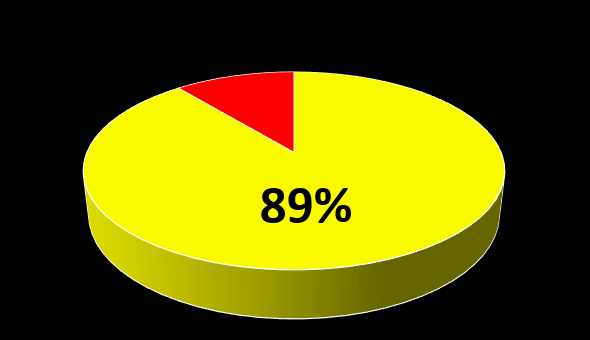
BREAKDOWN:
GRAPHICS: 82%
MUSIC/SFX: 97%
PLAYABLITY: 91%
OVERALL: 89%
Platform: Arcade Games
Genre: Action-Fighting-3D
Developer/Publisher: Namco
Release: 1995
Franchises: Soul Calibur