Another Taito Platformer, and another classic ……..

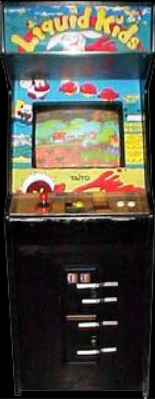
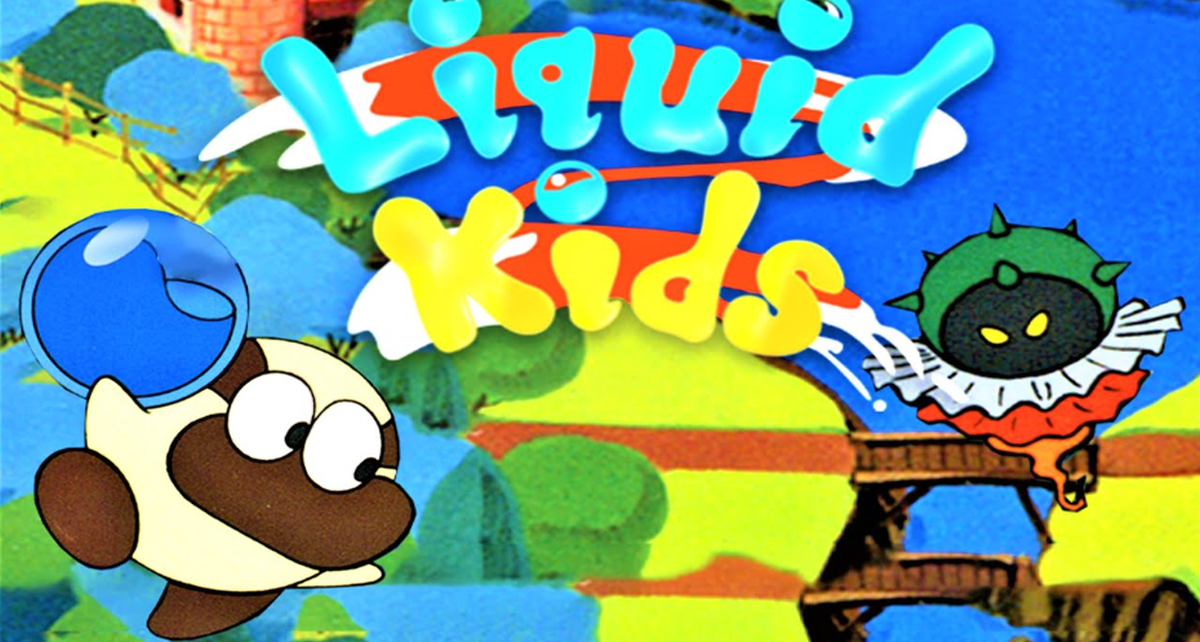
Liquid Kids, also known as Mizubaku Daibouken (“Water Bomb Big Adventure”), showcases Taito’s prowess in crafting delightful platform games, even if it didn’t garner the same level of recognition as Bubble Bobble. With its charming appeal, Liquid Kids proves to be a title suitable for players of all ages.
At the heart of the game lies Hipopo, a whimsical cartoon platypus residing in the serene Woody Lake alongside his girlfriend Tamasun and other adorable creatures. However, their tranquility is disrupted when the mischievous Fire Demon invades, capturing almost everyone. Fortunately, Hipopo possesses a magical artifact that grants him the ability to wield water bombs.
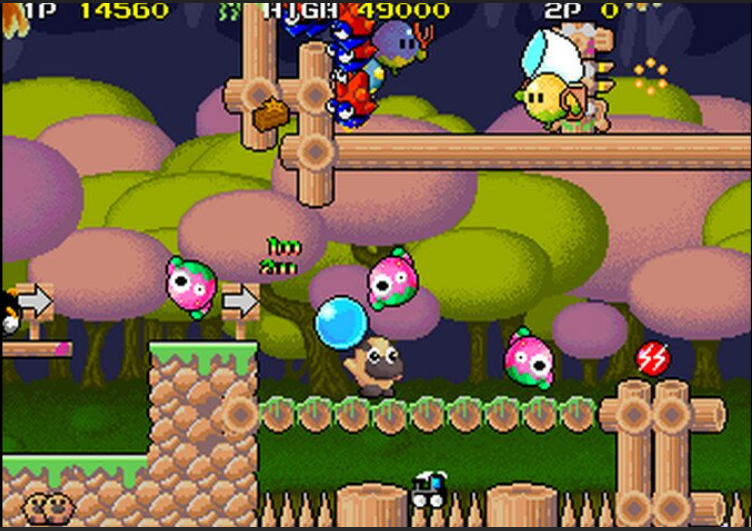
Drawing similarities to Taito’s earlier arcade platformer, The NewZealand Story, Liquid Kids shares familiar elements, including the rescue of caged animals at the end of each stage. The connections go beyond the narrative, with enemies emerging from unexpected portals and secret warp zones concealed within specific points, much like its predecessor. The game even features the same font in its interface, leading many to consider Liquid Kids a spiritual successor to The NewZealand Story, which never received a proper sequel (the underwhelming Nintendo DS remake can be disregarded).
Fortunately, the levels in Liquid Kids are more straightforward compared to its predecessor. The game adopts a mellower and less frantic approach, resulting in a relatively easier gameplay experience. However, as the game progresses, it introduces typical platformer challenges, such as spikes, crumbling floors, traps, and swarms of enemies.
One contributing factor to this shift in pace is Hipopo’s primary weapon: water bombs. Unlike Tiki’s swift and accurate arrows and laser beams from The NewZealand Story, the water bombs in Liquid Kids follow an arc, bouncing and eventually exploding into a stream of water. While they don’t outright kill enemies, they temporarily freeze them in place. This allows Hipopo to manipulate them by pushing them against walls or into each other, creating substantial score chains. In essence, the water bombs embody a fusion of Bubble Bobble’s water bubbles and the snowballs from Snow Bros., a single-screen platformer developed by Toaplan and released in the same year.
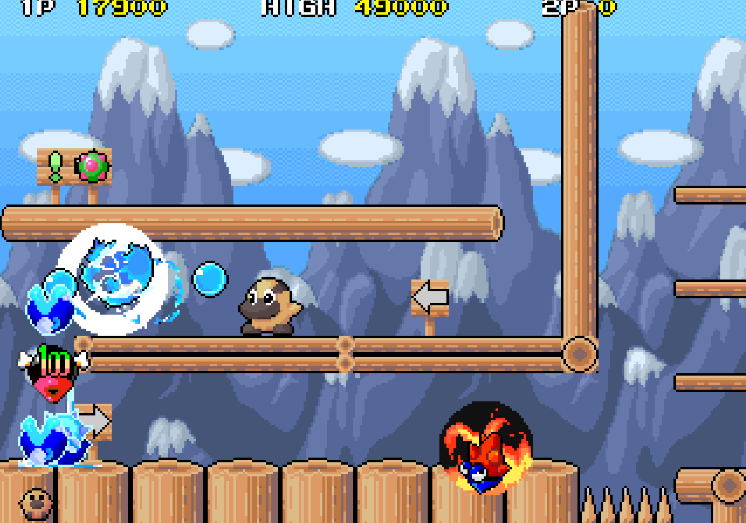
Water bombs in Liquid Kids possess remarkable versatility compared to conventional platforming game weapons. In addition to their offensive capabilities, they serve a range of purposes, such as extinguishing fires, aiding in plant growth to create platforms, powering watermills, and operating various contraptions. To maximize their potential, the bombs can be charged by holding down the button, ensuring more effective and powerful shots. Care must be taken not to rapidly mash the button, as this diminishes the bomb size and firing rate, akin to the mechanics of Snow Bros’ snowballs. Notably, water bombs remain the sole weapon available throughout the game.
The game’s relaxed pace is partly attributed to Hipopo’s movement speed, which unfortunately tends to be sluggish, particularly when swimming. However, by acquiring the train icon, Hipopo can increase his speed. It is worth noting that the boots icon, unlike in most games, does not enhance Hipopo’s mobility but instead prevents him from being affected by watery platforms and his own water streams. Conversely, collecting piggy icons not only grants 1000 points but further reduces walking speed. Additionally, when a life is lost, Hipopo’s speed and weapon status are reset, leaving him vulnerable. This becomes particularly challenging during boss battles, as defeated bosses may unleash unexpected maneuvers. Care should be exercised when acquiring consecutive speed-up bonuses, as excessive speed can make controlling Hipopo more difficult. In such cases, relying on the piggy icons to maintain a manageable speed becomes essential.
Upon defeating a boss, two doors open, offering branching paths for Hipopo to choose from. Opting for the harder path leads to a more challenging first stage in the subsequent area. However, there are no additional rewards for undertaking these challenges, making it a choice primarily for those seeking a greater level of difficulty. Typically, the harder path is found on the right, but this convention is reversed in the final stage, potentially catching unsuspecting players off guard.

The graphics in Liquid Kids effectively capture the charming and relaxed atmosphere of the game. The various settings, reminiscent of platformers from the 90s, include a hazard-filled factory, an Egyptian-themed stage with intricate traps and tricks, and the ominous dark castle at the game’s conclusion. These environments are presented in a fairy tale style, showcasing consistent artistic design rather than the surreal and unpredictable nature of The NewZealand Story.
Notably, Liquid Kids employs a visually pleasing effect where stages set outdoors transition from morning to dusk. The palette darkens gradually, symbolizing the passage of time. This feature adds a touch of visual appeal and is humorously accelerated if a warp is discovered, allowing swift access to the boss’s lair.
Hipopo and the adorable enemies in Liquid Kids exemplify Taito’s signature charm, characterized by their cute and rotund designs. While they may have limited animation frames, they are brimming with personality. Notably, the quirky end-stage bosses, including the final wizard clown-like demon, deserve special mention. The enemies, mostly minions of the Fire Devil, feature a thematic connection to fire, such as living bombs and fire-spitting Venus flytraps. However, the majority of foes are whimsical creatures that may not necessarily align with the level’s theme. These include splitting amoebas and mechanical ducks capable of swallowing Hipopo’s water bombs. The variety of characters to be rescued extends far beyond the kiwis found in The NewZealand Story, encompassing a range of individuals from children to elderly men, and from rustic folk to nobles. Even the time-out enemy, a green-haired clown in a checkered dress wielding a scythe, adds to the game’s bizarre and unique charm.

One entertaining aspect is the frequent portrayal of Hipopo as a hapless character. The introductory sequence randomly showcases images of Hipopo in various perilous situations, such as being crushed, electrocuted, or burned. During an intermission, Hipopo stumbles upon what appears to be Tamasun, only to realize she has been replaced by an enemy without his awareness. Additionally, the countdown on the continue screen features the seconds ticking in sync with a bomb enemy bouncing on Hipopo’s head. If no credits are inserted before the screen fades to black, the bomb detonates, adding a touch of humor and personality to the game.
In the end, Liquid Kids exemplifies Taito’s mastery in the platform game genre. While it may adhere to familiar conventions without introducing groundbreaking innovations, the game remains enjoyable, captivating, visually appealing, and sonically pleasing. It is carefully crafted to cater to both newcomers and seasoned experts alike, ensuring a satisfying experience for all.
BREAKDOWN:
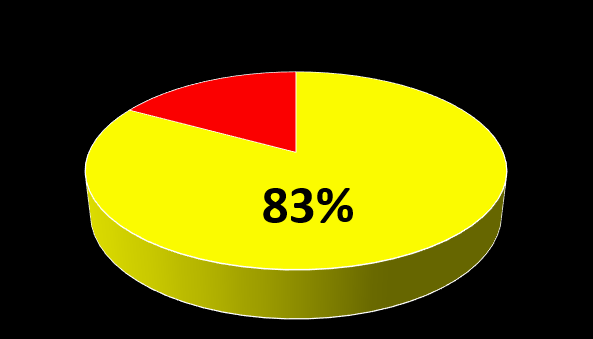
GRAPHICS: 84%
MUSIC/SFX: 82%
PLAYABLITY: 84%
OVERALL: 83%
Platform: Arcade Games
Genre: Action-Platformer-2D
Developer/Publisher: Taito Corporation
Release: 1990