Welcome to the James Bond Video Game, ranked from worst to best listicle. This was fairly difficult to compile as there are some real shockers, with some really great games as well with not much in between. There is a certain air of inevitability for the top slots though so let’s crack into the list….
25. A View to a Kill (1985)
| Release Date: | 1985 |
|---|---|
| Console: | ZX Spectrum, Commodore 64, MSX |
| Developer: | Domark |
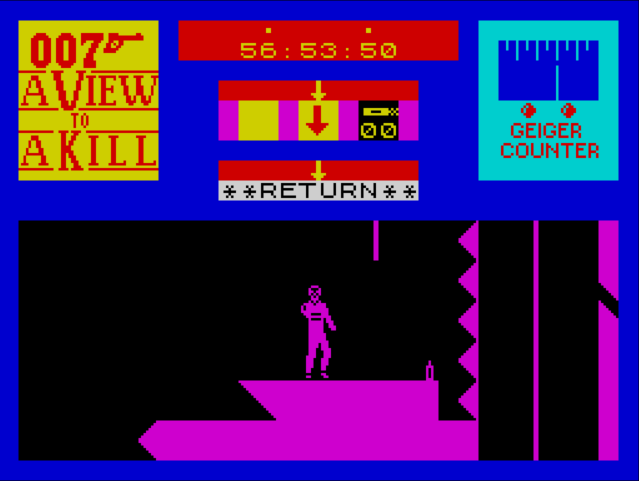
A View to a Kill, an action game developed for the ZX Spectrum by Domark in 1985, was one of two games with identical titles released during that year. The game is divided into three distinct missions, offering players a diverse gaming experience.
In the first mission, you find yourself racing through the streets of Paris in a taxi, attempting to catch May Day, who is parachuting down. The second mission is centered around the rescue of Stacey Sutton from a burning city hall and adopts a point-and-click adventure style of gameplay. The final mission introduces a platforming level, where your objective is to navigate a treacherous mine and defuse a bomb.
While the game boasts commendable variety, it suffers from significant control issues. The driving mission, for instance, frequently results in your taxi getting stuck against walls when taking corners. In the adventure mission, using and searching for items is cumbersome and lacks intuitiveness. In the platforming mission, pressing the jump button opens a menu if your character isn’t moving at a sufficient speed.
Despite its promising ideas and an impressive musical score, A View to a Kill is ultimately marred by its frustrating and inadequate controls.
24. James Bond 007: Goldfinger (1986)
| Release Date: | 1986 |
|---|---|
| Console: | Apple II, Macintosh, DOS |
| Developer: | Mindscape |
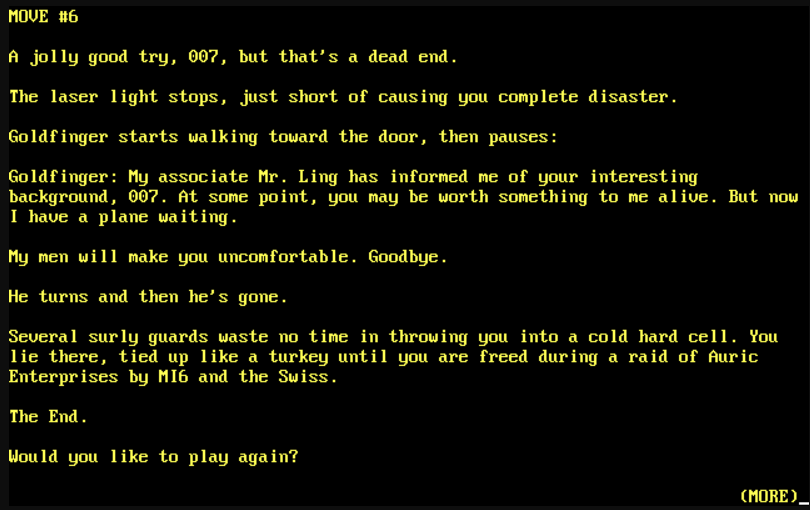
James Bond 007: Goldfinger marked Mindscape’s second and ultimately last foray into creating James Bond video games. It served as a direct sequel to A View to a Kill the text game, which had been released just a year prior. Notably, both games were penned by the Bond continuation author, Raymond Benson. However, it’s worth mentioning that the text and descriptions found in Goldfinger aren’t quite as captivating as its predecessor.
One notable improvement in Goldfinger is the increased clarity of objectives, particularly at the onset of the game. However, the persistently frequent deaths of the player character continue to contribute to an overall frustrating gaming experience.
23. James Bond 007: The Duel (1993)
| Release Date: | 1993 |
|---|---|
| Console: | Sega Master System, Sega Game Gear, Sega Mega Drive |
| Developer: | Domark |
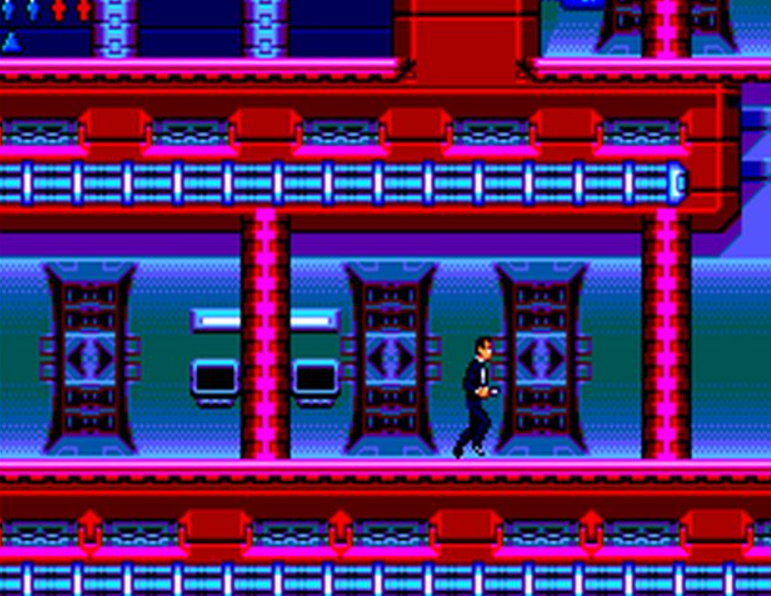
James Bond 007: The Duel, released in 1993, marked the concluding James Bond game from Domark, which was a relief for many gamers. This game adheres to the standard platformer format, where your character jumps and shoots enemies. However, the environments featured in the game hardly evoke the essence of a James Bond adventure, with settings like a mundane forest.
The primary issue with The Duel lies in its repetitive and uninteresting level design. Both the Master System and Mega Drive boasted an array of exceptional platformers, and The Duel pales in comparison. It simply blends into the sea of mediocre franchise tie-ins, failing to distinguish itself or capture the essence of the iconic James Bond franchise.
22. James Bond 007: A View to a Kill (1985)
| Release Date: | 1985 |
|---|---|
| Console: | Apple II, Macintosh, DOS |
| Developer: | Mindscape |
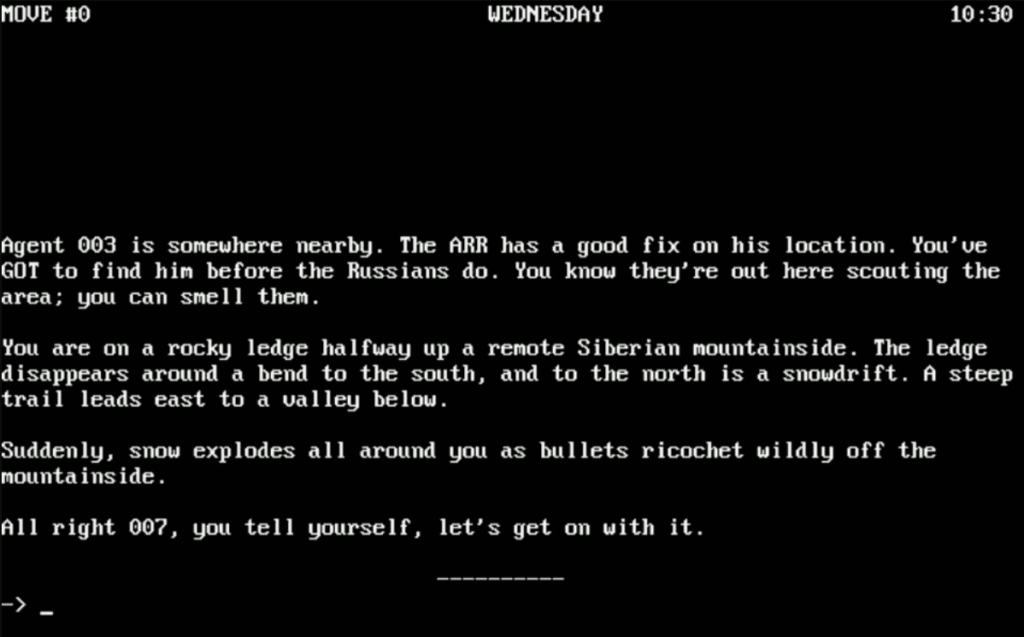
James Bond 007: A View to a Kill, released in 1985, is a text adventure game authored and crafted by the later Bond continuation writer, Raymond Benson. This game adopts a second-person interactive narrative style, requiring players to issue commands to govern Bond’s actions and advance the storyline. As is customary for games of this genre, frequent deaths force you to restart from the very beginning.
The game commences on a Siberian mountainside, where Bond’s mission is to locate 003 and effect a daring escape. The narrative is rich with vivid descriptions and skillfully crafted prose, vividly stimulating the player’s imagination. However, it falls short in terms of providing clear objectives, making progression challenging. For instance, in the initial level, you possess a firearm but lack bullets. Additionally, you have a ski pole equipped with a harpoon for shooting, but it proves ineffective if adversaries are situated in another area. Any intrusion into your territory results in your demise. Coupled with a rudimentary command parser and a lack of in-game guidance, the game becomes an exercise in frustration, overshadowing its well-crafted writing with gameplay that leans more toward irritation than enjoyment.
21. 007 Legends (2012)
| Release Date: | October 16th, 2012 |
|---|---|
| Console: | Playstation 3, Xbox 360, Windows, Wii U |
| Developer: | Activision |
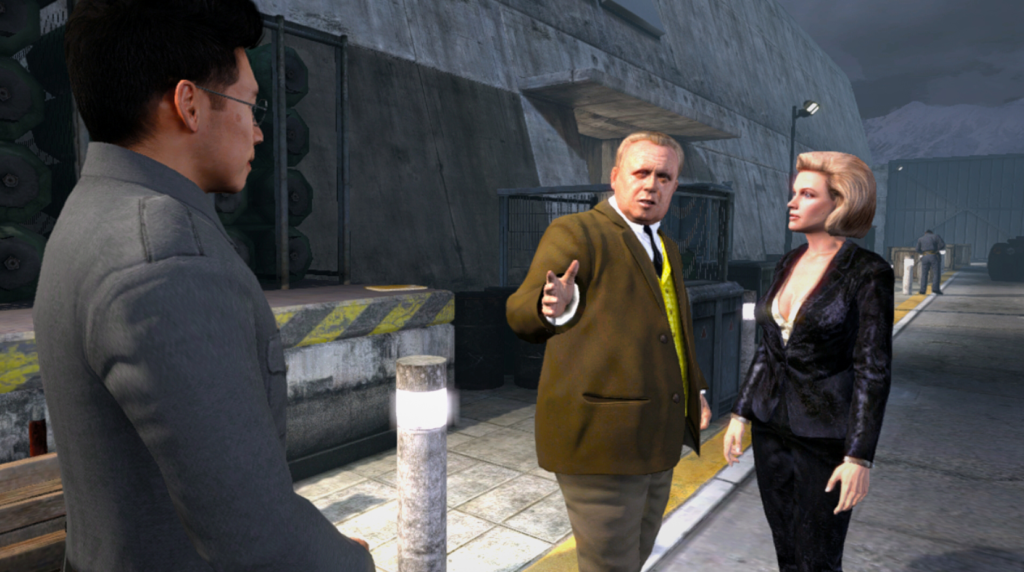
007 Legends holds the dubious honor of being the lowest-rated James Bond game in history, garnering aggregate ratings spanning from a dismal 16% to a lackluster 45%, contingent on the gaming platform. Eurocom, the game’s development studio, faced bankruptcy in the aftermath of its release, while the game’s dismal reception and underwhelming sales contributed to Activision’s loss of the Bond license.
The game’s premise revolves around Daniel Craig’s Bond experiencing flashbacks to missions from five classic Bond films, including Goldfinger and On Her Majesty’s Secret Service, all reimagined within a modern-day setting. However, 007 Legends falters in several crucial aspects. The gunplay is characterized by repetitiveness and monotony, boss battles amount to mere quick-time events, and the stealth mechanics come across as outdated and devoid of enjoyment. Adding to these woes is the absence of the original Bond cast for voice acting.
Ultimately, the game’s concept fails to coalesce, resulting in a disheartening distortion of cherished Bond moments that leaves little for even the most ardent Bond aficionado to relish.
20. James Bond: The Living Daylights (1987)
| Release Date: | 1987 |
|---|---|
| Console: | ZX Spectrum, Commodore 64, Amiga, MSX |
| Developer: | Domark |
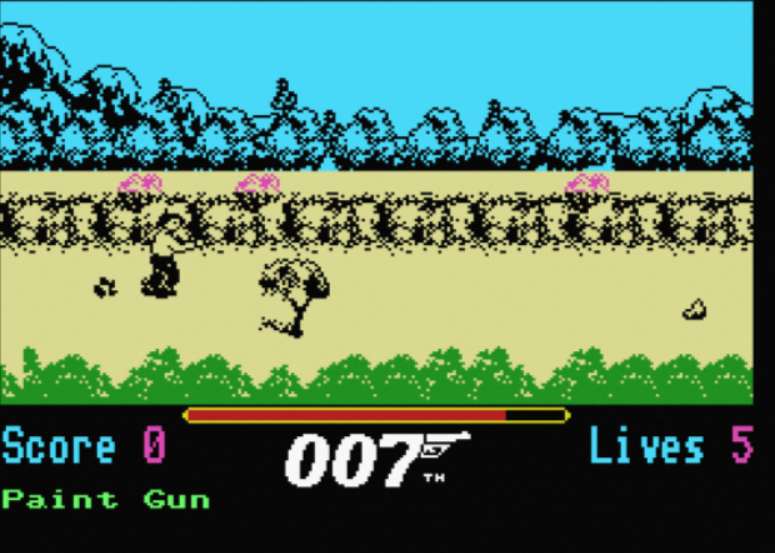
James Bond: The Living Daylights, released in conjunction with the film in 1987, marked Domark’s second venture into James Bond gaming. In a departure from their first Bond title, Domark chose to develop a completely new side-scrolling shooter. Players assume the role of Bond, with the ability to move right, execute rolls, and leap. By pressing left, a crosshair emerges from the right edge of the screen, granting precision aiming and shooting capability anywhere onscreen. Shifting the crosshair entirely to the right disengages the shooting mode and advances Bond.
These revamped controls represent a significant upgrade from Domark’s earlier endeavor, A View to a Kill. Nevertheless, the gameplay ultimately suffers from repetitiveness, detracting from the overall experience.
19. 007: Licence to Kill (1989)
| Release Date: | 1989 |
|---|---|
| Console: | DOS, Atari ST, ZX Spectrum, Commodore 64, Amiga |
| Developer: | Domark |
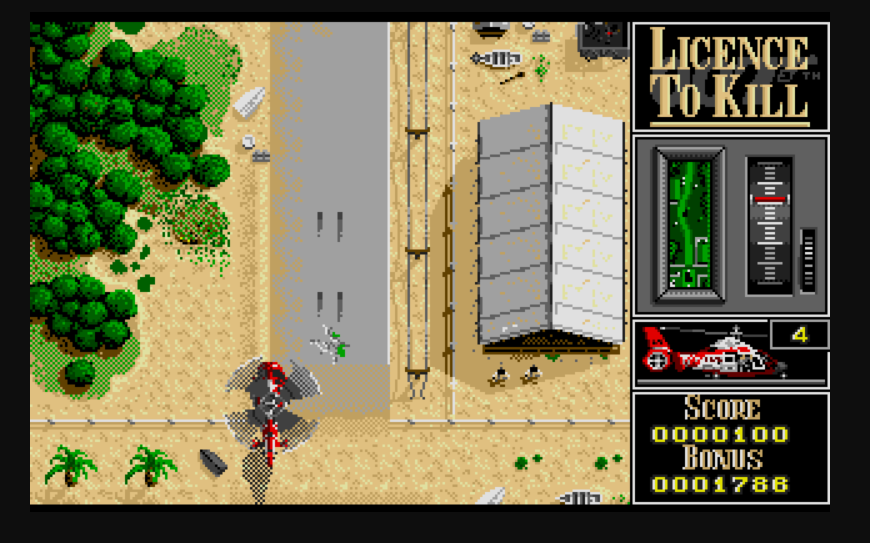
007: Licence to Kill, initially launched for DOS in 1989, marked Domark’s fourth foray into the realm of Bond gaming. This release showcased a notable leap forward in terms of graphics quality and introduced a greater sense of freedom in movement compared to Domark’s previous titles. The game comprises four primary levels, each offering distinct gameplay styles.
The first level presents a vertical-scrolling shooter experience with Bond piloting a helicopter. In the second level, Bond ventures on foot, employing 8-directional shooting and contending with limited ammunition. The third level finds Bond engaged in scuba diving, fending off adversaries and maneuvering underwater to evade enemy fire. The final level centers on driving, with Bond tasked with colliding his truck into other vehicles.
However, in line with the typical trend of Domark’s Bond games, 007: Licence to Kill falls short of greatness. While it boasts impressive graphics, it lacks accompanying in-game music and features levels that are disappointingly brief.
18. James Bond 007 (1983)
| Release Date: | July 1983 |
|---|---|
| Console: | Atari 2600, Atari 5200, Commodore 64 |
| Developer: | Parker Brothers |
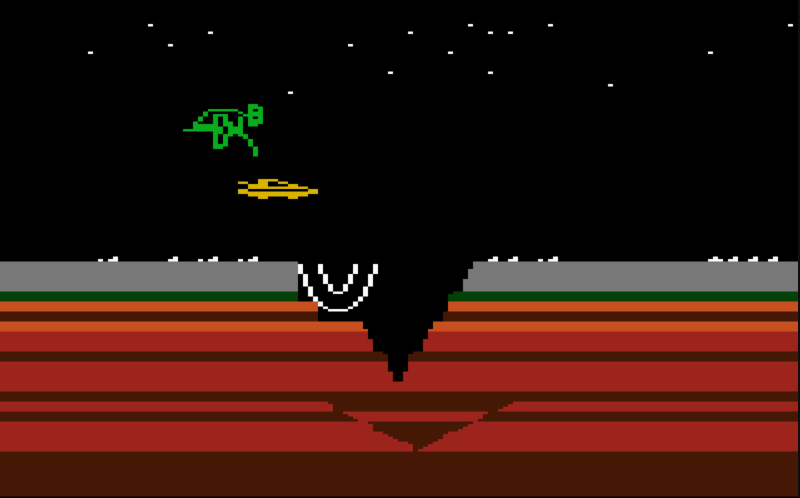
In the gaming landscape of 1983, the Atari 2600 saw the debut of James Bond 007, marking the inception of licensed James Bond games. The game’s narrative unfolds in its first mission, where Seraffino Spang, a character from the novel “Diamonds Are Forever,” employs diamonds to construct laser-firing satellites. As the player, your objective is to navigate through perilous satellite and helicopter attacks while progressing toward Spang’s offshore oil rig.
The gameplay adopts a side-scrolling format, with you assuming control of a car capable of jumping and shooting items for point accrual. It’s worth noting that firing upon enemies yields no discernible effects. Subsequent missions introduce new obstacles along the course, yet the core gameplay mechanics persist consistently. In terms of visuals, James Bond 007 delivers relatively commendable graphics, considering the limitations of the Atari 2600. However, the gameplay leans toward repetitiveness, which may detract from the overall enjoyment factor.
17. James Bond: The Spy Who Loved Me (1990)
| Release Date: | 1990 |
|---|---|
| Console: | DOS, Atari ST, ZX Spectrum, Commodore 64, Amiga |
| Developer: | Domark |
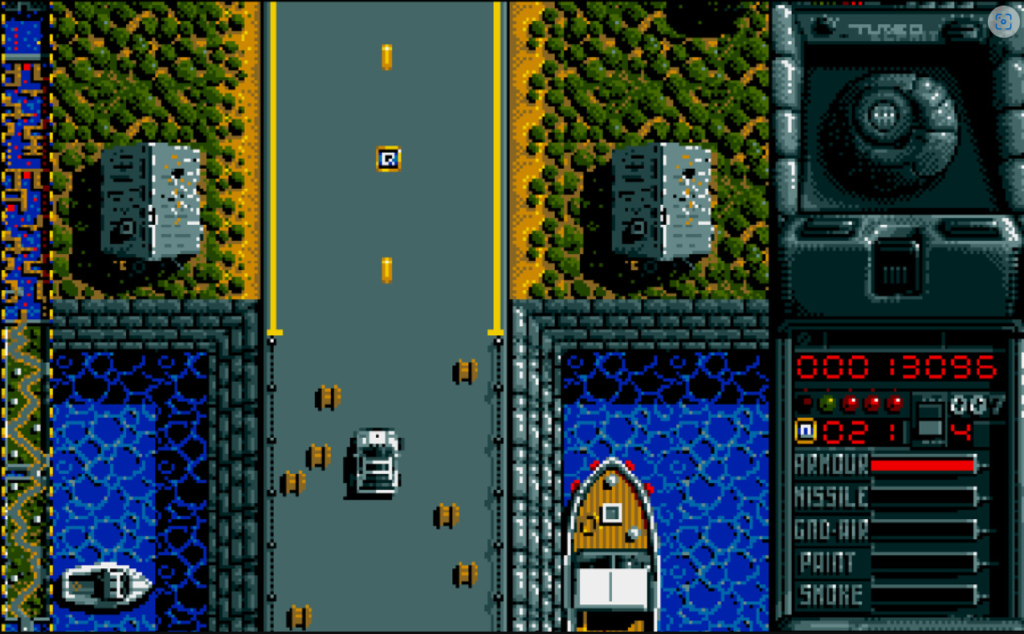
James Bond: The Spy Who Loved Me, one of Domark’s penultimate Bond games, has garnered a reputation as a somewhat derivative title, drawing heavy inspiration from the classic arcade game Spy Hunter. Both games share the common premise of gadget-laden cars navigating vertical-scrolling tracks while engaging in combat. However, The Spy Who Loved Me falls short due to its subpar controls and relatively low production values.
One notable issue revolves around the controls, which can prove cumbersome and less responsive than desired. Additionally, the game exhibits deficiencies in its production values. For instance, during the boat sections, players are provided with a map indicating the location of ramps and dead-ends. Unfortunately, this map can sometimes be inaccurate, leading to frustrating in-game deaths.
On a more positive note, the game shines in terms of graphics and music, particularly when experienced on platforms like the Amiga and Commodore 64, offering an enjoyable visual and auditory experience despite its gameplay shortcomings.
16. James Bond Jr (1992)
| Release Date: | 1992 |
|---|---|
| Console: | NES, Super Nintendo |
| Developer: | THQ |
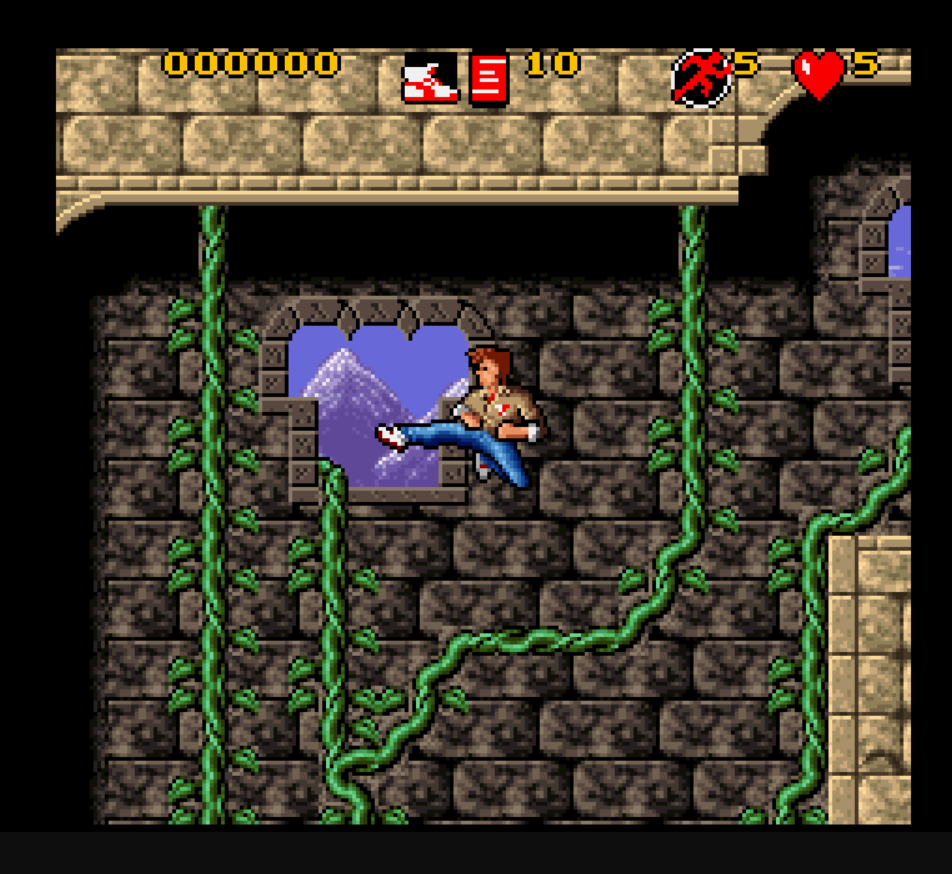
James Bond Jr, inspired by the animated series bearing the same name and centered around the adventures of James Bond’s nephew, marked THQ’s inaugural and sole foray into the world of Bond video games. This title saw the light of day in 1992 and was made available for both the NES and Super Nintendo consoles. While the narrative remained consistent across both versions, the gameplay mechanics and missions diverged significantly.
On the NES, players encountered a platformer intertwined with puzzle elements, offering a unique blend of challenges. In contrast, the Super Nintendo iteration leaned more towards the shoot-em-up genre. Here, players tackled various levels, including standard platforming segments featuring combat with punches and firearms, as well as high-stakes helicopter and boat missions, where a single mishap led to instant death.
In retrospect, both versions of the game earned a reputation as rather unremarkable entries, particularly when considering the gaming landscape of 1992. Nevertheless, they have withstood the test of time better than most of Domark’s Bond games, offering a somewhat enjoyable experience to players.
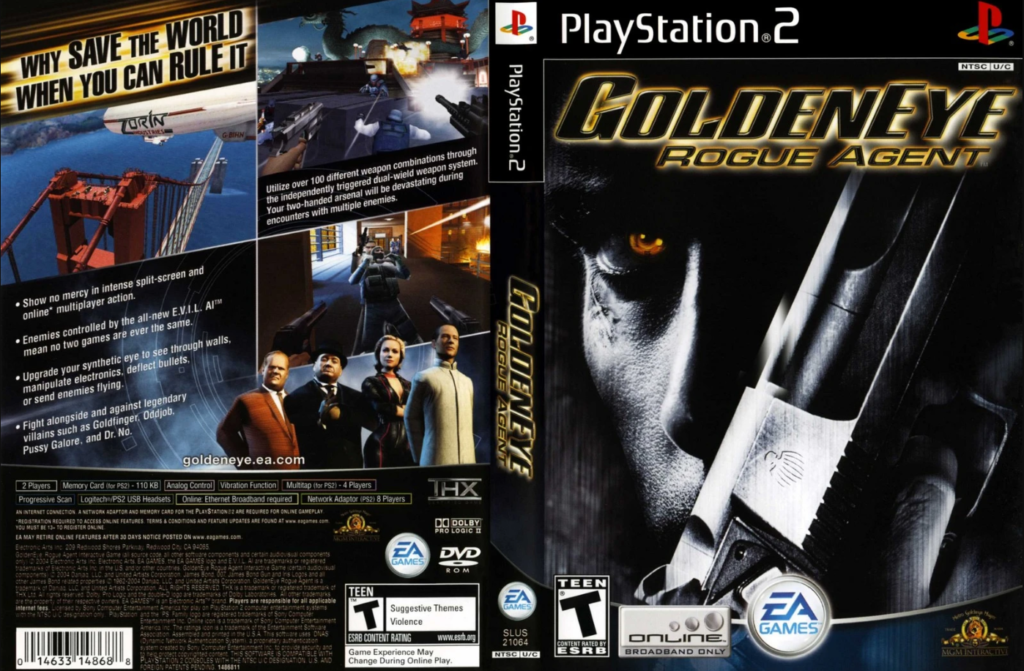
15. GoldenEye: Rogue Agent (2004)
| Release Date: | November 22nd, 2004 |
|---|---|
| Console: | Playstation 2, GameCube, Xbox, Nintendo DS |
| Developer: | Electronic Arts |
Goldeneye: Rogue Agent takes a perplexing departure from the James Bond franchise right from the start, as it omits the iconic character of James Bond and lacks any connection to the beloved Goldeneye film or game. The plot takes an even more bewildering turn by centering around an ex-MI6 agent who chooses to defect and join forces with Goldfinger, subsequently eliminating Dr. No and Oddjob. Yes, Oddjob, Goldfinger’s famously devoted henchman and bodyguard, finds himself in an incongruous role. These characters from unrelated films are thrust into positions that defy the established Bond series canon.
Unfortunately, the game’s glaring narrative shortcomings are compounded by lackluster gameplay. Players are subjected to monotonous combat against indistinguishable enemies set within mundane and uninspiring environments. Goldeneye: Rogue Agent offers an experience that fails to capture the essence of a true Bond game, rendering it unworthy of revisiting.
14. James Bond: Live and Let Die (1988)
| Release Date: | 1988 |
|---|---|
| Console: | Atari ST, ZX Spectrum, Commodore 64, Amiga, DOS |
| Developer: | Domark |
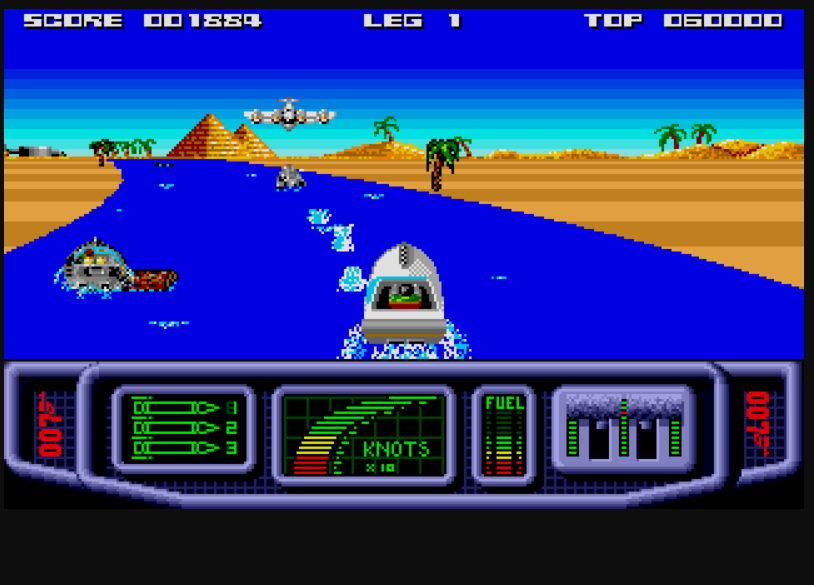
James Bond: Live and Let Die, a speedboat racing game released in 1988 by Domark, marked the company’s third venture into the realm of James Bond titles. Interestingly, the game originally began as a separate project named “Aquablast.” However, Domark soon recognized the striking similarities between the game’s missions and the iconic boat chase sequence featured in the James Bond film “Live and Let Die.” Seizing the opportunity to boost sales, the decision was made to rebrand the game as a 007 title.
The core gameplay of James Bond: Live and Let Die centers around high-speed boat racing, requiring players to deftly navigate through a river strewn with obstacles while engaging in relentless shootouts. Players must adeptly dodge various hazards such as floating logs and utilize hillsides for cover. To prevent running out of fuel during these intense races, fuel barrels must be collected along the way.
This game offers a genuinely enjoyable experience, particularly on the 16-bit Atari ST platform, where players can appreciate significantly enhanced graphics, elevating the overall gaming experience.
13. Tomorrow Never Dies (1999)
| Release Date: | November 16th, 1999 |
|---|---|
| Console: | Playstation |
| Developer: | Electronic Arts |
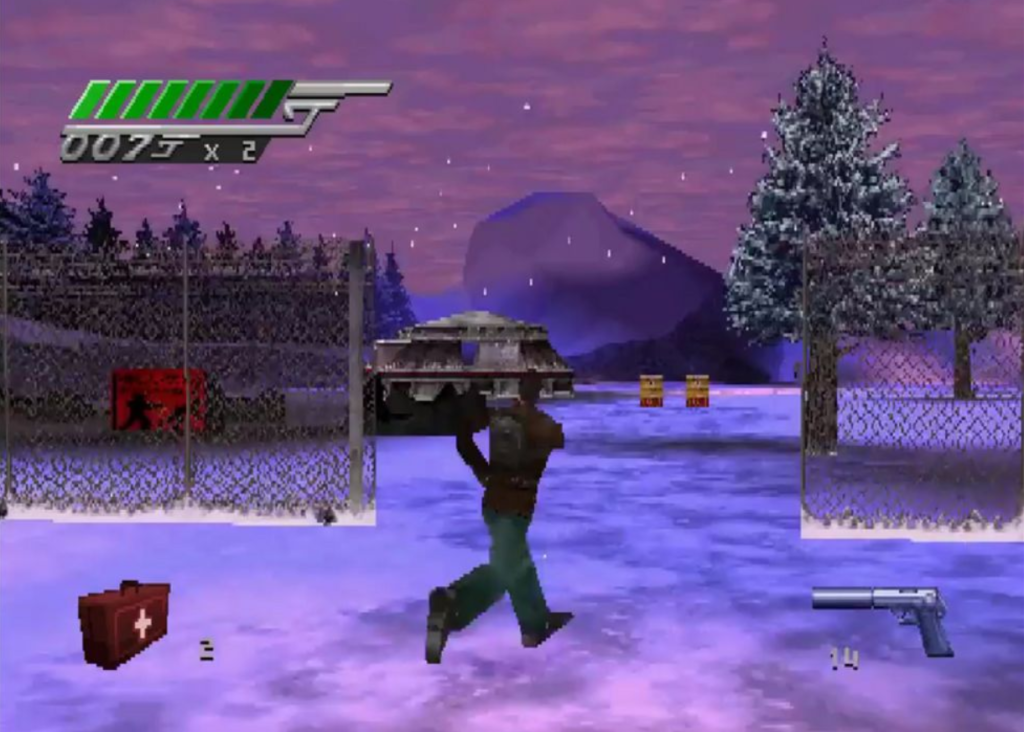
“Tomorrow Never Dies,” the inaugural entry in Electronic Arts’ series of 007 Bond games, marked the beginning of a new era but sadly fell short of expectations. Released for the Sony PlayStation in 1999, it chose to depart from the winning formula that had propelled “Goldeneye 007” to classic status. In this iteration, players were presented with a third-person perspective and, disappointingly, no multiplayer option, a stark departure from its beloved predecessor.
The game was marred by antiquated tank-like controls and lackluster graphics that failed to impress. An additional drawback was the targeting system, which automatically locked onto enemies without requiring any player input when the character approached them. This oversimplified one-button shooting mechanic diminished the overall gaming experience.
However, the game did manage to redeem itself somewhat with the inclusion of a skiing section, which provided players with an enjoyable diversion amidst the otherwise lacklustre gameplay.
12. James Bond 007: The Stealth Affair (1990)
| Release Date: | 1990 |
|---|---|
| Console: | DOS, Atari ST, Amiga |
| Developer: | Interplay |
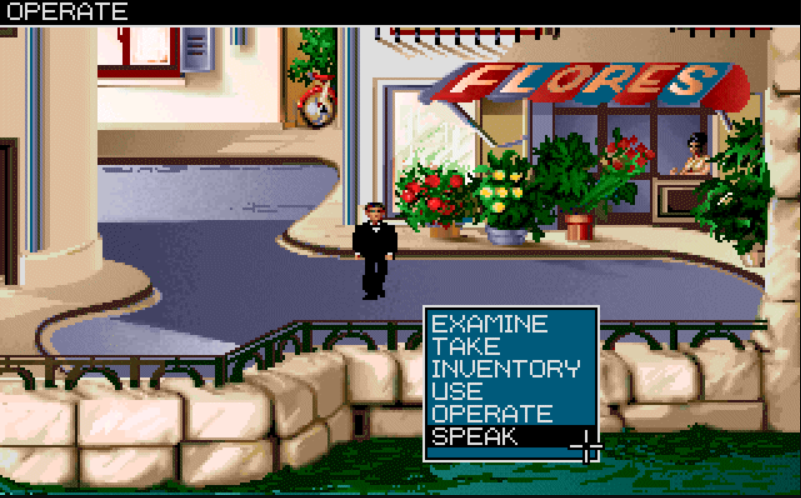
“James Bond 007: The Stealth Affair” was an intriguing point-and-click adventure game brought to gamers by Interplay in 1990. The game’s narrative centered around a CIA agent tasked with the mission of recovering a stolen stealth plane. Notably, the game was initially developed as an original title, and it bore the moniker “Operation Stealth” for most of the world.
However, for the American market, Interplay opted to capitalize on the James Bond brand, renaming it “James Bond 007: The Stealth Affair.” Curiously, this alteration didn’t significantly impact the game’s core elements, leaving Bond affiliated with the CIA, among other peculiarities.
The game received mixed reviews from players and critics alike, but it still managed to garner a dedicated following. For enthusiasts of point-and-click adventures, it might be worth exploring this unique take on the genre.
11. The World is Not Enough (2000)
| Release Date: | November 1st, 2000 |
|---|---|
| Console: | Nintendo 64, Playstation |
| Developer: | Electronic Arts |
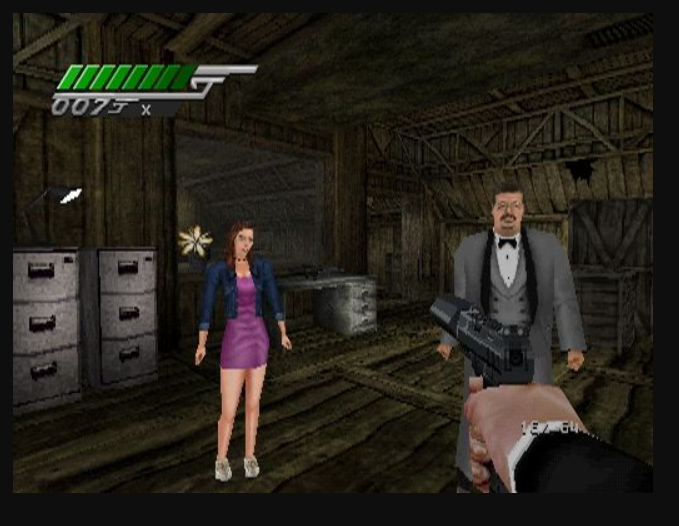
After the triumph of Goldeneye 007, developer Rare opted out of creating another Bond game, opting instead to forge their own path with the spiritual successor, Perfect Dark. This decision cleared the way for Electronic Arts (EA) to take the reins and release their sequel for the N64, titled The World is Not Enough, in 2000. Having learned from their underwhelming first attempt with Tomorrow Never Dies, EA decided to replicate the gameplay style of Goldeneye. The result was a commendable, albeit not groundbreaking, game that garnered favorable reviews.
Notably, EA also released a PlayStation game bearing the same title. However, this version was developed by a different studio and faced criticism for its subpar gameplay and absence of multiplayer features.
10. 007 Racing (2000)
| Release Date: | November 20th, 2000 |
|---|---|
| Console: | Playstation |
| Developer: | Electronic Arts |
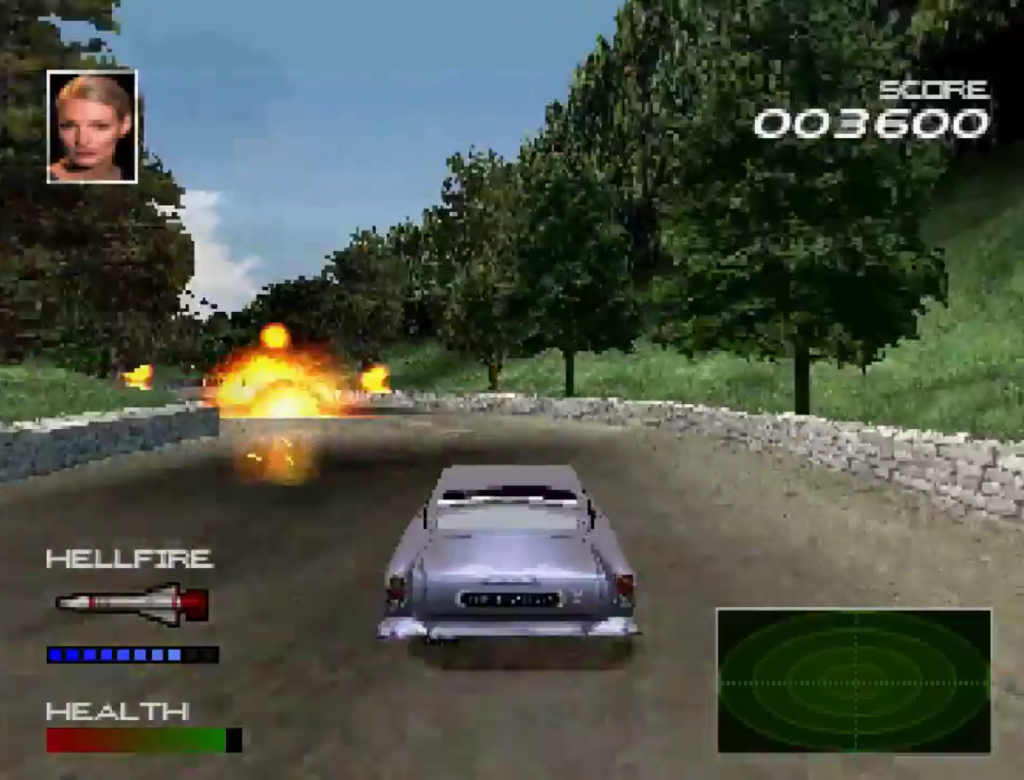
007 Racing hit the shelves during the same month as the dismal PlayStation version of The World is Not Enough, and it undoubtedly stands as Electronic Arts’ weakest entry in the realm of James Bond games. Dull graphics, abysmal level construction, clumsy gameplay, and lackluster sound design conspire to rob this game of any redeeming qualities.
The gameplay concept revolves around navigating a series of checkpoints while unleashing missiles and machine gun fire upon enemy vehicles. Regrettably, the clunky, unresponsive controls swiftly extinguish any flicker of enjoyment that might have ignited. This release only reinforced the notion that James Bond’s digital adventures found their true home on Nintendo consoles.
9. Blood Stone (2010)
| Release Date: | November 2nd, 2010 |
|---|---|
| Console: | Playstation 3, Xbox 360, Nintendo DS, Windows |
| Developer: | Activision |
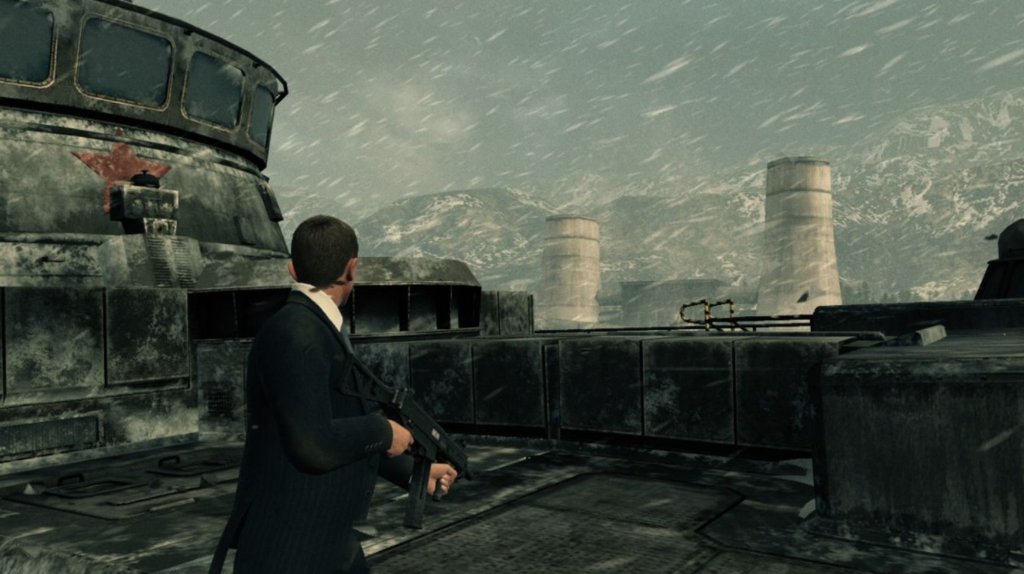
Blood Stone marked Activision’s second foray into the Bond gaming universe, and it substantially expanded upon the gameplay variety found in its predecessor. The game introduced melee attacks, providing players with opportunities for stealthy gameplay. Additionally, it featured exceptional car and boat driving missions that quickly became standout elements of the game.
However, Blood Stone did suffer from certain drawbacks. Following an intense pre-title sequence, the initial portion of the game got off to a sluggish start, with numerous empty hallways and a noticeable absence of high-octane action. Fortunately, the second half of the game managed to rectify this issue, but the overall experience felt somewhat lacking, given the relatively short 5-6 hour story mode. Sadly, the studio responsible for Blood Stone, Bizarre Creations, faced closure after the game’s release.
8. James Bond 007 (1998)
| Release Date: | January 29th, 1998 |
|---|---|
| Console: | Gameboy |
| Developer: | Saffire |
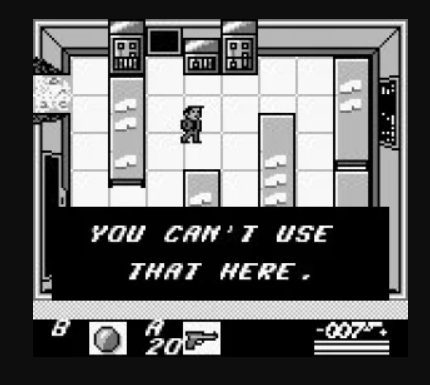
“James Bond 007” marked the inception of handheld James Bond gaming and was released for the original Game Boy during the console’s twilight years. Given the Game Boy’s limitations, which included black and white graphics and dated hardware, the prospects for creating a first-person shooter were quite limited. Consequently, the developer, Saffire, opted for a top-down perspective, crafting an action-adventure game more reminiscent of titles like Zelda than the typical James Bond fare.
The gameplay in “James Bond 007” revolved around puzzle-solving, item discovery, and straightforward close-quarters combat. While it may not have achieved the highest critical acclaim among Bond games, it undeniably delivered a unique gaming experience within the Bond franchise.
7. Agent Under Fire (2001)
| Release Date: | November 13th, 2001 |
|---|---|
| Console: | Playstation 2, GameCube, Xbox, Gameboy Advance |
| Developer: | Electronic Arts |
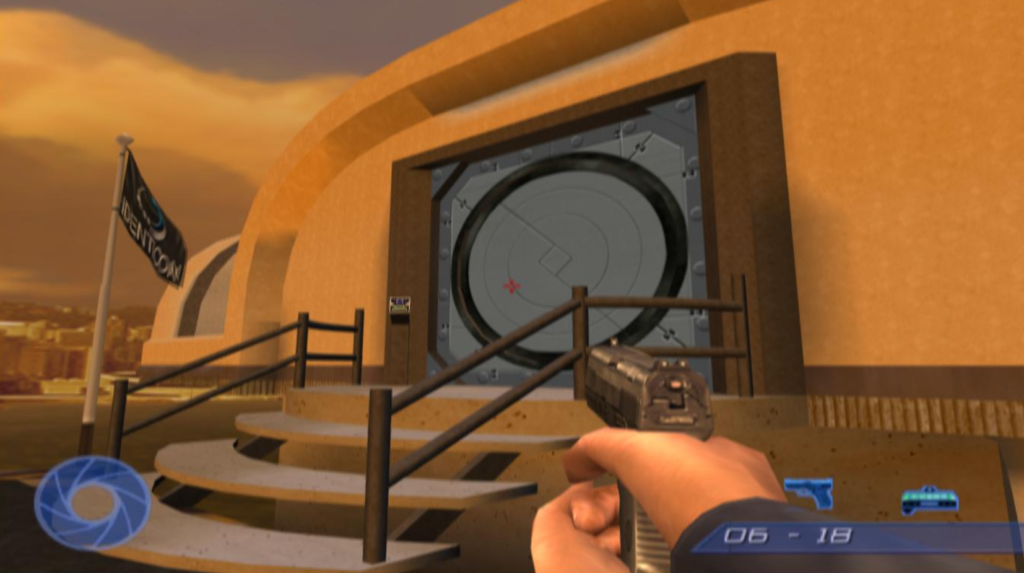
Agent Under Fire marked a significant milestone in the world of James Bond gaming, being the first to grace the sixth-generation consoles. Initially released on the Playstation 2, it was swiftly followed by ports for the GameCube and Xbox in the subsequent March. Given the rapid pace at which Bond games were hitting the market, Agent Under Fire ingeniously crafted an original storyline, successfully breaking away from the film adaptations.
This thrilling game reverted to the beloved first-person perspective, seamlessly blending exhilarating shooting sequences with an array of innovative gadgets, such as the trusty grappling hook and a cutting-edge hacking device. The inclusion of thrilling driving missions added a welcome dose of variety to the gameplay experience, significantly outshining the subpar mechanics of its predecessor, 007 Racing. All in all, Agent Under Fire proudly marked the onset of an impressive string of quality Bond games courtesy of EA.
6. Quantum of Solace (2008)
| Release Date: | October 31st, 2008 |
|---|---|
| Console: | Playstation 2, Playstation 3, Wii, Xbox 360, Nintendo DS, Windows |
| Developer: | Activision |
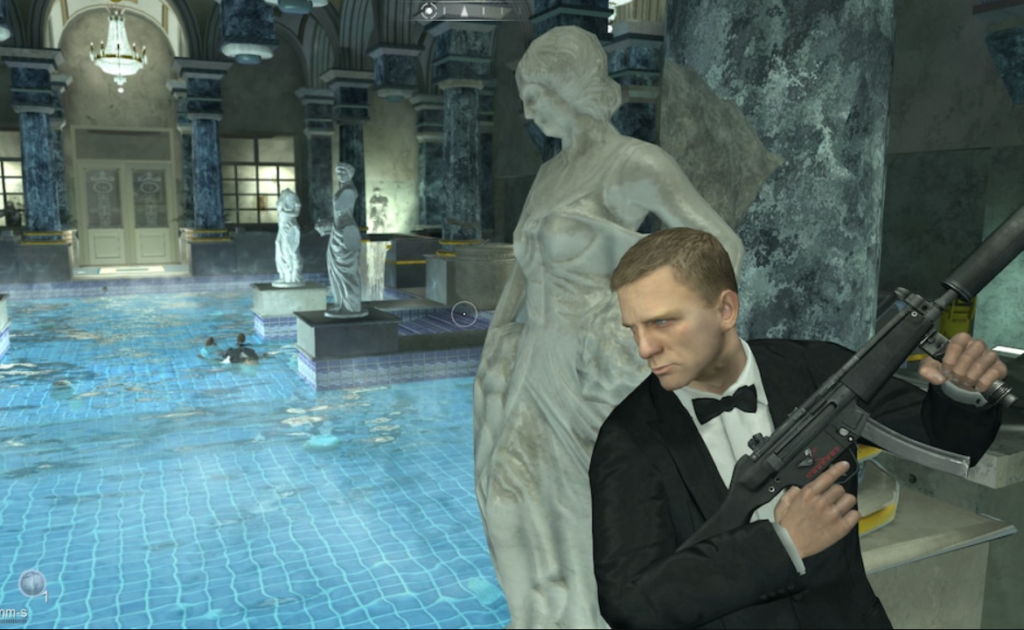
Quantum of Solace marked Activision’s entry into the James Bond gaming universe, effectively concluding Electronic Arts’ eight-game streak. Powered by the Call of Duty 4 engine, it emerged as the inaugural Bond title for the PS3, Wii, and Xbox 360 generation. The game’s narrative draws heavily from the films Casino Royale and Quantum of Solace, adhering closely to their storylines while incorporating a few additional elements.
While the shooting mechanics are top-notch, Quantum of Solace conspicuously lacks any driving segments—a departure from previous Bond games. This absence significantly impacts the game’s overall variety. On the bright side, the title excels in the realms of music and voice acting, featuring a stellar cast that includes Daniel Craig and Judi Dench. In sum, Quantum of Solace stands as a high-quality, though somewhat unremarkable, first-person shooter.
5. 007: From Russia with Love (2005)
| Release Date: | November 1st, 2005 |
|---|---|
| Console: | Playstation 2, GameCube, Xbox, PSP |
| Developer: | Electronic Arts |
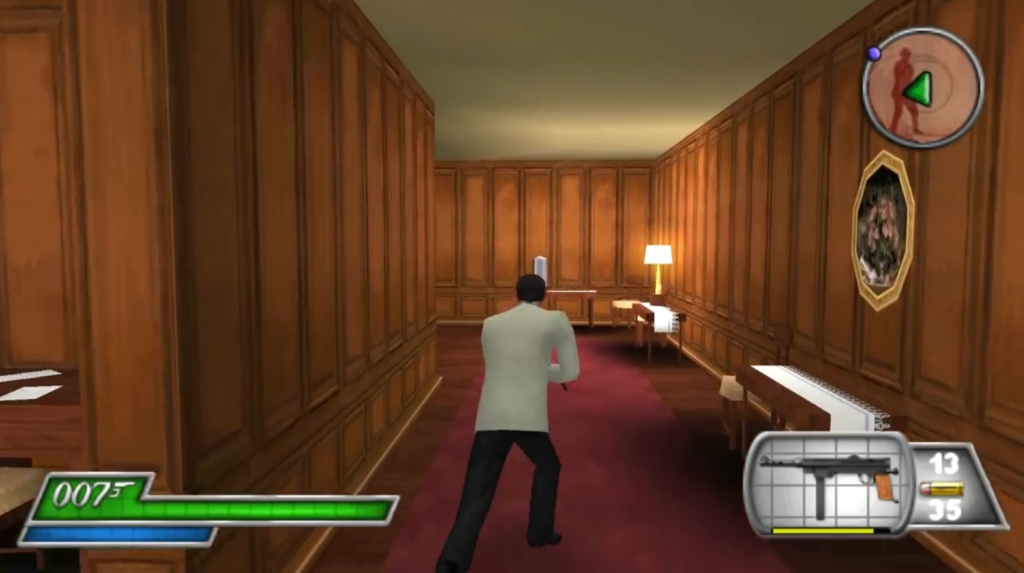
007: From Russia with Love marked the conclusion of Electronic Arts’ Bond game era, and although it didn’t quite reach the heights of Everything or Nothing, it managed to end on a strong note. Notably, the game featured the likeness and voice acting of Sean Connery, capturing the essence of the iconic actor, and faithfully recreated numerous sets and locations from the 1963 film.
One of the game’s most intriguing aspects was the opportunity to explore these familiar sets and delve into the off-camera areas that remained unseen in the original film. While these environments boasted remarkable beauty, the level design didn’t quite measure up to the standards set by Everything or Nothing, resulting in slightly less enjoyable gameplay. Nevertheless, it remains a pleasurable experience, especially for fans of Sean Connery’s portrayal of the suave secret agent.
4. Everything or Nothing (2004)
| Release Date: | February 11th, 2004 |
|---|---|
| Console: | Playstation 2, GameCube, Xbox |
| Developer: | Electronic Arts |
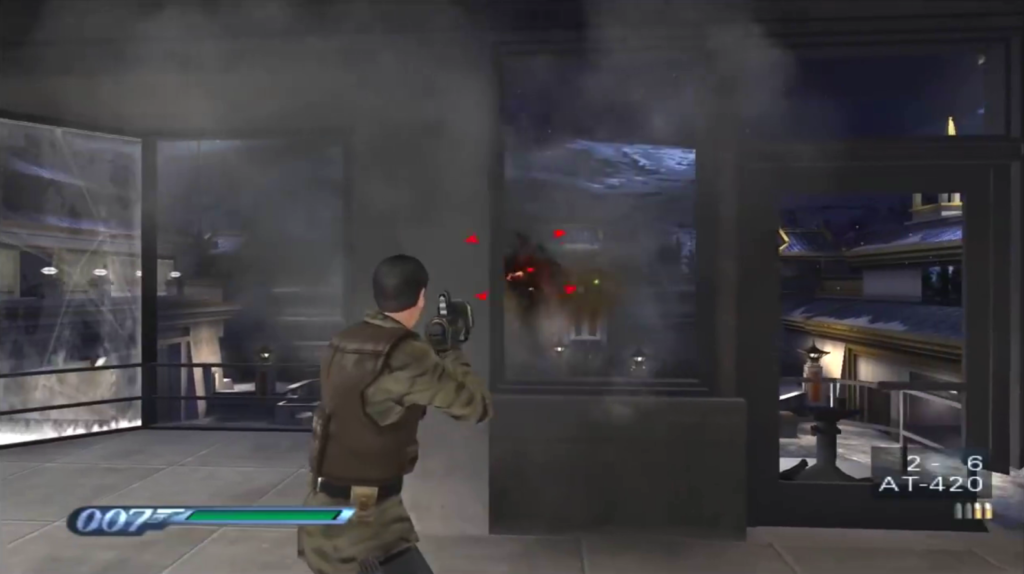
Everything or Nothing stands as the pinnacle among all the EA James Bond games, boasting an exceptional level of enjoyment. It made a strategic return to a third-person perspective, introducing a seamless combination of cover-and-shoot mechanics, thrilling wall-repelling action sequences, and incredibly entertaining gadget-filled driving missions. These missions spanned a wide range of vehicles, including cars, motorbikes, and helicopters, and they played a significant role in the game’s overall appeal.
Notably, Everything or Nothing placed a greater emphasis on driving missions than any Bond game that preceded it. With the implementation of the Need for Speed engine, players were treated to precise controls and mechanics that elevated the gameplay experience. Furthermore, it was the first Bond game to feature non-archived voice acting from the cast of the Bond films, an impressive addition that included the iconic Richard Kiel reprising his role as Jaws.
3. Goldeneye 007 (2010)
| Release Date: | November 2nd, 2010 |
|---|---|
| Console: | Wii, Playstation 3, Xbox 360, Nintendo DS |
| Developer: | Activision |
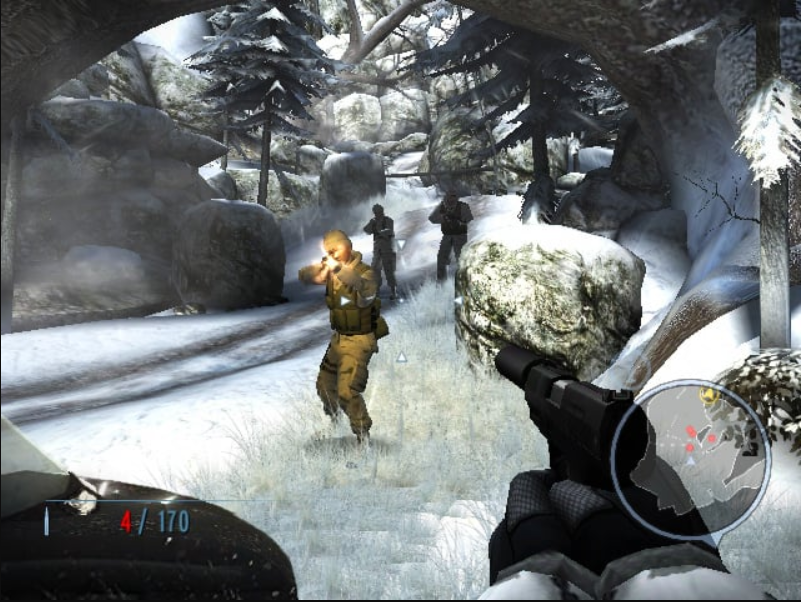
Goldeneye 007, a reimagining of the classic Nintendo 64 title, made its debut on the Wii, coincidentally alongside Blood Stone. This version introduced motion-controlled shooting mechanics utilizing the Wiimote, paired with Nunchuck-based movement controls. While the term ‘remake’ may mislead, it’s essential to clarify that this game was developed entirely from scratch, drawing heavy inspiration from the original masterpiece.
In keeping with the tradition of the original, the single-player experience in Goldeneye 007 is nothing short of outstanding. However, it’s the multiplayer death matches that truly cement its enduring appeal. Despite offering online multiplayer capabilities, the game truly shines during local split-screen shooting showdowns. It effortlessly ranks as one of the finest multiplayer titles available for the Wii.
In a subsequent release, a remastered edition known as Goldeneye 007: Reloaded hit the PlayStation 3 and Xbox 360 platforms a year later. Regrettably, it failed to garner the same level of acclaim as its predecessor.
2. Nightfire (2002)
| Release Date: | November 18th, 2002 |
|---|---|
| Console: | Playstation 2, GameCube, Xbox, Gameboy Advance |
| Developer: | Electronic Arts |
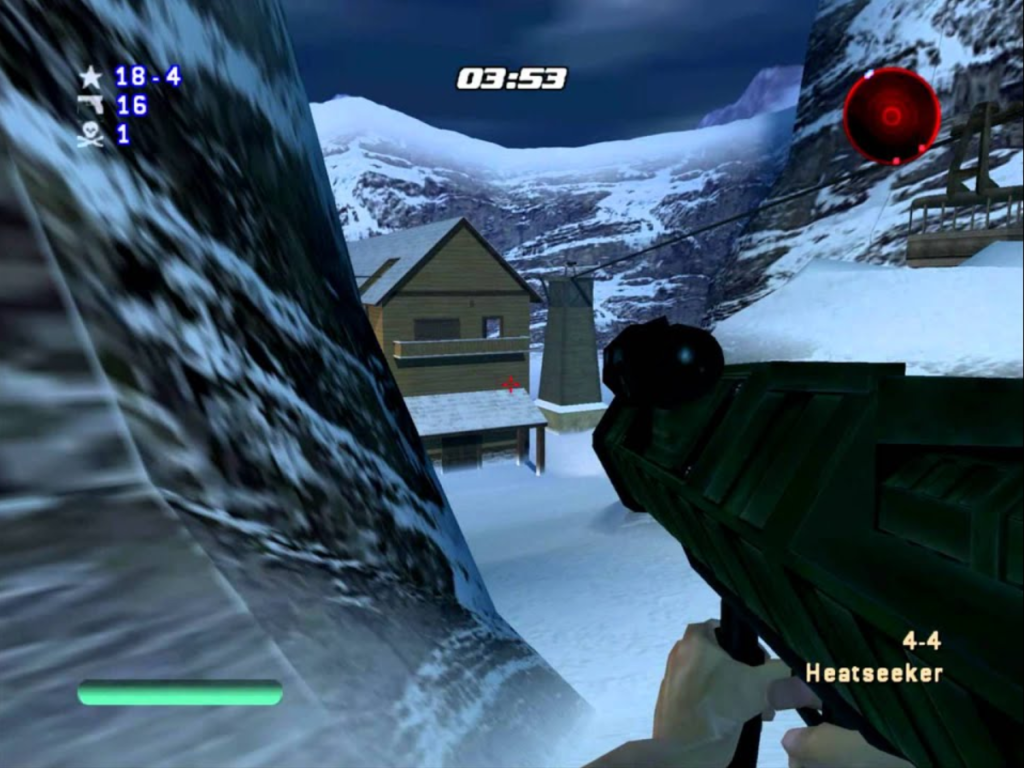
Nightfire, making its debut in 2002, emerged as the sequel to Agent Under Fire, and it undeniably elevated the Bond gaming experience in nearly every aspect. Right from the start, it successfully encapsulated the genuine essence of a Bond film. The game commenced with the iconic gun barrel sequence, followed by an action-packed pre-title sequence that players could actively engage in. Furthermore, it featured a captivating title sequence replete with an original song and a bevy of glamorous Bond girls.
One of the standout qualities of Nightfire was its exceptional level design. Many missions provided players with a plethora of diverse approaches, imbuing the game with a distinct open-world ambiance. In addition to this, the game featured stellar driving missions that further solidified its status as a bona fide classic within the Bond gaming repertoire.
1. Goldeneye 007 (1997)
| Release Date: | August 23rd, 1997 |
|---|---|
| Console: | Nintendo 64 |
| Developer: | Rare |
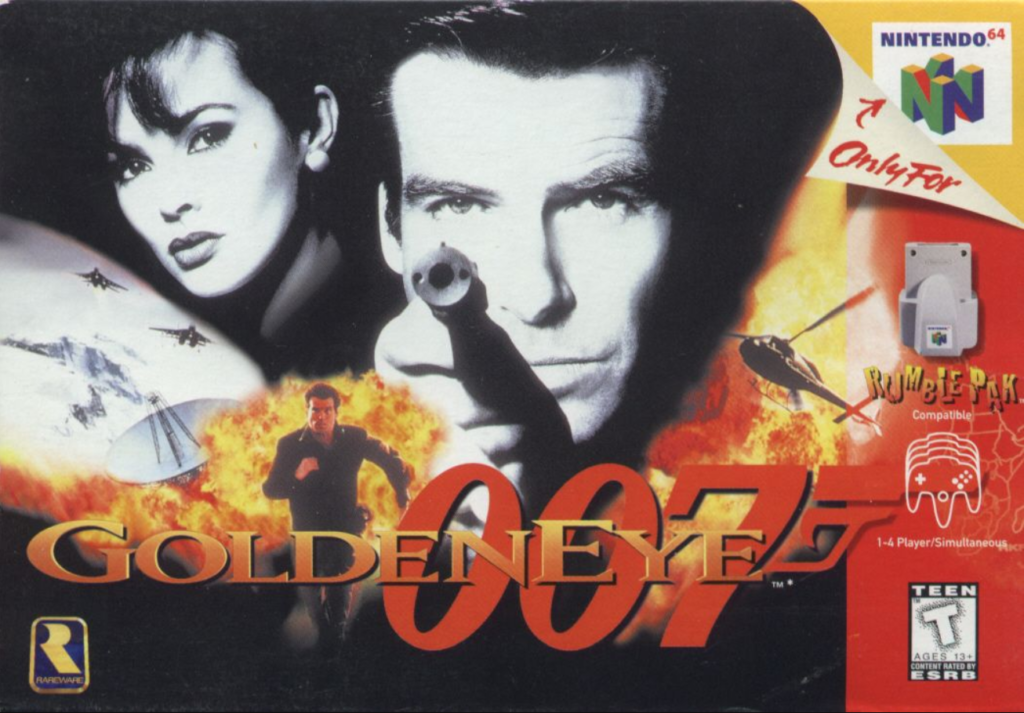
And inevitably, we get to the top spot and it is held by Goldeneye 007. Developed for the Nintendo 64, it is consistently regarded as the finest video game adaptation of a film. This groundbreaking first-person shooter, inspired by Pierce Brosnan’s 1995 debut in Goldeneye, introduced a split-screen multiplayer deathmatch mode that would go on to set a benchmark for the entire genre. Goldeneye 007 was the first game to showcase the feasibility of first-person shooters on home consoles, achieving remarkable sales figures of over 8 million copies. It secured its place as the third best-selling game for the N64 and continues to hold the title of the second best-seller in Rare’s portfolio, narrowly trailing the 9 million-selling Donkey Kong Country.
A couple of mentions ……
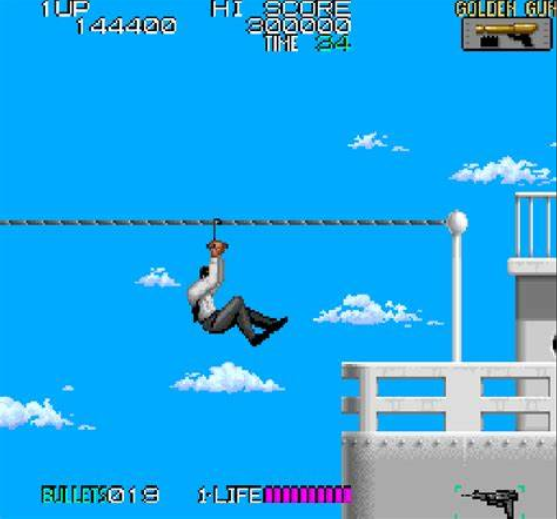
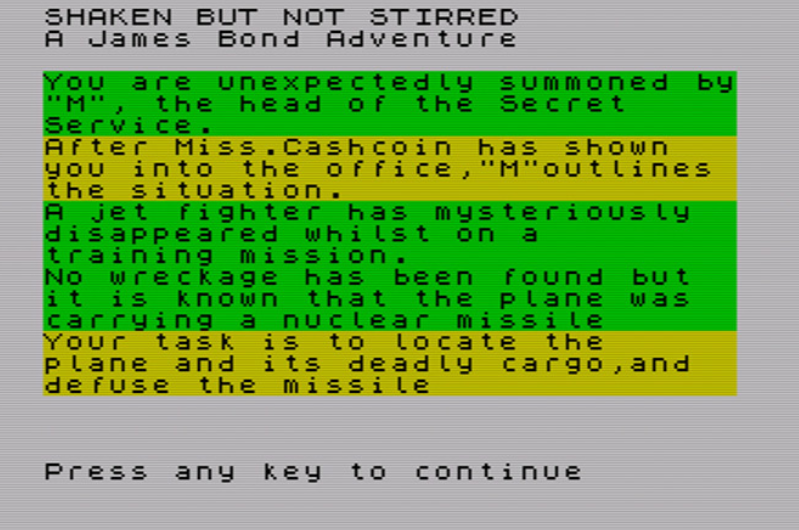
Albeit not strictly Bond games there are a few that hit the mark, one being Shaken not Stirred, released in 1982 and is a text based adventure, half novel, half game. Another that gets a quick peak is the arcade action shoot ’em up platformer from Data East, Sly Spy. Although not holding the stamp of Bond, this was the closest coin-op showcasing a ‘Secret Agent’ from the late 80’s and is pretty good with lots of reference to the Bond series with Golden Guns and underwater fight scenes, a la Thunderball. Full review Sly Spy Secret Agent