A standout game and OUTSTANDING it really is ………
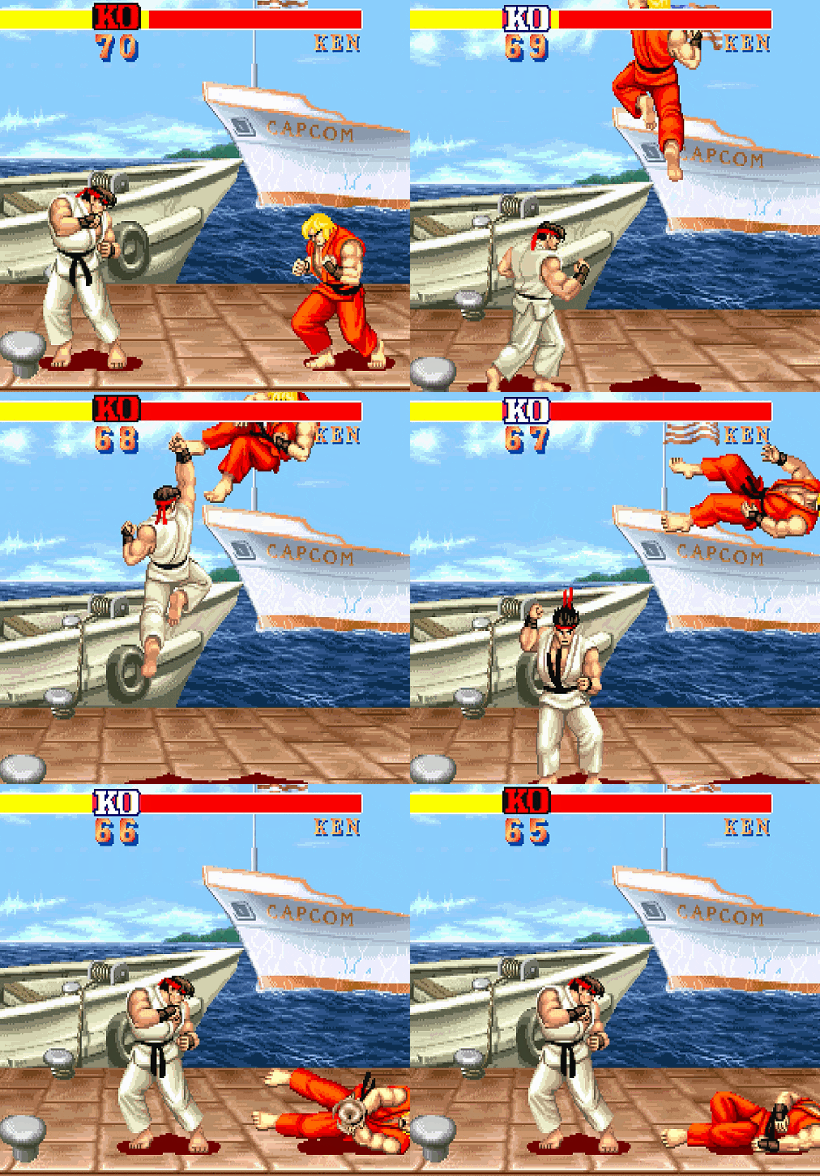
There’s an indescribable essence to Street Fighter II that’s difficult to pinpoint. It churned out numerous editions and versions, flooding arcades and home consoles, yet every single one was fantastic and widely adored. This fighting game reigned supreme during the early to mid-90s, and you could find at least one of the many SF2 cabinets in nearly every arcade or entertainment venue.
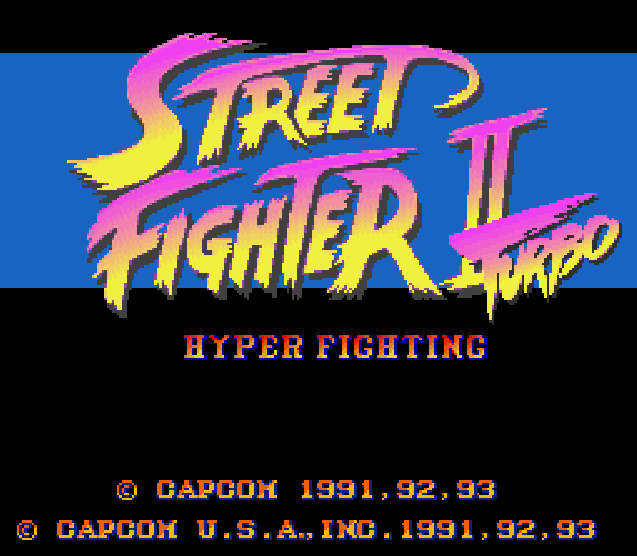
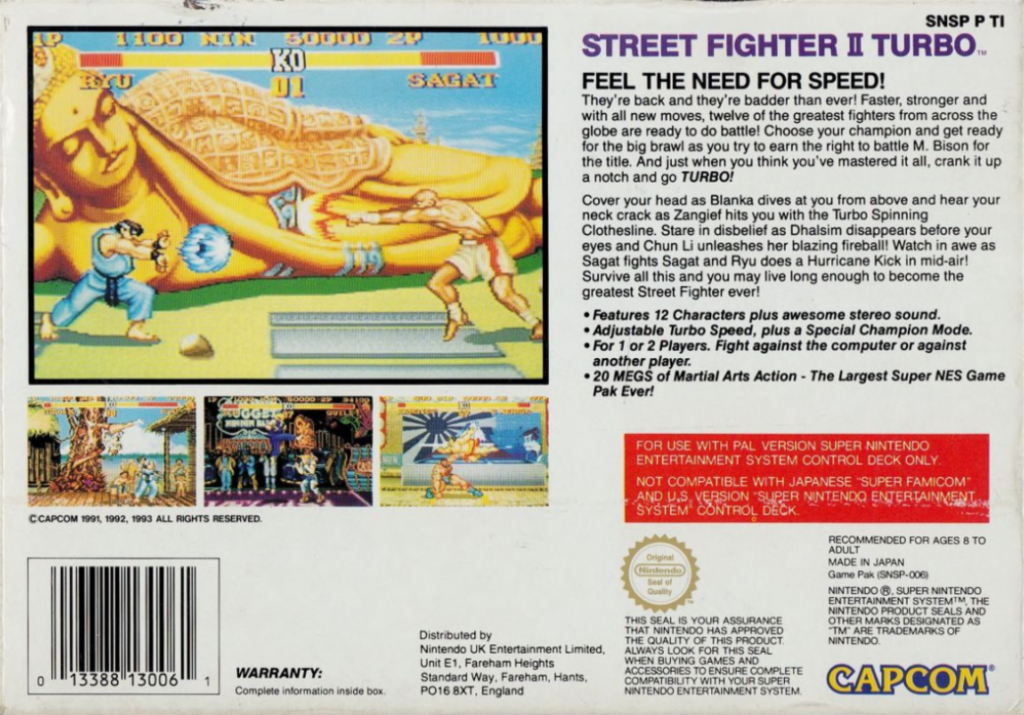
It was practically inevitable that Street Fighter II would make its way to home consoles, and in 1992, the initial edition, “The World Warrior,” landed on the SNES. Featuring eight diverse characters from various backgrounds, each equipped with unique fighting styles, special moves, strengths, and weaknesses, the game offered hours of solo gameplay or thrilling head-to-head matches. Even today, revisiting this version proves it’s still a solid experience. However, Capcom wasn’t content with just one iteration; the following year, in the summer of 1993, they introduced “Street Fighter II Turbo” to the SNES library.
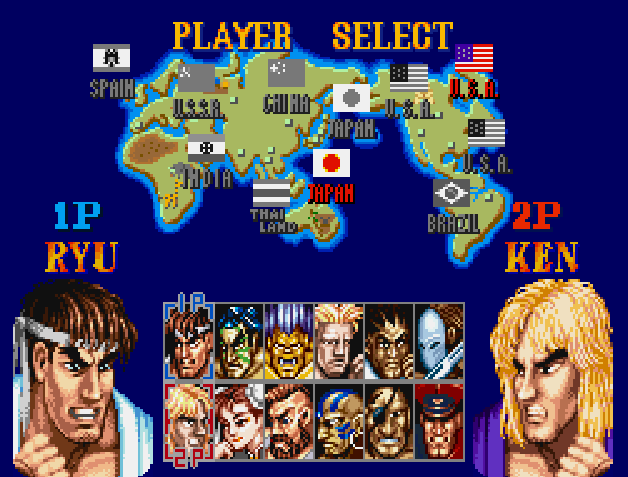
This installment returns players to the prestigious street fighting tournament to determine the ultimate warrior among the twelve competitors. All eight World Warrior characters make a comeback, each with their own motivations for entering the tournament. Ryu seeks a formidable challenge, while Guile and Chun Li are on a quest for vengeance against the sinister dictator boss, M. Bison, whom they hold responsible for the deaths of their loved ones. E. Honda and Zangief aim to prove their respective wrestling styles as the supreme fighting technique, and so forth. Notably, “Street Fighter II Turbo” allows players to assume the roles of the four grand champion characters who were previously only CPU-controlled bosses in the first game: the rugged boxer Balrog, the narcissistic cage-fighter Vega, the hulking Muay Thai fighter Sagat, and the supremely powerful warlord, M. Bison.
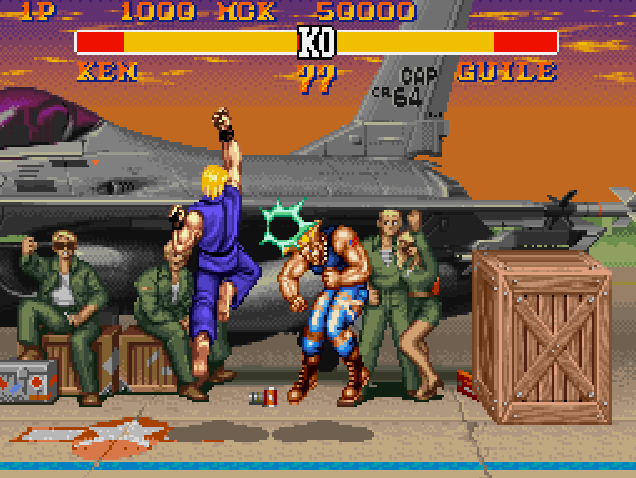
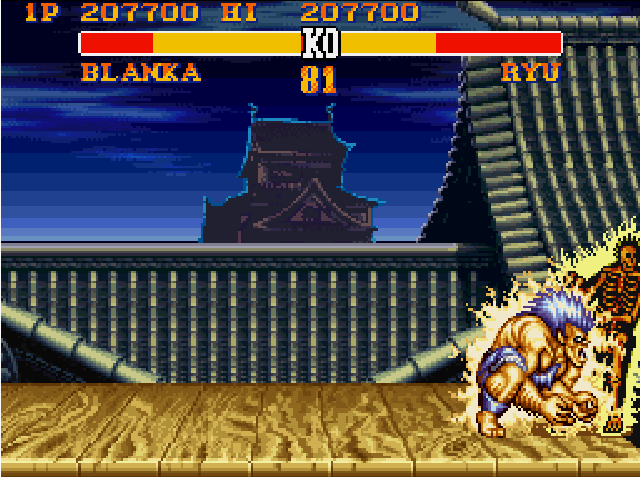
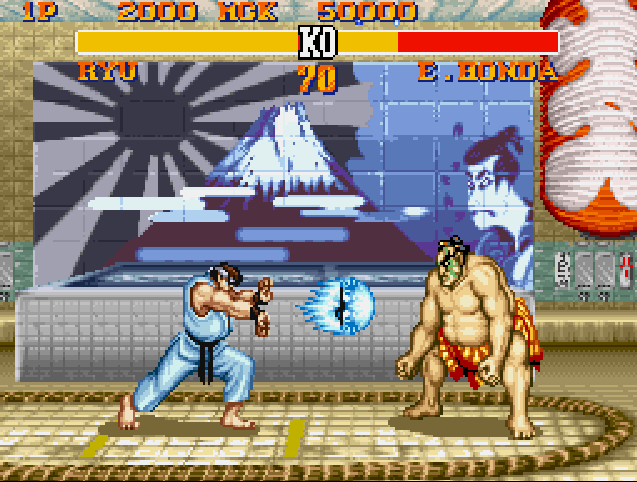
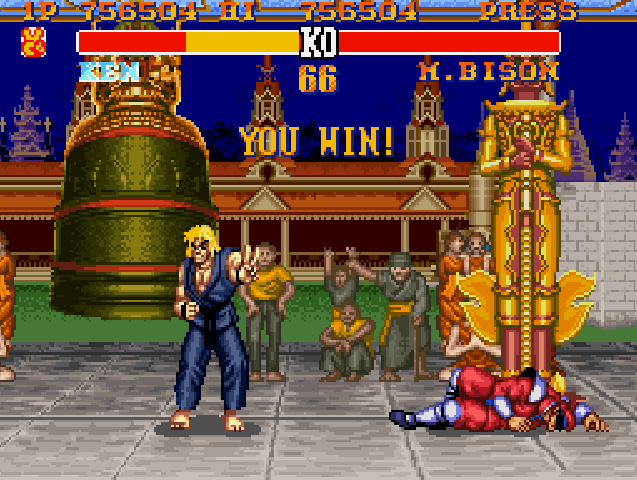
The gameplay unfolds with two characters facing off in a side-view battle screen. Each character’s health meter is displayed at the top of the screen on either side, and the goal is to deplete the opponent’s energy gauge using your arsenal of attacks and win a round. Winning 2 out of 3 rounds secures the overall victory in the fight. In single-player mode, you select a character and progress through a series of battles against all other World Warriors before confronting the grand champions in the following order: Balrog, Vega, Sagat, and M. Bison. Conquering M. Bison signifies completing the game and grants access to a unique ending sequence for your chosen character.
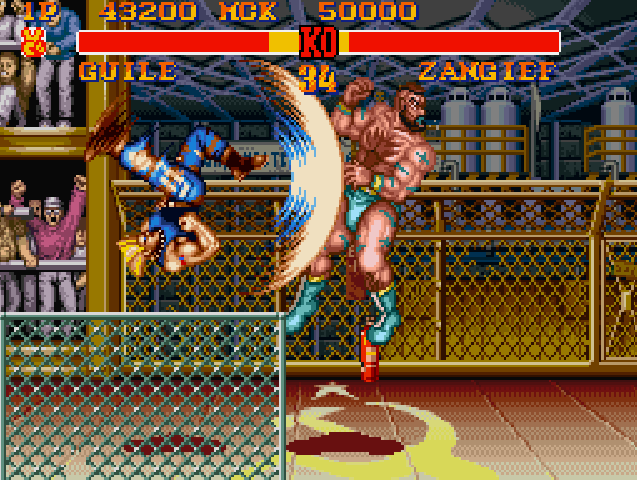
Every character employs a distinct array of standard punch and kick attacks using the four action buttons and two shoulder buttons on the SNES controller. The speed and power of your attacks vary; “Weak” attacks are swift but deal less damage, while “Fierce” attacks are potent but slower. “Strong” attacks fall in between. In close combat, characters can execute throws and hold maneuvers to inflict extra damage. The classic special moves are retained, such as Ryu and Ken’s hadouken projectiles, Guile’s impenetrable flash kick, Zangief’s devastating spinning pile driver, and Dhalsim’s bizarre fire-breathing Yoga Fire and Flame attacks. The grand champion characters introduce impressive special moves that can inflict substantial damage when executed adeptly. Sagat’s projectile range and potent “Tiger Uppercut” and “Tiger Knee” moves, Vega’s swift and acrobatic claw dive and suplex maneuvers, and Bison’s notorious “Psycho Crusher” (often abused by less scrupulous players) make mastering these characters equally rewarding.
Moreover, there’s more to explore in this edition, particularly the new Turbo mode, which we’ll delve into shortly. In this mode, many of the original World Warrior characters receive fresh special moves. For instance, Ryu and Ken can now execute hurricane kicks mid-jump, E. Honda and Blanka have acquired vertical leaping slam maneuvers, Chun Li wields fireball projectiles, Zangief flaunts a swifter spinning clothesline attack, and Dhalsim gains the ability to teleport, granting him a quick escape from incoming assaults.
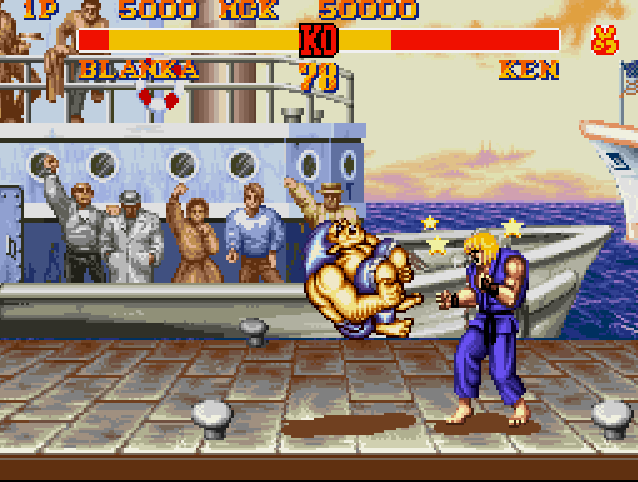
The game retains a strong resemblance to its World Warrior predecessor, both in look and feel. The game engine remains almost identical, providing the same fluid and responsive controls, which players will instantly adapt to. The inclusion of adjustable difficulty levels and improved endings for those who dare to venture into higher difficulty settings adds depth to the gameplay. It’s definitely rewarding to invest time and effort in playing through the game with all twelve characters. For players content with the original game’s pace, color palette, and move sets, the Normal mode lets you experience the Champion Edition of Street Fighter II in all its original glory, presenting nothing novel to those familiar with its classic gameplay.
Now, let’s turn our attention to the game-changer in this edition – the Turbo mode. When you activate this mode from the main menu, using the Left and Right buttons allows you to add or remove stars, indicating the game’s speed. No stars mean the game operates at its original pace, while at the maximum four stars, the game speeds up considerably, introducing a fresh challenge and testing your reflexes and speed. Even seasoned Street Fighter 2 veterans will find themselves facing a demanding, yet equally enjoyable, experience at this heightened tempo. To distinguish this mode from the original and Champion Edition, characters sport upgraded color schemes unique to the Turbo mode, which also carry over into their end-game cinematic sequences.
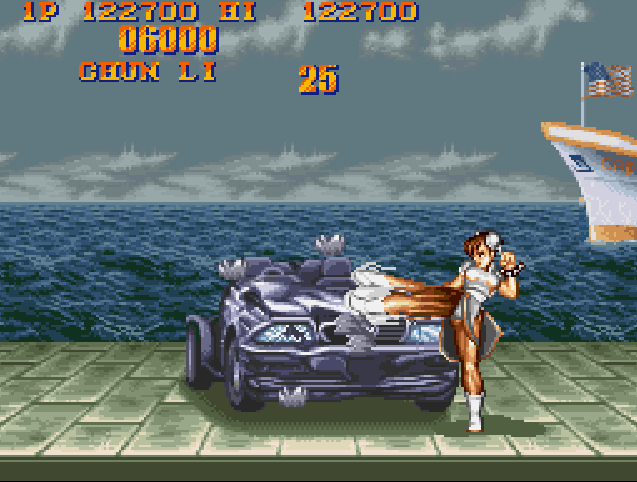
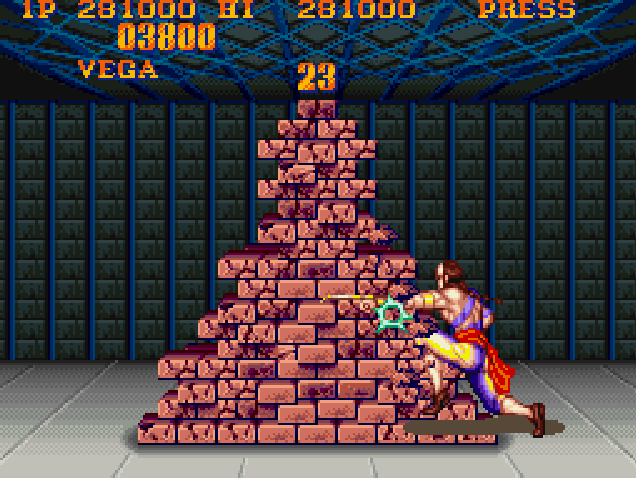
To break the routine of battles, a series of bonus games awaits after a few fights in single-player mode. Armed with your character’s fighting skills, you must destroy a car, a brick wall, or twenty barrels within the time limit to earn bonus points. While there are no other tangible rewards, these bonus stages offer a welcome diversion from the intense combat, allowing you to test your character’s abilities.

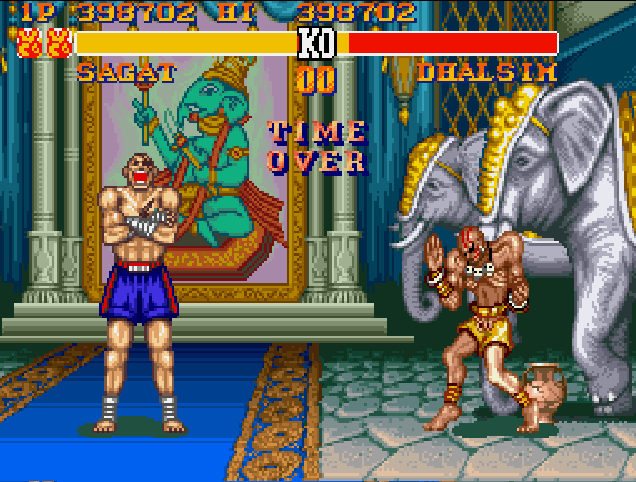
Furthermore, the graphical enhancements, while mostly subtle, do introduce a few noticeable improvements. Character models appear slightly larger and boast greater detail compared to “The World Warrior.” They feature impressive stances, fighting animations, victory poses, and enhanced portraits in the Character Select screen. Each character engages in combat in distinct global locations, from dueling Ryu on a pagoda rooftop in Japan to clashing on a fishing pier in Blanka’s native Brazil. The graphics are especially noteworthy, offering more vibrant colors and improved contrast when compared to Sega’s “Street Fighter II’: Special Champion Edition.”
Musically, the execution is commendable once again. Each stage boasts a fitting theme that intensifies as one character’s energy gauge nears depletion. While it largely echoes the SNES SF2 game’s previous sounds (excluding the Grand Champion ending theme), I personally find it slightly less impressive than the Mega Drive version’s music, which features a deeper and more robust rhythm. Sound effects maintain their familiar quality, including resonant impacts, character grunts during throws, the iconic “Hadouken!” cry as Ryu unleashes a fireball, and resounding cries when a fighter sustains a critical blow, signaling their defeat. Both the visuals and audios are well-crafted, offering a satisfying experience.
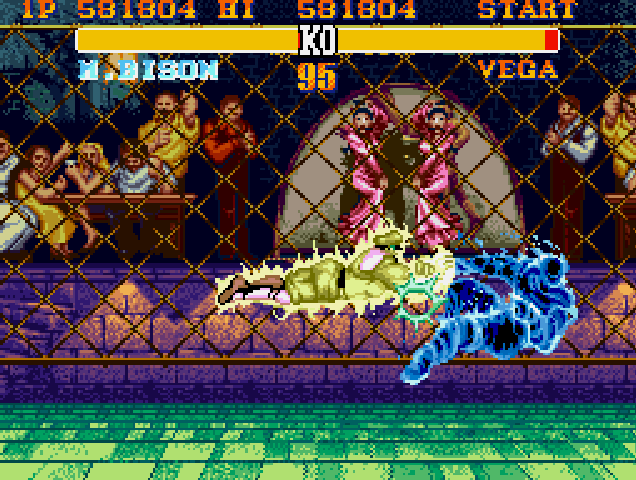
When comparing it to Sega’s SF2: Special Champion Edition game, there’s not much to set them apart. I have a preference for the graphics in this version, and the fact that the standard SNES controller works perfectly (unlike the Sega game, which required a separate 6-button controller purchase). However, there are fewer multiplayer options available in this game, limited to a standard V.S. Battle. Nevertheless, this version provides ample content for extended playtime, enjoyment, and challenge. The combat mechanics are outstanding, featuring highly responsive controls. Each character offers a fun and engaging learning curve, and the added characters and Turbo mode enhance the overall value. Even if you possess the original World Warrior game for the SNES, this version is worth considering. Alternatively, for those who prefer a more recent system, the Virtual Console option is readily available. In summary, it’s a reiteration done right, making it a worthwhile addition to the gaming library for all the fighting game enthusiasts.
An outstanding game and a serious contender for best game ever on the SNES.
GRAPHICS: 92%
MUSIC/SFX: 94%
PLAYABILITY: 99%
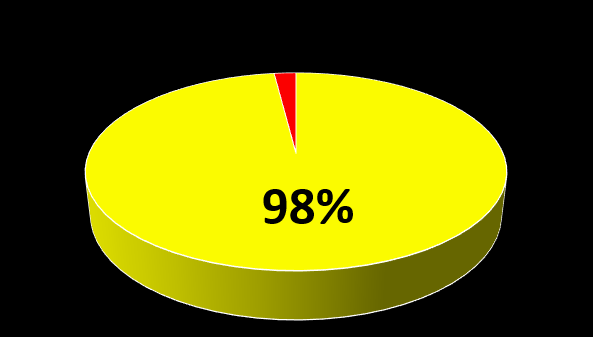
OVERALL: 98%
Platform: SNES
Genre: Action-Fighting-2D
Developer/Publisher: Capcom
Release: 1993
Franchises: Street Fighter