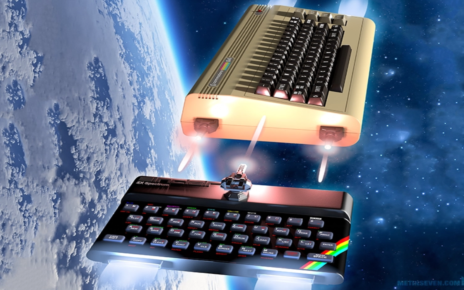
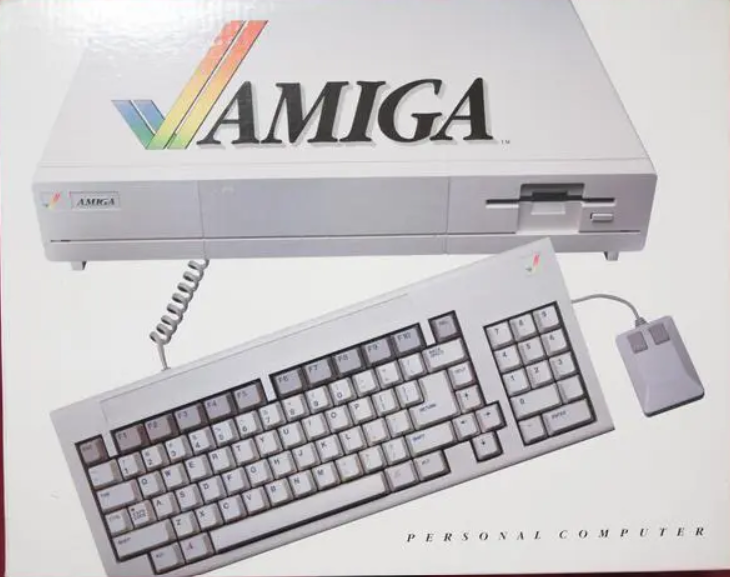
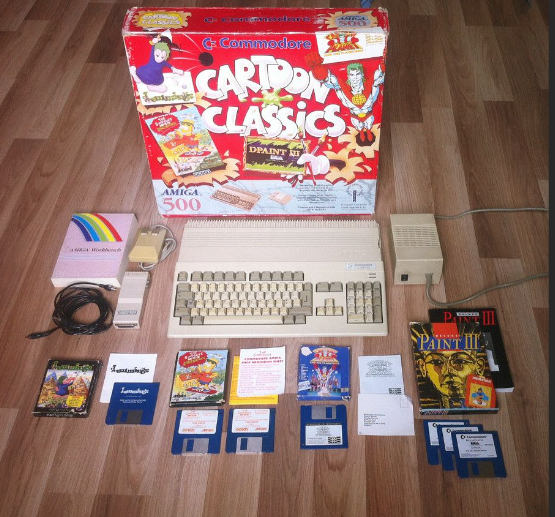
The Amiga 500, introduced in 1987, boasted capabilities comparable to those of Windows 95, running an operating system that had been in existence for a decade prior to Windows 95’s release. It was a technological marvel, easily a decade ahead of its time. However, it faced failure. Let’s delve into the reasons behind Amiga’s downfall.
Amiga’s demise was not attributed to a single factor but rather serves as a cautionary tale demonstrating that even outstanding engineering cannot rescue a product if everything else is mishandled.
Market Penetration
Let’s delve into the intriguing realm of markets, where standards play a pivotal role. Markets can be a peculiar entity, characterized by their adaptability and fickleness. When it comes to smartphones, the majority of users are divided into two standards: Apple and Android. However, the world of video game consoles presents a different landscape with three prominent standards: Sony PlayStation, Nintendo, and Microsoft Xbox. This diversity leads us to ponder why certain standards thrive while others fade into obscurity.
The straightforward explanation is that the “cheap enough, good enough” solution often emerges victorious. Yet this theory falls short in explaining the fate of certain contenders. Take Cyrix, for instance, an Intel competitor in the 1990s that attempted to offer a budget-friendly, quality alternative but faced a rapid downfall, much like Amiga. Moreover, it doesn’t provide insight into markets that accommodate two or even three incompatible standards.
The key to survival in the world of standards appears to be the magic number: approximately 16 percent. When a standard manages to capture 16 percent of its potential market, it reaches a critical mass necessary for market penetration, ensuring its survival. If a competing product reaches this 16 percent milestone while the incumbent standard doesn’t, the incumbent product is destined to fail.
To illustrate this principle, let’s consider Commodore’s Amiga. In order to secure its survival, Commodore needed to sell approximately 14 million Amigas in the United States. Some argue that 14 million units worldwide might have sufficed, but this remains a matter of speculation. Unfortunately, Commodore only managed to sell about 3 million Amigas globally, falling significantly short of the critical threshold.
On the other hand, Apple faced challenges but succeeded in reaching the 14 million unit mark, accomplishing this feat around 1994 or 1995. Despite encountering difficulties in the late 90s, Apple had a substantial user base to remain a viable contender. In contrast, Commodore’s inability to meet the 16 percent benchmark played a significant role in its ultimate downfall.
In the ever-evolving world of tech and standards, the 16 percent rule serves as a guiding principle, shaping the destiny of products and the companies behind them.
Commodore achieved critical mass once with the C-64, or at least came reasonably close, so why did they struggle to replicate this success with the Amiga, a considerably more ambitious and innovative product?
Marketing Failures
One of Commodore’s most significant challenges lay in its marketing strategies. In the early 1980s, Commodore’s marketing was undeniably successful, but it primarily revolved around pricing. The VIC-20, for instance, achieved notable sales because it offered the most affordable option among computers worth owning. Comparable products in its price range usually had some significant drawback, while those exceeding its price lacked features like color, sound, and a full travel keyboard. The C-64, a more advanced computer, followed a similar pricing strategy. It was a superior machine, which contributed to its enduring popularity, and it delivered 64K of memory, color, and sound at a competitive price point that competitors couldn’t match.
Commodore’s marketing approach was relatively straightforward: “Everyone else is ripping you off.”
In 1985, Commodore employed a variant of this rip-off theme in an advertisement that pitted the Commodore 128 against the Apple IIc. This ad highlighted the superior capabilities of the Commodore 128, particularly its advanced sound capabilities. The Apple IIc, lacking such capabilities, was depicted as buried amidst musical instruments and consumer goods that the Commodore could emulate, showcasing its superiority. The message was clear: “Look how much better the 128 is, and it’s more affordable too.”
Individuals who grew up with a Commodore 128 tended to have a deep affection for the machine. However, the Amiga, a different beast altogether, remained in a league of its own. Unfortunately, Commodore’s advertising failed to effectively demonstrate the Amiga’s capabilities. They scarcely mentioned its multitasking feature, let alone explaining why it was indispensable. Astonishingly, they had true multitasking a decade before Microsoft and 15 years before Apple, yet they couldn’t convey the value of this innovation. In comparison, Bill Gates appeared as a marketing genius. Perhaps the most glaring marketing mishap was the Amiga 600, but Commodore’s history was riddled with incompetence in various other years as well.
Apple managed to grasp a crucial concept that Commodore never quite understood: they needed to explain why they built their products. Commodore struggled to define that purpose. Jay Miner, the key engineer behind the Amiga, delivered a passionate speech in 1990, shortly before his passing. At least he could articulate why his creation was superior, but he too never revealed the underlying motivation behind building it.
Amiga Failed Partly due to Price
The Amiga initially held a competitive price position in the market, falling between the Atari ST and the Macintosh upon its release. While it outshone both machines in terms of performance, Commodore struggled to convey its unique value proposition.
Much like the C-64, the Amiga featured custom chips crafted in-house by Commodore, giving them a technological edge in 1982. At that time, Commodore could manufacture its own chips more cost-effectively than anyone else. However, as other companies modernized their manufacturing processes, expanded their production capabilities, and built new factories, Commodore remained stagnant. They even closed one of their chip-making facilities in 1986. This was a crucial misstep, as Intel, for instance, was actively modernizing its facilities. To remain competitive, Commodore needed to update its manufacturing plant, implement contemporary production processes, shift manufacturing from Pennsylvania to California, and modernize the Pennsylvania plant. Had they followed this path, they could have lowered chip production costs, allowing for price adjustments when necessary.
The unique custom chips within the Amiga were integral to its success, as there were no off-the-shelf components that could match their capabilities during the 1980s and early 1990s. However, Commodore struggled to articulate why consumers should pay extra for these technological marvels. Over time, the price gap between the Amiga and its competitors continued to widen, even as its technological edge narrowed.
It’s essential to recognize that success doesn’t always hinge on being the cheapest option, as Apple demonstrated. Nevertheless, Commodore appeared to lack a strategic alternative to their pricing approach, which ultimately proved to be their downfall.
Amiga Failed as it wasn’t Easy to Buy
One of the primary contributors to Amiga’s demise was its lack of accessibility. During the C-64’s prime, it was widely available at retail chains like Kmart and Target, making it easily accessible to consumers. However, Commodore decided to steer away from mass market retail, which led to the loss of its network of independent dealers. As large stores such as Best Buy and Circuit City were emerging on the national scene, Commodore failed to distribute the Amiga through these channels. The only national chain to briefly carry the Amiga 500 was Software Etc., which wasn’t the most stable retail operation. Commodore needed a broader and more stable retail presence to succeed, but they didn’t have it.
3D Gaming
The advent of 3D gaming played a significant role in the Amiga’s downfall. While the platform excelled in various genres, the emergence of games like Wolfenstein 3D in May 1992 revolutionized the industry. PCs offered this 3D gaming experience, rendering the Amiga’s platform games less compelling. The release of the AGA Amigas in October 1992 closed the graphics gap with PCs but still couldn’t match their 3D capabilities. Consumers could easily find affordable 386SX computers that could run Wolfenstein 3D, further impacting the Amiga’s appeal.

Software Development
The absence of a killer app also hindered the Amiga’s success. Products like Lotus 1-2-3, VisiCalc, and Aldus Pagemaker played pivotal roles in driving sales for IBM PCs, Apple IIs, and Macs, respectively. The Amiga lacked a comparable application that could generate such demand. Desktop video capabilities could have filled this void, as the Amiga possessed a unique advantage in this area. However, Commodore failed to develop this potential and lacked initiatives to promote or support companies working in this space. This created a challenging situation where there weren’t enough machines to attract developers, and simultaneously, there wasn’t enough software to sell machines.
Amiga Failed due to Mismanagement
Ultimately, Amiga’s downfall resulted from a chain of mismanagement at Commodore. While international subsidiaries managed to perform relatively better, the crucial US market suffered due to poor decisions by management. Irving Gould bears a significant share of the blame for his lack of interest in understanding the business. He viewed Commodore as a means to fund his extravagant lifestyle during the 80s. Furthermore, he didn’t provide CEOs with sufficient time and autonomy to understand and address the company’s problems effectively. Despite legendary figures like Jean-Louis Gassée expressing their readiness to turn Commodore around, they couldn’t secure the necessary commitment and freedom from interference. Most CEOs struggled under these circumstances, with only Mehdi Ali receiving an extended tenure due to his compliance with Gould’s piggybank scheme.
In summary, the Amiga’s fall underscores Commodore’s mismanagement, and it highlights the critical role of effective leadership and market accessibility in a product’s success. Despite not requiring overwhelming success, the Amiga fell significantly short, and this serves as a cautionary tale of missed opportunities and poor decision-making.