An essential play for anyone who loves snooker, or any game for that matter ……
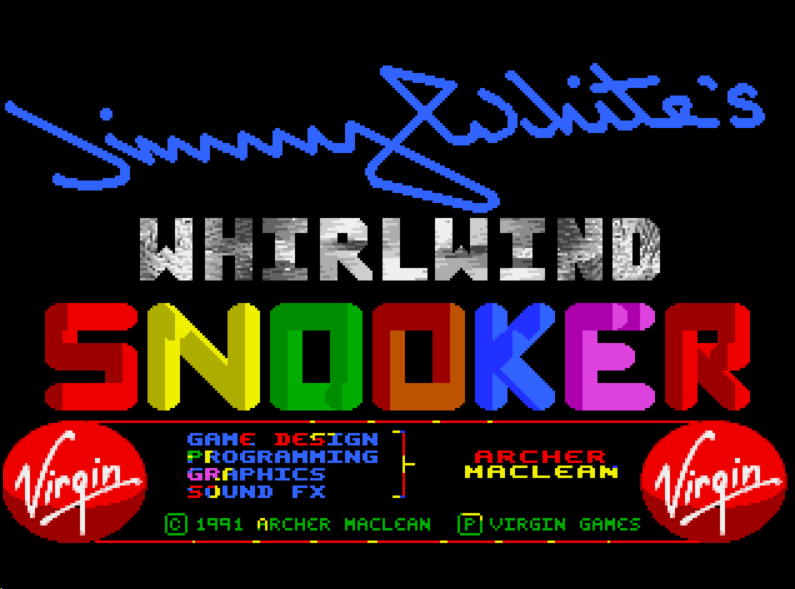
At four in the morning, after engaging in ten frames (equating to approximately 12 continuous hours) of this game against a friend, I finally arrived at the unequivocal realization that this was, without a doubt, one of the most remarkable sports simulation I had ever encountered. In fact, this sentiment had been apparent from the outset, but I hesitated to fully embrace it, fearing the possibility of being proven wrong.
Snooker, a game familiar to us all, has been a source of enjoyment for many. I wager that most of us have spent hours in front of the television, watching skilled individuals amass fortunes by potting balls. Consequently, we have certain expectations when it comes to a snooker simulation, and over the years, numerous attempts have been made on various gaming platforms.
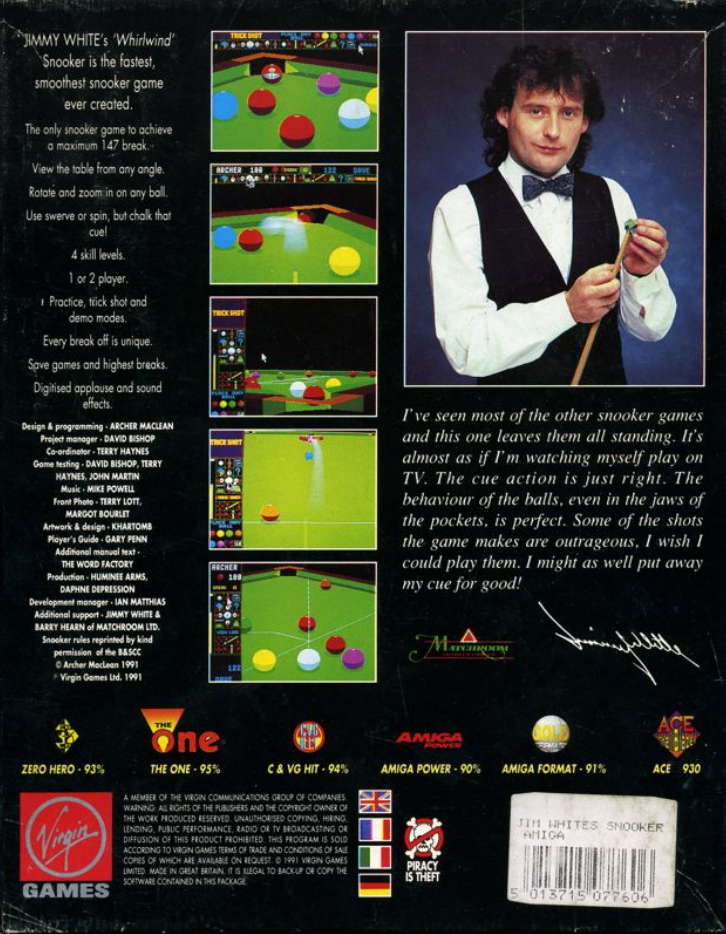
It’s genuinely challenging to envision how this could be improved further. For avid snooker enthusiasts, Jimmy White’s Whirlwind Snooker brings you as close as possible to owning a 12-foot table, complete with lead and baize, right in your living room. Yet, this game has more to offer, and we’ll explore those features shortly.
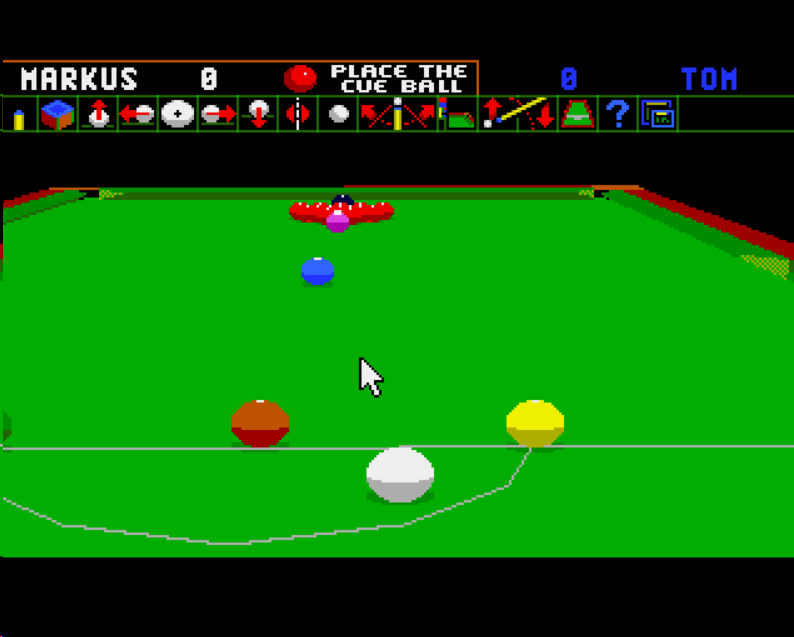
Now, onto the critical evaluation of any snooker game—the movement of the balls. Frequently, computerized pool, billiards, and snooker games exhibit balls zooming around at unrealistic speeds, eventually slowing down with uncomfortable jitters. However, in this game, the balls decelerate gracefully and naturally. Unlike some early computer snooker attempts, they remain steady without any noticeable trembling when left untouched.
Equally impressive is the control method, displaying a subtlety in angle calculation and striking that is impeccable. You could play this endlessly without ever attributing a faulty shot to the program.
Players navigate through a set of on-screen icons or use the keyboard for control. Initiating a shot involves selecting the cueball icon, which transports you behind the white. Adjusting the shot alignment is accomplished by manipulating the cue using the swing icon or the machine’s arrow keys. Precision is facilitated by a white guiding line that outlines the expected path of the ball.
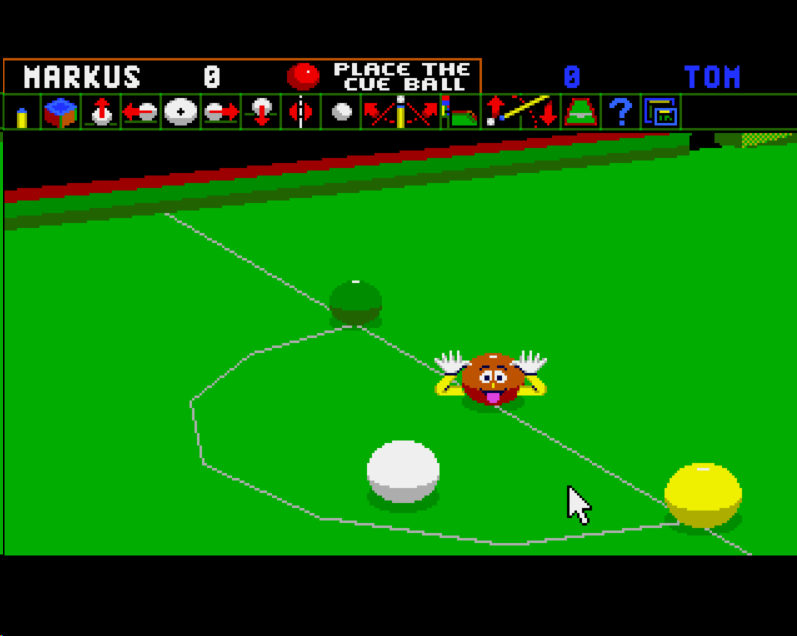
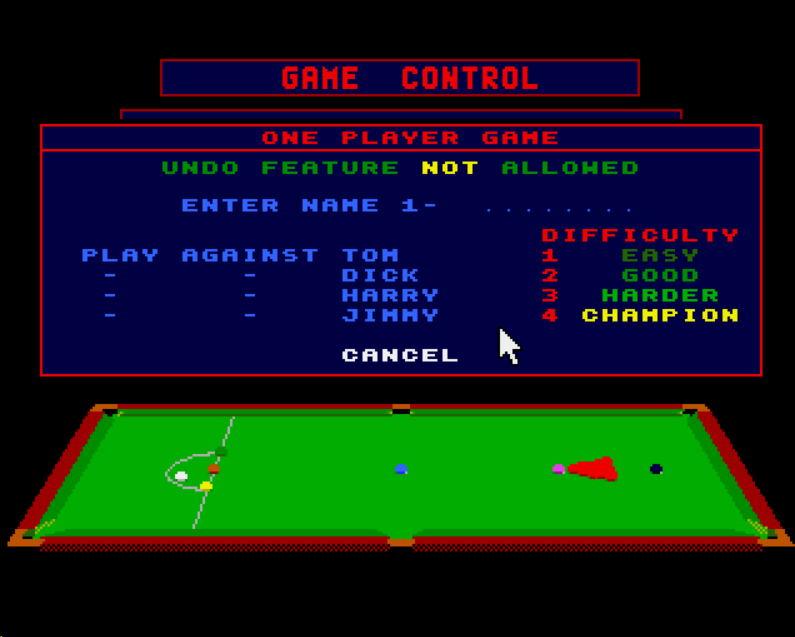
The player can then manage the speed of the cue action with remarkable precision, incorporating side spin, top spin, or stun effects. Finally, pressing the central ball icon executes the shot, and you can observe the outcome of your calculations.
While these controls may seem familiar, the notable distinction lies in the game’s commitment to allowing players the luxury of taking their time with shots, confident that their actions adhere flawlessly to the laws of physics.
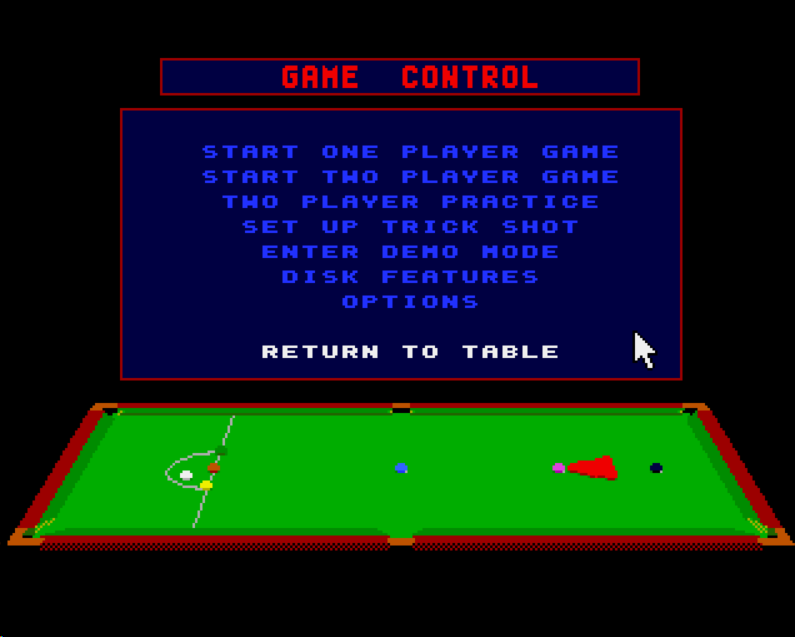
Beyond the basic controls, the game offers a myriad of additional features too intricate to delve into here. Exploring the Trick Shot screen is particularly enlightening, as it allows players to experiment with a variety of maneuvers.
Another highly impressive feature is the game-view option, providing the flexibility to freely zoom around the table. This can be accomplished by moving the mouse on-screen, using icons, or relying on the keyboard for control.
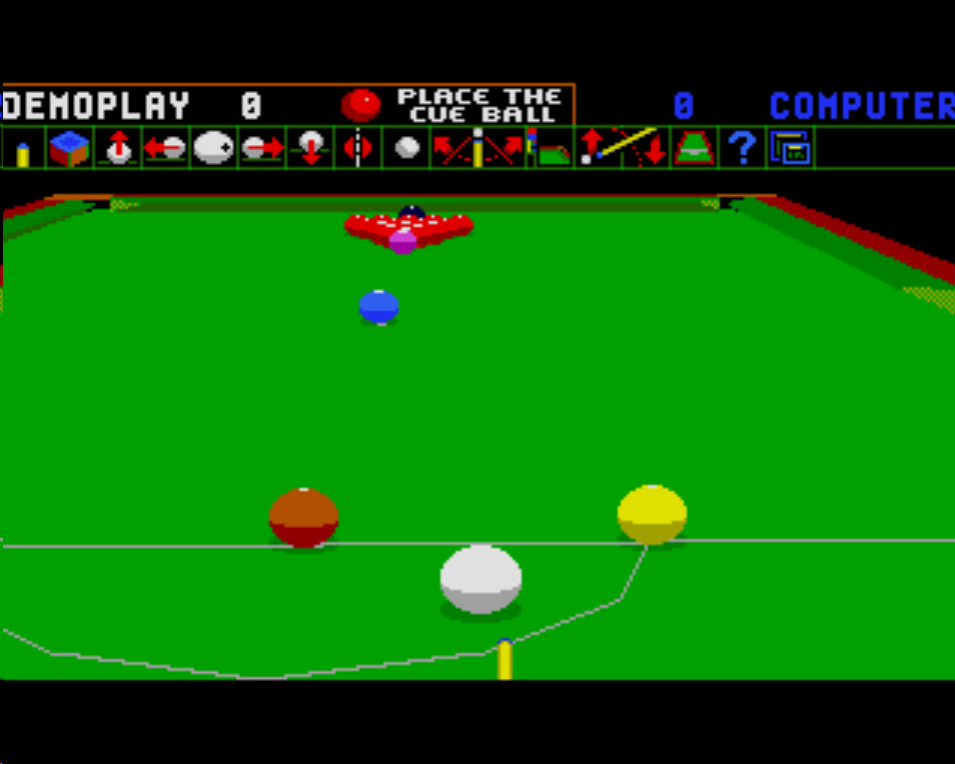
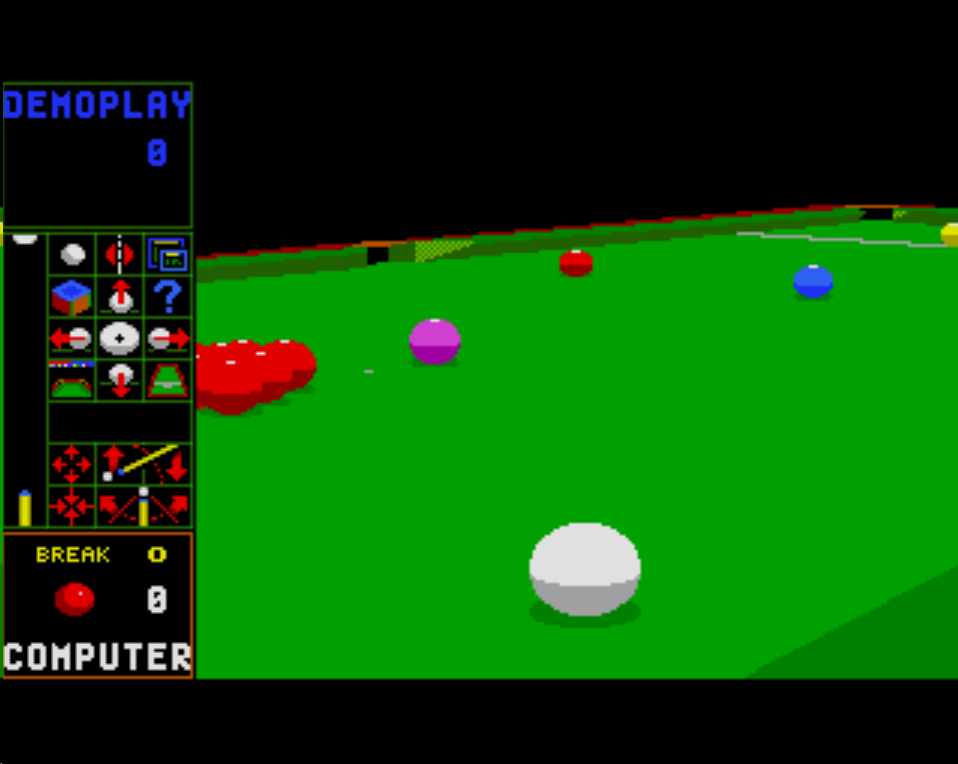
Movement in this 3D Amiga game is arguably the fastest yet witnessed, a remarkable feat given the extensive number-crunching involved.
Now, while the positives are undeniably impressive, it’s only fair to touch on some minor drawbacks. To begin with, the sound quality falls slightly short. The sound of balls dropping into pockets, for instance, comes across as overly clanky and lacks realism.
Another issue I encountered pertains to the absence of comprehensive statistics. When adapting a game to a computer platform, it makes sense to leverage the capabilities of the machine. It would have been excellent to have statistics like ‘percentage-of-shots-potted’ or the average ‘get-out-of-a-snooker’ rate, or essentially any relevant metrics. The provided stats are somewhat lacking.
There, that did sound a bit finicky, didn’t it? To be honest, I don’t really want to criticize the game. For enjoying a great snooker session at home, this game is hard to beat. Beyond being a testament to the admirable craftsmanship of programmer Maclean, it’s one of those titles that makes owning an Amiga entirely worthwhile. An absolute gem.
BREAKDOWN:
GRAPHICS: 93%
MUSIC/SFX: 88%
PLAYABLITY: 97%
OVERALL: 94%

Platform: Amiga
Genre: Sports-Individual-Billiards
Developer/ Publisher: Virgin Games
Release: 1991
Franchises: Jimmy White