The Ultimate Blend of Strategy and Action and an absolute Masterpiece……
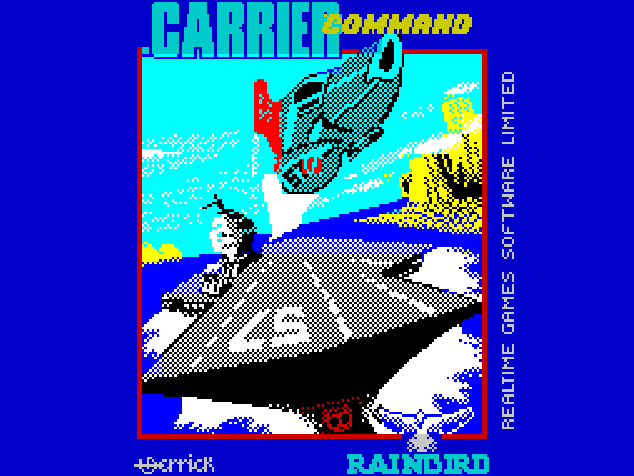
I remember the heady days of my Speccy life and that this title took an age to arrive and it kind of did not bother me as I suspected that the Spectrum conversion from 16 bit would not be of particularly high calibre. How wrong I was.
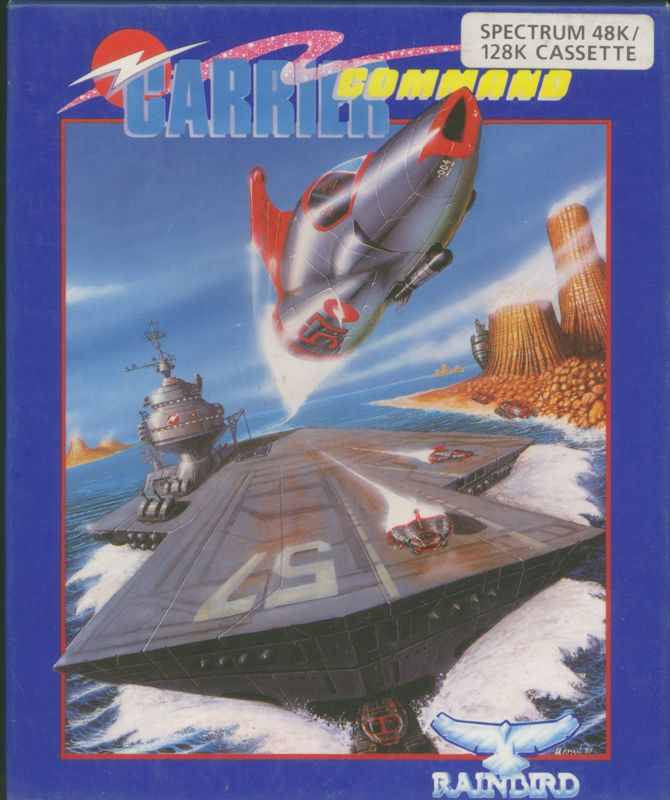
Carrier Command is nothing short of paradise for both wargamers and arcade enthusiasts. It delivers a deep, strategic challenge wrapped in a thrilling, action-packed experience. Using a mix of filled and vector graphics, the game presents a highly convincing 3D world in which you command the mighty aircraft carrier ACC Epsilon. Your mission? To stop a terrorist organization known as Stanza, who have hijacked the Epsilon’s sister ship—the Omega—and are attempting to seize control of a strategically vital chain of 32 islands. To succeed, you’ll need to master every system of your ship and outthink the enemy at every turn.
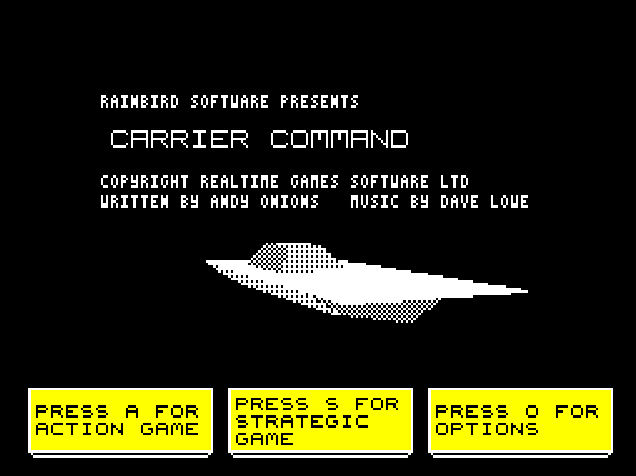
When Carrier Command first launched on the Atari ST, it was praised as one of the finest 16-bit titles ever created. Remarkably, the Spectrum 128K conversion manages to retain much of the magic, bringing an ambitious and complex experience to an 8-bit system.
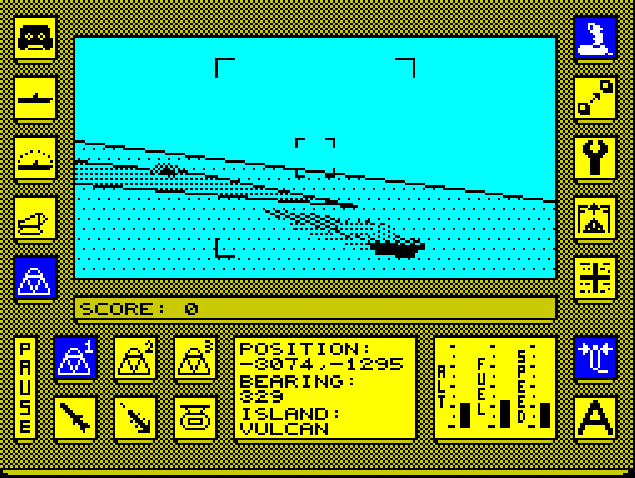
Developed by Realtime Software (the minds behind Starstrike and Starglider), this version impresses across the board. The graphics are fast, fluid, and surprisingly detailed for the Spectrum. The entire interface is icon and joystick-driven: the central view displays what you see from the bridge of your carrier, your Manta fighter jets, or your Walrus amphibious vehicles. Surrounding this are icon-based menus granting access to key systems—arming vehicles, managing repairs, checking maps, and monitoring strategic data.
Sound design also deserves applause. The team clearly worked hard to reproduce the rich audio atmosphere of the Amiga and ST versions. The throaty hum of the Manta’s engines and the deep boom of explosions are impressively close to their 16-bit counterparts—a real feat on the Spectrum.


Crucially, the gameplay remains as compelling as ever. The goal is to bring all 32 islands under your control, which inevitably puts you in direct conflict with Stanza’s forces. Islands can be friendly, neutral, or hostile, and the tactical map helps you track both ownership and vital supply routes. You can even tailor your experience toward either a more action-oriented or more strategic mode.
Capturing islands requires careful coordination. First, equip and launch a Walrus lander to establish a command centre. Once that’s done, you’ll need to defend your new base from enemy air and ground assaults, deploying Mantas for protection. The flight mechanics alone could make for a satisfying standalone game—but Carrier Command layers this with the management of landers, carrier defenses, lasers, drones, and logistics, creating a remarkably rich experience.
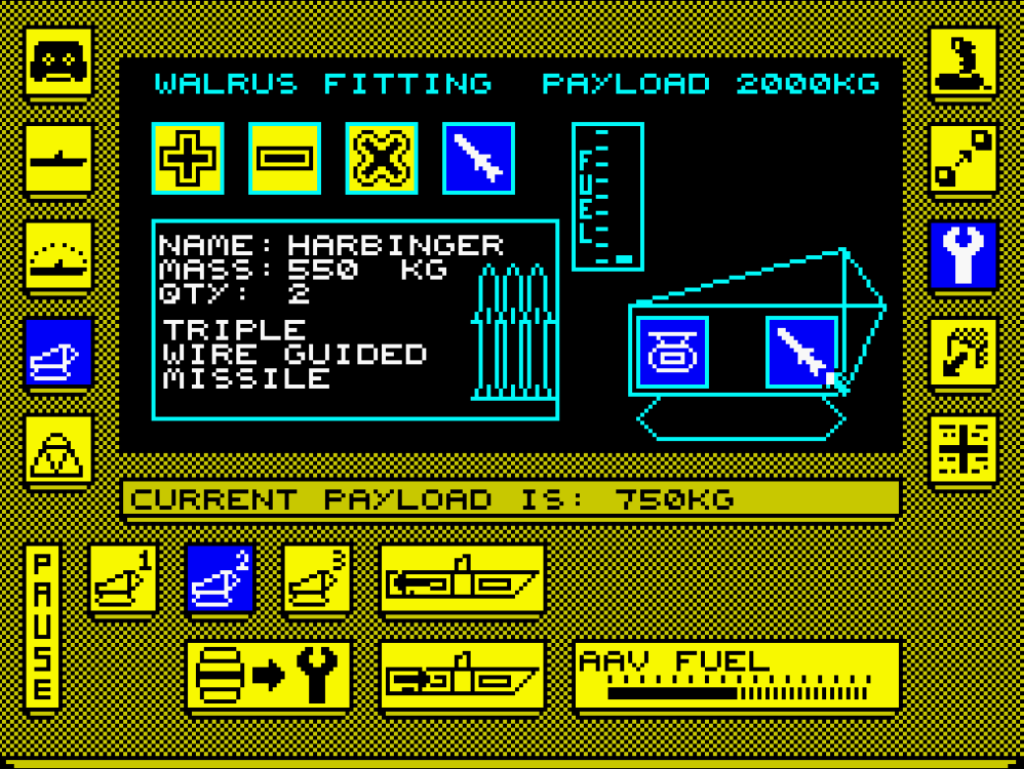

To seize enemy-controlled islands, you’ll need to destroy their command centre using laser strikes or virus bombs, then secure the area for your own operations. Keeping your supply lines running is critical—fuel, munitions, and replacement vehicles are limited, so strategic planning is key to survival.
In every respect, Carrier Command is a technical and creative triumph—a benchmark title that pushes the Spectrum to its limits. It stands proudly alongside classics like Elite, proving that even on an 8-bit machine, depth, strategy, and cinematic excitement can coexist in one unforgettable package.
BREAKDOWN:
GRAPHICS: 95%
MUSIC/SFX: 90%
PLAYABLITY: 98%
OVERALL: 95%

Platform: ZX Spectrum
Genre: Strategy – Real Time – General
Developer/ Publisher: Realtime Games / Rainbird
Release: 1989
Franchise: Carrier Command