This is absolutely atrocious, AND!!! The original price for this was £5.65 – f*cking heartbreaking…….
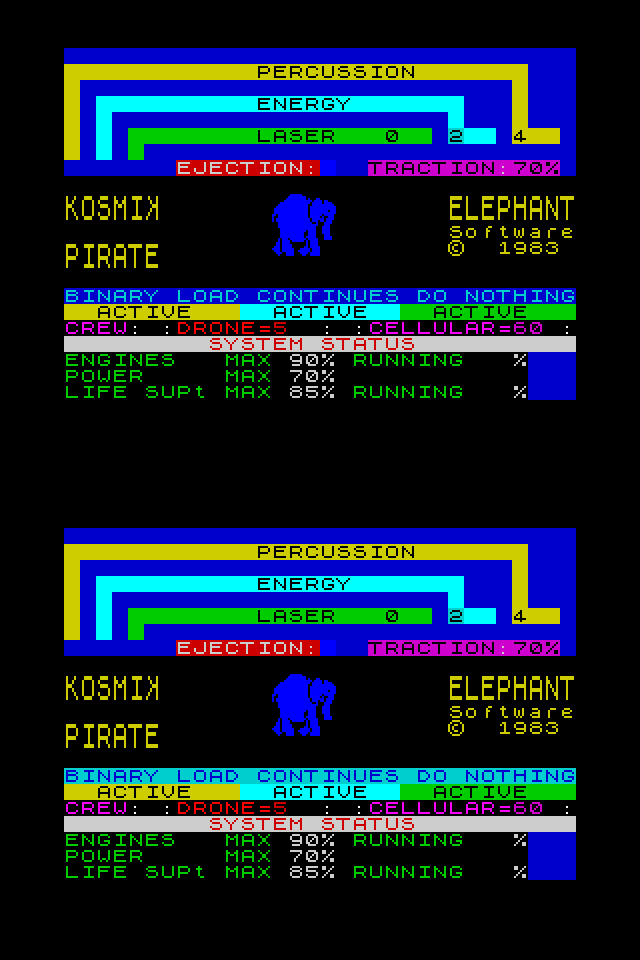
One of our ‘side quests’ if you like, is building a Top 100 worst games ever made for any machine ….. ever. A difficult challenge indeed as 100 sounds like a lot but, like the best games ever, we have to identify the absolute worst there is. Step up a contender for that list, not only the list but a reasonably ‘high’ placing on that list. Ohhh dear!!!!!!
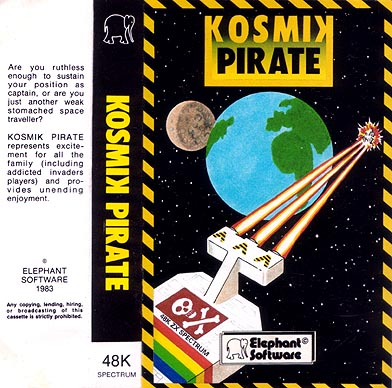
You are the captain of the aging starship Red Beard 2, a vessel so outdated that your role essentially amounts to being a space pirate. Your mission? To unleash chaos across the orbital shipping lanes. Fortunately, the Red Beard still packs torpedoes for offensive strikes—though it’s burdened with a worn-out, unreliable onboard computer and a crew made up of drones and semi-sentient cellular lifeforms.
Gameplay unfolds as a blend of simple interactive adventure and light strategy, all presented through the ship’s computer interface. During pursuits, the computer provides a visual simulation of the chase and combat. This appears as a semi–3D view of space, complete with a targeting cursor, drifting stars, and the ship you’re hunting. Using the directional controls lets you maneuver your target into your firing sights. Once you’ve damaged an enemy vessel, you can board it and seize its cargo.
Play your cards right, and you might even rise to become the dictator of Earth.
So there is some sort of storyline to this game, but…… and it’s a Kim Kardashian (huge but)
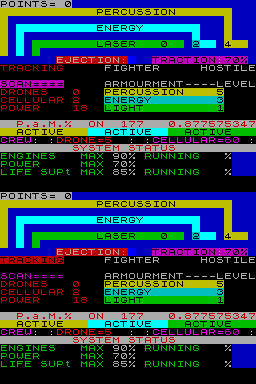
Where do you even begin with this game? There is zero guidance from the instruction manual. You’re dropped in with no clue about what you’re supposed to do—at least not in any direct or helpful way. The screen is overflowing with information, yet most of it is completely pointless. The computer constantly asks for inputs, but half the time it doesn’t acknowledge them. Sometimes you’re left holding down a key for minutes before anything—anything—actually happens.
Sure, there are some moving graphics sprinkled in, but what you’re meant to do with them remains a mystery. The inlay insists—loudly—not to use the ENTER key. But since the game provides no guidance whatsoever, that seems to be the only way to make anything respond… when it feels like it.
And then there’s the pièce de résistance: the “crash.” With almost no effort, you’re suddenly treated to a starfield drifting gently down the screen, followed by the triumphant message: “Systems Power Down.” Wonderful. Congratulations—you’ve crashed. How is it possible that the developer spent more time crafting a clever way of crashing the game than designing an actual game to play?
Overall
So why does it still scrape together a whole 3%—especially when you might have handed over nearly £6 for this disaster back in the day? Well, technically it has a storyline, and yes, there’s a bit of colour. But none of that saves it from being truly, monumentally awful.
BREAKDOWN:
GRAPHICS: 4%
MUSIC/SFX: 1%
PLAYABLITY: 1%
OVERALL: 3%

Platform: ZX Spectrum
Genre: Simulation-Space
Developer/ Publisher: Elephant Software
Release: 1983