Without question, Call of Duty has long been defined by its multiplayer dominance. Ever since the original Modern Warfare transformed PvP into a global phenomenon, the franchise has towered over the industry on the strength of its online modes. And yet, year after year, Activision has poured millions into ambitious single-player campaigns. For players like me—who grew up on Half-Life, Halo, and story-driven shooters—these campaigns have been the reason to return annually. The series hasn’t always hit the mark, but when it does, as with last year’s superbly crafted Black Ops 6, it reminds you why Call of Duty’s cinematic storytelling once mattered.
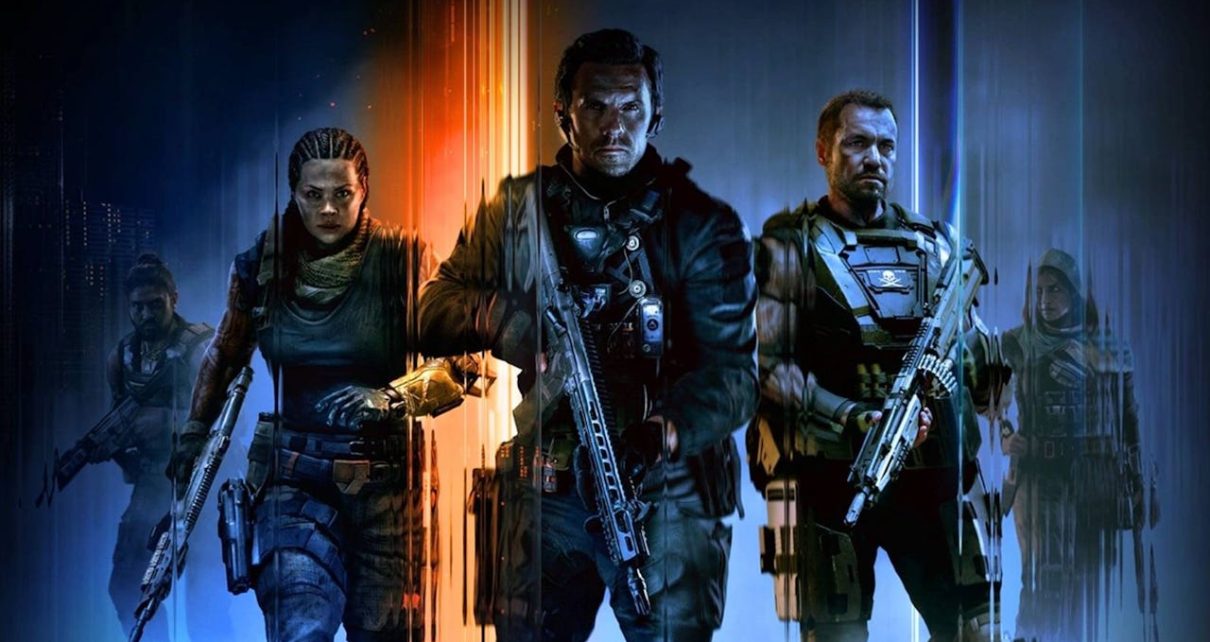
This year, however, marks a pivotal shift. Black Ops 7 openly markets its story mode as a “co-op campaign” designed around a four-player squad. As our review notes, the experience is significantly weaker when played solo—so much so that we can’t recommend tackling it alone. For the first time, Call of Duty feels like an entirely multiplayer-focused package. And that raises a big question: is this the end of traditional Call of Duty single-player?
Co-op itself isn’t the issue; Halo and Gears of War excel at creating campaigns that work both solo and with friends. But Black Ops 7 isn’t a classic Call of Duty story that simply supports co-op—it’s a fundamentally different experience. Gone are the scripted, cinematic, tightly directed set pieces that defined the franchise. Gone are the bold mission experiments we saw in Black Ops 6. In their place is a series of straightforward corridor shootouts and bullet-sponge boss fights clearly designed for groups who might be chatting more than following a storyline. Trying to balance a mission like Modern Warfare’s legendary “All Ghillied Up” or last year’s espionage-heavy “Most Wanted” for four players was likely deemed impossible.
As a result, much of what made Call of Duty campaigns iconic has been stripped away. And it’s not just the shift to an always-online infrastructure that removes AI squadmates, eliminates pausing, and boots inactive players. It’s the introduction of RPG-like enemy health bars, damage numbers, and colour-coded loot. It’s the addition of a shared open-world hub—Avalon—filled with bite-sized activities that feel pulled from Destiny, Warzone, or Helldivers. The true centerpiece of the campaign isn’t the story at all, but Endgame, a 32-player PvE mode that will evolve over the game’s lifespan and eventually stand independent from the campaign that leads into it.
Activision has already confirmed that players will eventually be able to skip the campaign entirely and jump straight into Avalon. As Black Ops 7’s associate creative director Miles Leslie explained to IGN, the team wants players to “progress naturally” on day one, but is already discussing when to unlock the experience for everyone.
And the data tells its own story: only 5% of PlayStation players finished last year’s Black Ops 6 campaign. Modern Warfare 2 reached only 8%. Even the universally acclaimed Modern Warfare (2019) topped out at just 12.6% completion. These numbers leave little doubt—most COD players simply aren’t interested in single-player anymore. With production budgets soaring, it’s no surprise Activision is gravitating toward modes that align with modern multiplayer tastes—modes shaped by Fortnite’s always-social design, Destiny’s progression loops, and the looter-shooter trends of Borderlands.
It’s worth remembering that Treyarch has flirted with this direction for years. World at War introduced co-op missions in 2008. Black Ops 3 attempted a radically nonlinear co-op campaign, though its “choose any mission at any time” structure stripped the story of momentum and impact. Black Ops 4 removed single-player entirely in favour of Blackout, the franchise’s first battle royale. While Activision hasn’t returned to a campaign-less release since, the seeds for today’s shift were planted long ago.
Even in campaigns that still adhered to the traditional structure, signs of multiplayer influence were growing. Modern Warfare 3 (2023) borrowed heavily from battle royale design, transforming missions into Warzone-style encounters and even reusing parts of Verdansk. Yes, its rushed development played a role, but it also reflected a reality: Warzone is far more popular and far more familiar to Call of Duty’s modern audience than any narrative mode ever could be.
Black Ops 7 takes that influence even further. Its campaign is built from the ground up around multiplayer mechanics, not storytelling. While it’s technically playable solo, the balance and mission flow feel fundamentally wrong without a squad—effectively making Call of Duty fully multiplayer-driven for the first time since Black Ops 4.
So is this the new direction for the series? Will future releases abandon cinematic single-player campaigns entirely? It’s impossible to say. Call of Duty reinvents itself every year, and depending on which studio leads development, 2026 could be anything—from another multiplayer-centric experiment to a spiritual return to Modern Warfare (2019)’s grounded storytelling. But right now, the trend is clear: Activision is re-evaluating what Call of Duty should be in an era dominated by live-service giants.
For two decades, Call of Duty has prided itself on delivering a trio of experiences: campaign, multiplayer, and co-op. Yet when a blockbuster campaign like Black Ops 6 is completed by only a fraction of the player base, you have to acknowledge the unsustainability of continuing to spend Hollywood-level budgets on content most fans ignore.
And as the traditional single-player FPS becomes increasingly rare—outside of sporadic releases like Doom or Wolfenstein—it’s understandable that Activision is pivoting. The shift began with repurposing multiplayer systems for campaign missions, and years from now, we may look back at Black Ops 7 as the moment the series fully embraced a Destiny-style identity.
If Call of Duty is now central to Game Pass’s strategy—expected to deliver constant engagement, consistent logins, and ongoing playtime—then transforming five-hour campaigns into evolving co-op worlds was always going to be the logical next step.